


A year without our “Mishti Meye”
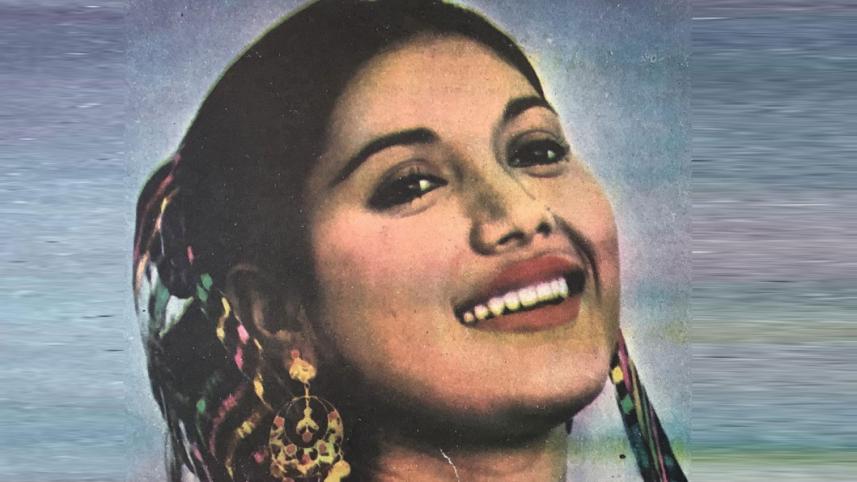
At a very young age, she moved to Dhaka from Chattogram. The then Mina Pal did not aspire to become an actress. Dancing was her passion, and she dreamt of becoming a dancer. Nevertheless, that was not what was in store for her. Call it luck or poverty; she was brought her to the doors of the silver screens. And once she stepped inside, there was no looking back.
To gain something one has to lose something in return. The stardom that followed her initial success needed her to let go of her old life; the simpler joys in life she had experienced in her playful childhood. It also meant that no friend she made would stick around forever. After all, she was only 13 when she faced the camera for the first time in 1963.

It was not an easy journey for 13-year-old Mina. Her director slapped her after the very first shot, which prompted her to elope from the sets and go back to her home at Firingipara. But fate brought her back again. While working in the same project, she got married to the film producer Chitto Chowdhury, after which she gave birth to her first child.
All the struggles paid off when her debut film "Sutorang" (1964), a Subhash Dutta directorial, brought her an honour from the Asian Film Festival in Frankfurt. The film was announced the most commercially successful cinema from 1956 to 1968. Upon investing BDT one lakh, the producer earned BDT 10 lakh.

However, success seldom translated to happiness for the young girl forever alone in the city. "I am friendless, I am alone", were her very last words. Her films became synonymous with her life, with all its twists and turns wrapped in the stories on the reels.
This was a story of how Firingibazar's Mina gradually went on to become one of the legendary actors of Bangla cinema. Her transformation from Mina Pal to Kabori was nothing short of a roller coaster ride. The teenager, who took the responsibility of returning the audience from Urdu to Bangla films, worked with the same conviction throughout her career of six-decades.
Kabori predominantly ruled the Bangla film industry, before and after the country's independence. In the 60s, both Shabnam and Kabori became extremely popular. But with Shabnam turning to Urdu cinema, Kabori was the one to dominate the industry here for years.
The magic of Kabori lies in the fact that she did not limit herself to just being a performer. She went beyond her comfort zone and explored herself as a producer and director. "Sheet-Boshonto" (1968) was the first film from her production house Shreemoti, which was later changed to Kabori productions. "Gunda" (1976), directed by Alamgir Kumkum, was one of the last and commercially successful films produced by Kabori.
Interestingly, "Gunda" at some point, might seem like the sequel to the 1973 Razzak and Kabori starrer "Rangbaaz", produced by Razzak. Both films featured the duo -- considered one of the most popular on-screen pairs in Bangla cinema – in the lead characters.
She was the first actress in Pakistan to be featured in a cinemascope film, "Bahana" (1965), directed by Zahir Raihan. The Urdu film was not commercially successful, but was critically acclaimed for both her work and Zahir Raihan's cinematic brilliance.
Kabori's demand kept rising with her flawless performance in the films like—"Orun Borun Kiron Mala", "Saat Bhai Champa", "Abirbhab", "Koto Je Minoti", "Neel Akasher Niche". Halls would need pre-booking for these films, with tickets being sold in black. Her mesmerisingly sweet smile was quick to earn her a title even sweeter, "Mishti Meye", among her audience. It was just not the charm, but also her versatile performances, sheer conviction and acting brilliance.
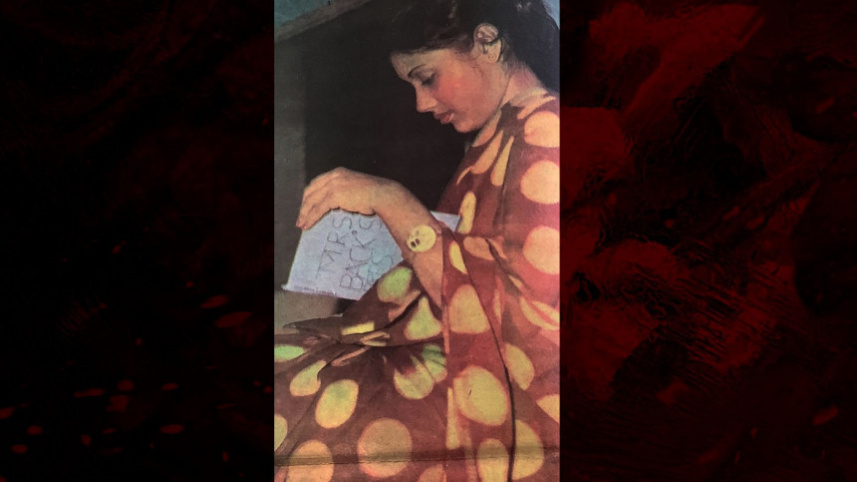
During the Liberation War, she narrated the heart-wrenching story of migrating to India as a refugee in her autobiography, "Smriti Tuku Thak". She travelled to different states in India to gather support in favour of the cause of Bangladesh's independence. She also acted in a film called "Joy Bangladesh" during the war and donated half of her remuneration to the refugees and the freedom fighters keeping, while her own survival was uncertain.
After the war, she appeared in "Titas Ekti Nodir Naam" (1973) directed by Ritwik Ghatak. An actress of her fame and caliber did not hesitate working with newcomers at all.
In the late 1970s, she won the National Film Award for her role in "Sareng Bou" (1978). Although she had received some other awards before, it was her first national recognition. Based on Shahidullah Kaiser's novel "Sareng Bou", the film of the same name, directed by Abdullah Al Mamun is a turning point in Kabroi's career, after which she became selective of the roles she played.
Among the 10 films she did in the 80s, "Devdas" (1982), and "Dui Jibon" (1988) went on to grab the status of iconic commercially successful films. She experimented with her methods and style in both films, which brought her immense appreciation from both critics and audiences.
She was concerned about portraying strong and bold female roles, which reflect political and social conscience. Maybe this realization prompted her to join politics. She became the member of the Parliament in 2008 from Narayanganj. She also directed a full-fledged film "Ayna" (2006) and a short film "Ekattorer Michhil" (2001), which reflected her thoughts and ideas on politics.
Loneliness is sometimes believed to have caused by ambitions. However, what makes people decide to walk on that ambitious path? Only few can answer that. Fortunately or unfortunately, our "Mishti Meye" Kabori, the little and naïve Mina, was one of those very few.
Had it not been her untimely demise due to Covid-19 last year, Kabori might have been busy with the script and casting of another film this year. Amidst all the talks of her personal life, and all the pointing fingers that came with it. If one thinks of her indomitable passion and determination, they can still hear her respond to all these with, "I'm in the party to break the tradition."
 For all latest news, follow The Daily Star's Google News channel.
 The author is a teacher and film critic.
Comments