


Kamaruzzman to consult his lawyers today
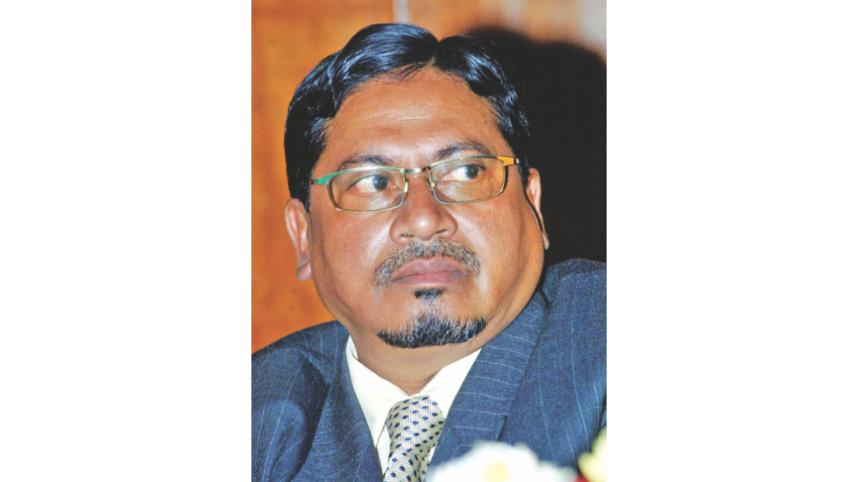
The jail authorities yesterday gave condemned Jamaat leader Muhammad Kamaruzzaman permission to talk to his lawyers over seeking presidential clemency, the last option for the war crimes convict to save his life.
The death row convict desired to speak to his counsels after the Dhaka Central Jail authorities communicated to him in the evening the Supreme Court verdict that dismissed his review petition against the death penalty.
 For all latest news, follow The Daily Star's Google News channel.
 As fixed by the prison authorities, five counsels for the Jamaat leader will meet him at the jail at 11:00am today, Shishir Manir, one of his lawyers, told this correspondent last night.
Around 3:00pm, the SC released the full text of the verdict that rejected the review petition of Kamaruzzaman, assistant secretary general of Jamaat-e-Islami.
He filed the petition on March 5 against the apex court's judgment that upheld his capital punishment. On Monday, a four-member SC bench led by Chief Justice Surendra Kumar Sinha dismissed the review petition.
Kamaruzzaman, key organiser of infamous Al-Badr force in greater Mymensingh in 1971, was sentenced to death by the International Crimes Tribunal-2 in May 2013 for committing crimes against humanity, including mass killings in Sohagpur of Sherpur, during the Liberation War.
The ICT registrar's office received a copy of the 36-page SC verdict around 4:30pm. Tribunal officials took it to the central jail authorities around 5:45pm.
Farman Ali, senior jail superintendent of the central jail, read out the verdict to Kamaruzzaman, and wanted to know whether he would seek mercy from the president, said jail sources.
The Jamaat leader then told the prison official that he would decide on the matter after consulting his counsels, they said.
SC OBSERVATIONS
In its full judgment, the SC expressed serious doubts about the credibility of a book, "Mahila Muktijoddha", which was placed before it as fresh evidence on behalf of Kamaruzzaman.
The court described it as a "tailor made book".
"Having read the book from the top to the toe, we [SC judges] are immutably convinced that it is a tailor made book that has been published with an ulterior motive to shield the native paramilitia forces from the accusation of crimes against humanity.
"Nowhere in the book has the frenzied role of the collaborators against the liberation forces been depicted.
"The book gives conspicuous and undistorted impression as if Rajakars, Al-Badres played no part in 1971 atrocities, although truth has it that the Paki army would have been totally lost and helpless without the active help and participations of those local poodles. This book has been published by Nari Grantha Prabartana which is also an unfamiliar quantity," the SC said.
During hearing on Kamaruzzaman's review petition on April 5, his counsel Khandker Mahbub Hossain submitted to the apex court the book written by Farida Aktar.
Mahbub told the SC that the writer took the interview of prosecution witness-13, who said Pakistani army had killed her husband, and mentioned it in the book.
"The authenticity of this book has never been tested nor has PW [prosecution witness] 13 been ever asked any question on the alleged interview, shown to have been published in that book.
"The book was first published in February 1991, with second edition in December 1994. So, all the publications took place when the party of the petitioner's belonging was in power," it said.
On the defence counsel's prayer for considering commuting Kamaruzzaman's punishment from death sentence, the apex court said it is true that many countries have abolished capital punishment. But it is equally true that a total of 55 countries retain death penalty as of today.
The countries that retain capital sentence include India, the world's largest democracy, and 32 of the 50 component states of the US, the most powerful democracy in the world, said the court.
"According to Amnesty International's latest report, death sentence worldwide jumped by more than 500 in 2014 compared with the previous year and that during that year at least 2,466 people were sentenced to death worldwide", said the judgment.
It said Mahbub's argument that Bangabandhu Sheikh Mujibur Rahman "exonerated all criminals against humanity is founded on erroneous belief and is hence legally untenable".
"The truth is that Bangabandhu granted mercy to those collaborators only who committed no criminal offence. He did certainly not insulate those who were accused of criminal offences during the Liberation War period. As a matter of fact by dastardly killing him the anti-liberation forces delayed the trial of those guilty of crimes against humanity," observed the apex court.
There was no error in the judgment on Kamaruzzaman's appeal, it added.
Justice AHM Shamsuddin Choudhury Manik, a judge of the four-member bench, wrote the judgment. Chief Justice SK Sinha and other two judges -- Justice Md Abdul Wahhab Miah and Justice Hasan Foez Siddique -- agreed to it.


Comments