


Unicef message was not a measles outbreak warning: Prof Sayedur tells Star

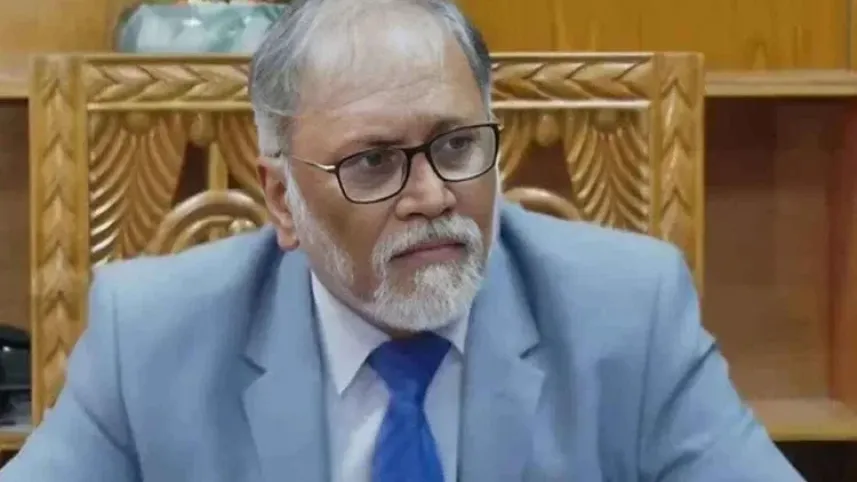
Professor Sayedur Rahman, former special assistant to the chief adviser of the interim government for the health ministry, provided a written reply to The Daily Star’s queries on the ongoing measles outbreak and the alleged poor handling of the long-running vaccination programme. Below is the full transcript of his interview.
Star: A special measles campaign was scheduled to be held in mid- or late 2024, but it was not carried out during the interim health administration, even though the government received confirmation from GAVI, the Vaccine Alliance, in March 2025 about receiving vaccines for the special campaign. Why?

Prof Sayedur: I just want to politely remind you that the earlier two special measles campaigns were conducted in 2014 and 2020, six years apart. You are right that the next one was scheduled to be held in 2024. However, all of us know the situation in 2024. After the interim government was formed, during the first six months, the Ministry of Health and Family Welfare had to deal with a number of emergency, serious, and sensitive issues related to the documentation of deaths and management of injured victims of the July uprising in different hospitals (both at home and abroad). Later, after being a little settled, in early March, GAVI issued the decision letter for MR (measles-rubella) vaccines required for the follow-up campaign (special campaign). Please note, at that time, there was no alert, warning, or red flag from any national or international authority indicating an urgent need to conduct the Special Measles Campaign immediately.
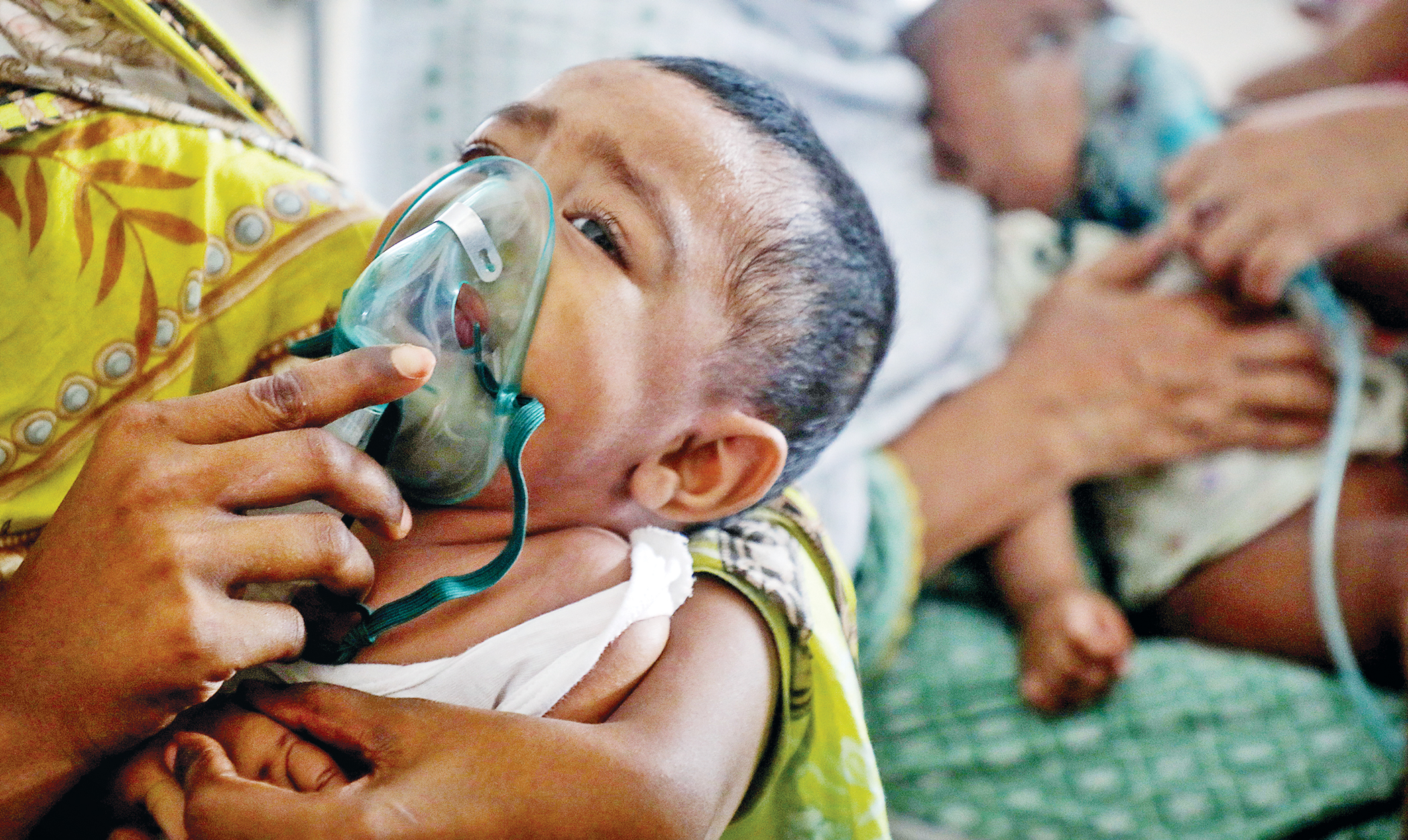
Consequently, MR vaccines were scheduled to arrive in two separate shipments -- scheduled in September 2025 and March 2026. The second date was beyond the interim government’s tenure. If any urgency was mentioned by any competent authority or expert, the health ministry could have initiated rescheduling the shipments to execute the special campaign earlier. Just to note, those MR vaccines approved under GAVI’s Decision Letter signed in early March 2025 are now being used in the ongoing special campaign in response to the present measles outbreak.
Star: The health ministry’s decision to cancel the proposed fifth sector programme, without implementing a bridge project in a timely manner, resulted in disruptions in service delivery, including funding for vaccination efforts. The proposed sector programme was cancelled in March last year; the bridge projects were not approved until November. It then took several more months to appoint project directors and make the projects operational. What were the reasons behind these delays that disrupted emergency service delivery?
Prof Sayedur: After the interim government assumed responsibility, the proposal for the 5th HPNSP submitted by the health ministry was returned by the Socio-Economic Infrastructure Division with a request to resubmit it with an exit plan. In response, the health ministry formed an expert committee to examine the matter and advise on practical and pragmatic options.
Following the committee’s recommendations, the ministry instructed relevant departments to identify essential activities and prepare bridging Development Project Proposals (DPPs). Because the health sector had long relied on operational plans rather than development projects, the transition required extensive inter-departmental coordination, which took more time than initially expected. The delays appear to have been primarily due to the fact that they were out of practice as well as existing bureaucratic inertia regarding new initiatives. I already mentioned earlier that the DPPs were instructed to be prepared in a manner so that essential services remain uninterrupted. In addition, during the approval delay, we made a number of emergency interventions on different issues and aspects communicated to us. Some of these are like NCD medicines or anti-rabies vaccines or antivenom, but still some service delivery was perhaps affected. However, in spite of some limitations caused by delay in approving DPPs, the vaccination programme was not stopped for logistics constraints. A careful review is now important to identify the specific procedural bottlenecks and ensure smoother transitions in the future.
Star: In September last year, the interim government decided to use 50 percent of the vaccine fund (Tk 842 crore) to procure vaccines through Unicef under the direct procurement method (DPM), while the remaining 50 percent would be procured through an open tender process. It has been alleged that procuring vaccines from revenue funding, instead of the previous sector programme, along with the complexities arising from splitting procurement between Unicef and open tender, resulted in delays in vaccine supply. How do you respond to this?
Prof Sayedur: First of all, we need to appreciate the decision to procure vaccines from revenue funding, which reflects the interim government’s strong commitment to maintain vaccination as a core government activity. Moreover, we need to know that according to the GAVI Transition Plan, the Bangladesh government has to finance the whole vaccination programme from its own funding in 2029. Therefore, revenue funding is a positive approach for such an important public health issue. In the year 2025-26, the government allocation for EPI vaccines was Tk 842 crore. In addition, a special initiative in June 2025 enabled the repurposing of Tk 609 crore from a loan provided by the Asian Development Bank (ADB) under the APVAX programme. That means the interim government allocated Tk 1,450 crore for EPI vaccines, which is approximately threefold the government revenue allocation of the year before.
Fifty percent of the revenue allocation of this year, Tk 419 crore, was nearly equivalent to the entire vaccine revenue budget of the previous year. Fifty percent of the revenue allocation and the repurposed ADB funds were approved for procurement through Unicef under the direct procurement method in November 2025 and January 2026, respectively. Combining these two funds, approximately Tk 1,000 crore has already been approved for procurement through Unicef. I wanted to reiterate that all the EPI vaccines worth Tk 1,000 crore are procured through Unicef under the direct procurement method (DPM). Regarding the decision about the remaining 50 percent of the revenue fund through open tender, it should not have led to delays in vaccine supply. The already approved fund for procuring EPI vaccines through DPM by Unicef was sufficient to keep required vaccines in hand. So far, we assume, despite our sincere efforts, there was a time gap between approval and release of funds. This happened purely because of interrupted institutional memory as well as administrative complexities that require proactive reform in the existing bureaucratic system.
Star: It has been reported that Unicef warned the health ministry that changes in the procurement process could disrupt routine immunisation and trigger an outbreak. Why did the ministry not pay heed to the warning?
Prof Sayedur: As far as I recall, Unicef’s communication reached me on December 30, 2025, providing valuable guidance on the advantages of procuring vaccines both through the direct procurement method and through Unicef. On February 11, Unicef communicated information on “Step by Step Tasks for Vaccine Procurement through International Open Tender (Single Envelope) Method” and a comparison of the duration of OTM versus DPM.
After receiving the communication regarding the OTM and DPM option, there was limited opportunity to undertake a detailed review, as the government was fully engaged in the national election process at that time. Consequently, the final decision on the remaining 50 percent of revenue allocation was deferred to the incoming elected government, to be considered in light of their priorities and the prevailing circumstances.
It is also important to clarify that Unicef’s communication was primarily focused on procurement modalities rather than epidemiological warnings like any specific alert or indication of an imminent outbreak risk.
I fully respect the public’s concerns and emotions surrounding this issue. Going forward, strengthening clear communication and coordinated planning among all stakeholders will be essential to further reinforce the national immunisation system.
 For all latest news, follow The Daily Star's Google News channel.
 Star: As a high-ranking official within the health ministry, how do you respond to the public sentiment that the ministry’s glaring lapses in vaccine procurement and distribution contributed to the deaths of children from measles?
Prof Sayedur: We are deeply saddened by the deaths of the children, and I fully understand the grief and anxiety felt across the country. These tragedies affect us all.
During the interim government’s tenure, all required approvals and policy support for vaccine procurement were provided by the Ministry of Health and Family Welfare on time and according to established procedures. I have already explained the issues surrounding the procurement process. It is also important to clarify that policy-level officials are not directly involved in day-to-day operational matters such as procurement logistics or field-level distribution. They step in when any institution or surveillance system raises concerns that require action.
Measles outbreaks usually result from several long-term factors. Even so, the concerns raised by the public are understandable and deserve attention. I sincerely hope that this painful moment strengthens our shared commitment to improving immunisation services and ensuring that every child is protected. With the blessings of the Almighty, and with the interventions the present government has already initiated, we also hope that the spread of infection and the loss of young lives can be brought to an end as early as possible.
My deepest sympathies are with the families who have suffered such an unimaginable loss.
Comments