


How to reap the benefits of budgetary allocation for healthcare

The government is going to place the budget for the fiscal year 2020-21 tomorrow at a time when the world grapples with the Covid-19 pandemic. The outbreak has also exposed the weakness in the country's healthcare system as people felt they did not get the service they expected. The health budget, thus, this time around will draw a lot of attention. The Daily Star talked to two prominent health experts -- Prof Dr Rashid-E-Mahbub, former president of the Bangladesh Medical Association, and Prof Dr Muzaherul Huq, former regional adviser, WHO, South East Asia Region -- about the country's health sector and upcoming budget.
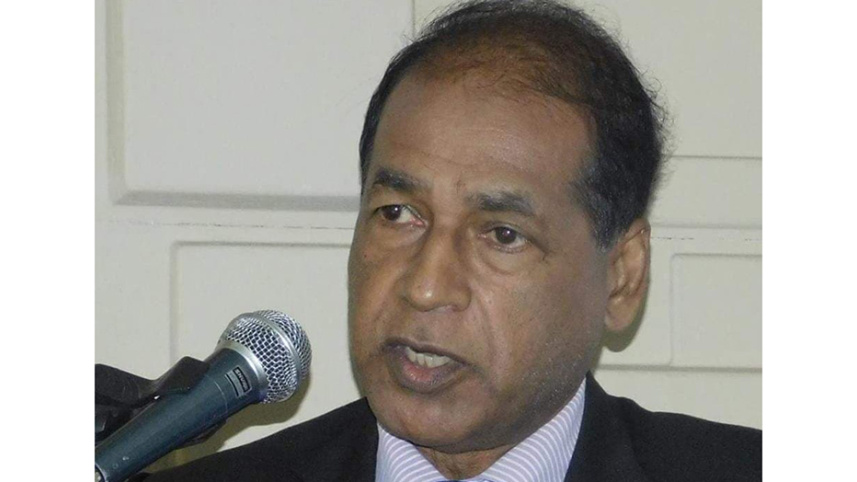
PROF MUZAHERUL HUQ:

There is a lack of skilled people in the health management system of Bangladesh -- both in the health ministry and the Directorate General of Health Service (DGHS). In many cases, skilled people cannot be a part of the management due to politics.
The health sector has rampant corruption. Among the Southeast Asian countries, the health budget in Bangladesh is the lowest where only 0.9 percent of GDP was allocated for the sector which was only 4.9 percent of the total budget for 2019-20 fiscal year.
As per the last five-year plan, which is supposed to be completed this year, the health budget is supposed to be 1.12 percent of GDP.
The health sector has failed. Despite past allocation of budget, the sector still remains heavily under-utilised.
As we see in the last five-year plan, only 24 percent has been implemented till 2019, which shows the poor performance in management and lack of management skill.
He also said the government should prioritise SDG goals and universal health coverage in next budget with focus on rural population. Besides, the government focus should be on strengthening upazila health complexes to make them functional.
Effective referral system needs to be immediately established from village to national level hospitals.
The next budget's priority should be on Covid-19 patients in rural settings at upazila health complexes with isolation unit.
Availability of oxygen supply, nasal cannula and oxygen masks be ensured with urgent procurement. There should also be an ambulance in each upazila for patients with acute respiratory and cardiac conditions.
PROF RASHID-E-MAHBUB:
The problem in our health sector is quite simple. The country's health sector has not been reformed even though the sector itself has evolved in the last five to six decades.

The health sector is now huge but its planning and monitoring remains weak. As such, concerned authorities cannot even utilise money allocated by the government.
Meanwhile, allocation to public hospitals is not adequate and as a result out-of-pocket expenditure of service seekers is increasing.
Public hospitals lack necessary manpower, equipment, medicine and most importantly accountability of their authorities. Only the few with high social standing have access to proper treatment at public hospitals. The general public, who have no alternative but to go to public hospitals, however, do not get proper health services.
Private medical services in the country was developed in an unregulated manner. Doctors from public hospitals often work at private hospitals in the evenings to increase their earnings.
But if a doctor works round the clock to make money, people will not get proper treatment even after spending a lot of money.
 For all latest news, follow The Daily Star's Google News channel.
 The problems in the health sector cannot be solved overnight. If one wants to install ICUs in all district level hospitals, you may set up equipment but you won't get skilled manpower overnight to operate those properly.
The government should prepare a five-to-ten-year plan for the health sector considering people's expectation and can make an outline from the National Health Policy 2011, which remains unutilised mostly.
Comments