


How to avoid overeating during Eid-ul-Adha
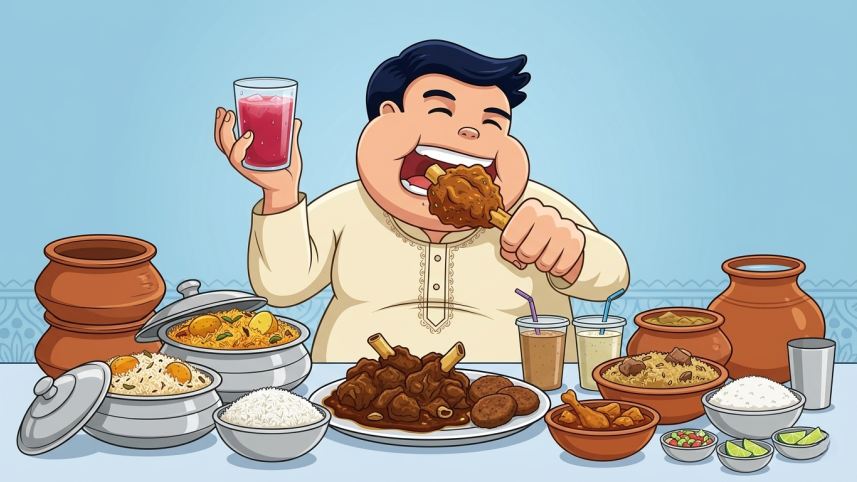
Eid-ul-Adha, the festival of kindness, togetherness, and food, might leave you lethargic and regretful if you are not eating mindfully enough. You do not have to be the person counting bites on a feast. However, there is a difference between eating with joy and eating until you can barely move. By being a little more intentional, you can enjoy the celebration without any guilt.

Don’t arrive hungry
If you skip meals and show up in the “Eid dawat” hungry, it is surely going to backfire. Have a light, protein-rich snack before heading out. A boiled egg, some yoghurt, or a handful of nuts are healthy approaches. Hence, when the aroma or perfectly spiced beef hits your nose at the dawat, you can still make wiser food choices.
Start with salad or vegetables
If you see a table full of juicy, meaty options, yet start eating a large portion of salad, your brain might go, “Why are we eating leaves like a confused goat?” But believe it or not, this strategy helps you practice mindful eating more than you can imagine, and fills you just enough to stop you from attacking food like a lion hearing the dinner bell at the zoo.
Eat slowly
When you eat quickly, which is easy to do in a festive setting, you can consume far more than you require before the signal of fullness arrives from your stomach to your brain, which leads to overeating.
Moreover, eating large amounts of food within a short while makes you swallow more air, which increases stomach pressure and pushes acid upwards, causing heartburn, or even rapid blood sugar surges and palpitations.
Use a smaller plate
It sounds simple, but studies constantly show people eat less when they use smaller dishes, yet feel equally satisfied. Smaller plates almost naturally limit portion sizes, without much willpower. Also, your brain might signal you that carrying a huge overloaded plate during Eid gatherings is very risky, because one wrong move and you have redecorated someone’s living room carpet with beef curry.
Watch the drinks and desserts
Sugary beverages and sweets add a significant number of calories to every course. If you have a sweet tooth and a little dessert does not spike your blood sugar, you do not have to entirely skip it, take minimal servings and opt for water over cold drinks after a meal.
Go for a walk
It doesn't have to be a long one; even a gentle 10 to 15-minute walk after a banquet can do more than you would expect. Walking stimulates digestion, helps your stomach empty more efficiently, and prevents that heavy, sluggish feeling that tends to set in after a big Eid feast. It also helps regulate blood sugar, which tends to spike after large, carb and meat-heavy servings.
The key is not to collapse onto the sofa the moment the plates are cleared, and you will likely arrive at the next table feeling comfortable and ready to enjoy the celebration all over again.
Escaping the bottomless plate
In Bangladeshi households, love comes in the form of “extra rice” during any occasion. We take it personally if the guests do not eat enough, according to us. But listening to your body is far more important than being polite.
You do not have to refuse right away, and may accept additional portions if you are feeling you could have a little more without upsetting your stomach. Also, try saying, “I’m still eating, let me finish this first,” to avoid disheartening your host; it has been proven to work.
In the end, if you do overeat, do not spiral into guilt. Even if you are trying to lose weight, one or two indulgent days will not derail your health. Just return to a normal eating pattern the next day and move your body a little. Eat with joy, but stop with wisdom.
 For all latest news, follow The Daily Star's Google News channel.
Comments