


Can’t read text without glasses? Welcome to your 40s

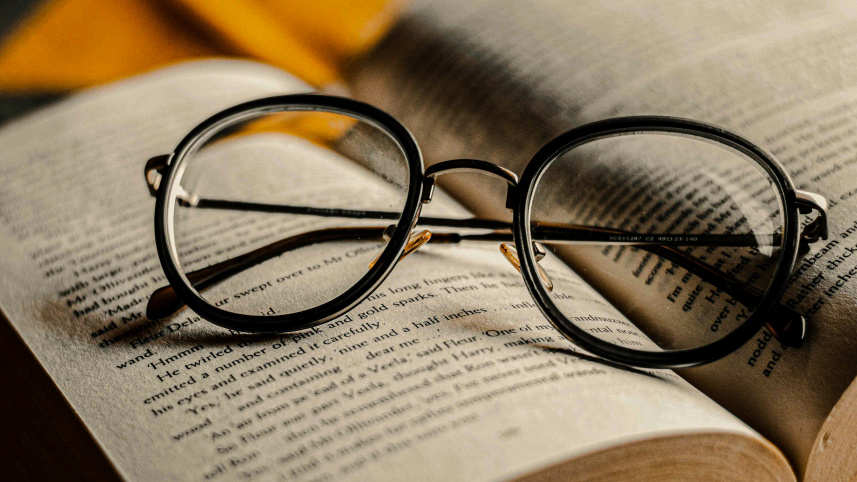
I do not feel particularly bad about getting older. Not yet! The one thing, however, that genuinely makes me sad these days is the worsening of my vision. Forties bring their own set of challenges, and one of the significant challenges that I face at this point in life is the worsening of my near vision every year after turning 40.
I can no longer read books, newspapers, menu cards, nutrition labels, and ingredient lists without my reading glasses. My optometrist prescribes higher-powered lenses after every annual eye exam to correct my worsening near vision. I expressed my worries to my optometrist, who said, “Your presbyopia (near vision loss) will continue to worsen until it stabilises around age 60.”

I looked at her in disbelief because if this is indeed true, then by the time I turn 60, the only thing I might be able to read (without glasses) would be roadside billboards, provided that I do not suffer from age-related farsightedness as well.
I cannot read in the evening like I used to. Even when two lamps are giving off light in the room, I feel as if there is not enough light for me to read. Therefore, to read after sundown, I use a rechargeable book light that I can clip to the back of a book. Earlier, book lights came with cell batteries, which had to be replaced every few weeks — rechargeable ones are so much better.
But reading in the evening is no longer as much fun as it used to be. I can no longer lie on my side and enjoy a book, because my reading glasses get in the way. Also, the reading light clipped to the book slides right and left when I try reading like that.
Cell phones have become our constant companions, but without my reading glasses, it is now nearly impossible to read anything comfortably on them. To improve legibility, I have increased the text size and reduced the transparency. Also, increasing the screen’s brightness when I am indoors helps greatly.
When I was young, I used to see my mother and aunts always carrying reading glasses in their handbags. They would take out their glasses every time they needed to read something or see something up close. It did not occur to me back then that I would have to do the same one day.
I must now carry my reading glasses outside if I am not accompanied by my husband or daughter. If one of these two people is with me, they usually read things for me. At a grocery store, I will just hand them a cup of yoghurt, a bar of chocolate, a bag of chips, or whatever else to read the nutrition label for me.
Presbyopia does not begin for everyone at the same age. As a result, my husband, who is slightly older than I, does not need reading glasses yet. But presbyopia affects virtually everyone, some earlier than others, typically starting in the early 40s.
Unfortunately, near vision loss is not preventable; it is a normal part of ageing. Therefore, it is a good idea to get an annual eye exam, so you can get your reading glasses in time.
If you are in your 40s and experiencing blurred vision while trying to read, be it a newspaper, online news, or product labels, you are most likely suffering from presbyopia. The earlier you get your reading glasses, the better, because very soon, you will experience headaches, eye fatigue, and also frustration over not being able to read letters and numbers.
The biggest health-related change and challenge that I have faced in my life so far is adapting to the near vision loss in my 40s; I can no longer imagine a life without reading glasses!
 For all latest news, follow The Daily Star's Google News channel.
Comments