


From selling chicken to selling flags: Dhaka’s World Cup flag vendors
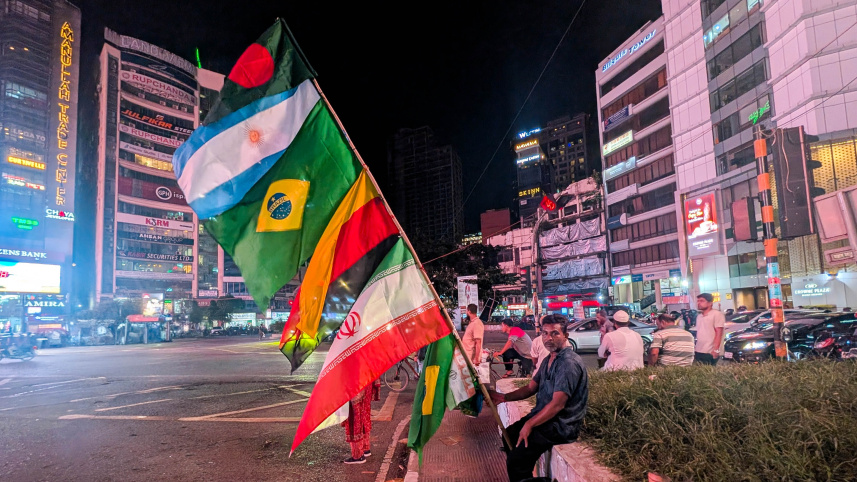
On a humid afternoon at Gulshan 2 signal, Al Amin rests, holding a bamboo pole lined with colourful flags. When the World Cup comes, his business begins. Now over 45, he drives an auto-rickshaw for most of the year, but during football season, he sells flags of different countries — Brazil, Argentina, Spain, Germany, Iran and more. At other times, like Victory Day or Independence Day, he sells the Bangladeshi flag.
“It all started in the year 1996. In the beginning, I only sold the Bangladesh flags,” he shared. “People used to salute us then. That respect is not there anymore.”

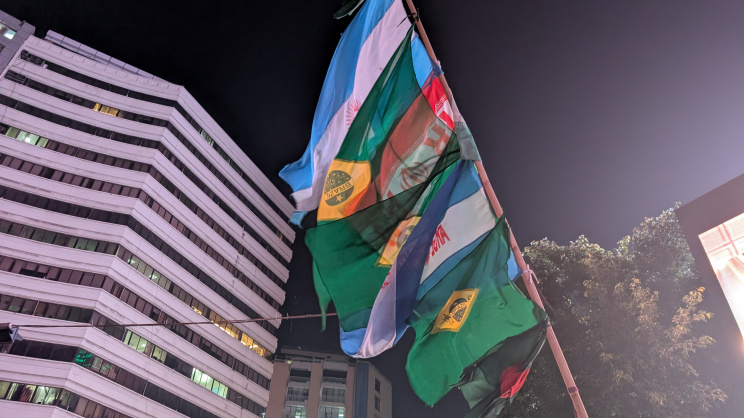
He buys his flags from places like Sadarghat and Keraniganj, wherever he finds them cheap. Prices start from Tk 100 and can go up to Tk 450. The Iranian flags are the most expensive. “The quality is better as it is Chinese fabric,” he explains. “The others are mostly made with local materials”.
When it comes to sales, two countries lead the market. “Brazil and Argentina both sell equally well,” he shares.
He walks across Gulshan, stopping at signals as people buy flags on the go.
Evening brings the most customers, as office-goers return home. He has worked in Shahbagh and Mohakhali before, but now Gulshan 1 to Gulshan 2 is his regular spot.
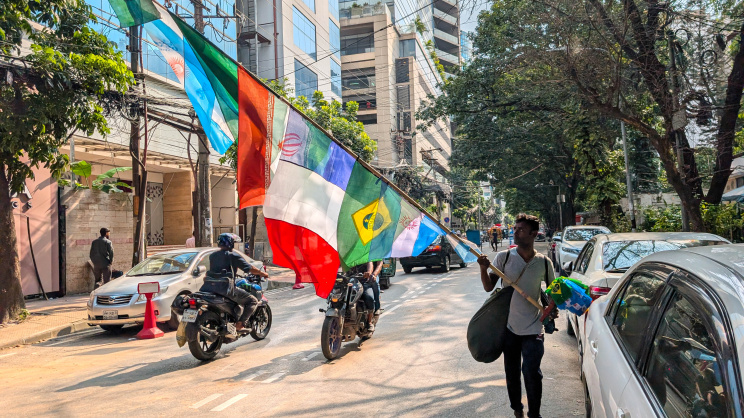
Another flag seller, Shamim, shares a similar story. He usually sells chicken at Kaptan Bazar, but during special occasions, he sells flags as well.
“Sales started after Eid and quickly grew,” he says. But he knows it won’t last long. Demand will end in a few days.
When asked which flag he likes most besides Bangladesh, he smiles. “I support Argentina, so it’s the most beautiful.”
His prices are simple. Small flags sell for Tk 150, and the biggest ones go up to Tk 400. Small hand flags with sticks cost only Tk 10.
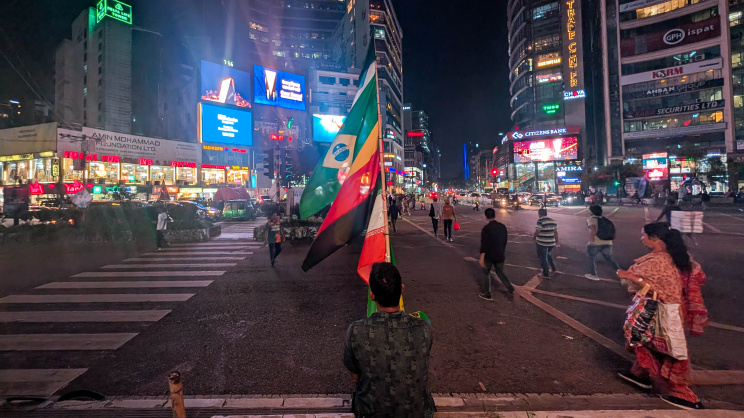
For both Al Amin and Shamim, the work is temporary, but it matters. During the World Cup, Dhaka’s streets fill with flags from around the world. Buildings hang giant flags, shops decorate their fronts, and for a few weeks, the city feels more alive, full of colour and excitement.
Then again, it slowly goes back to normal. The flags come down. The excitement settles. But for these sellers, the cycle continues. They move from one occasion to another, finding ways to earn.
As evening falls in Gulshan and the traffic grows heavier, Al Amin stands up again. He picks up his bamboo pole and steps closer to the road.
The flags he carries may belong to other countries, but the story behind them, of work, waiting, and survival, belongs entirely to Dhaka.
 For all latest news, follow The Daily Star's Google News channel.
Comments