


First step towards Café exhibitions in Dhaka
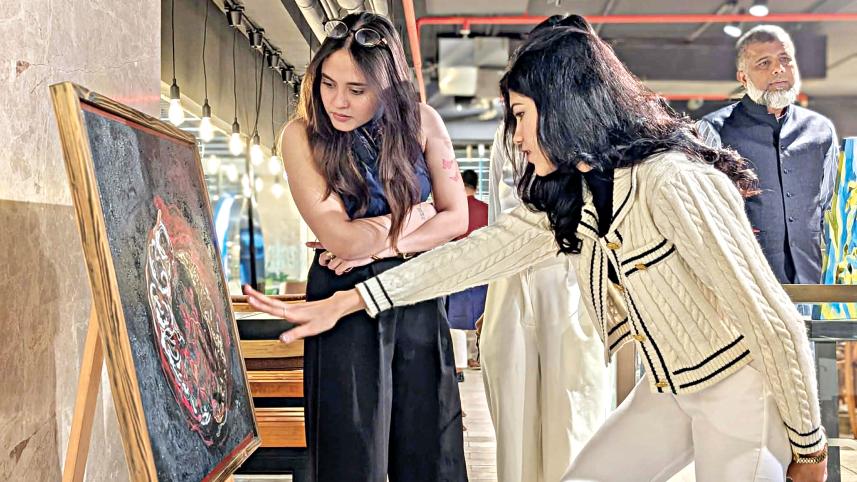
The possibility of an art exhibition taking place in a popular coffee shop can be as exhilarating as the smell of freshly brewed coffee. The warmth of the coffee diffusing through the air adds an extra dimension to the exhibition itself.
And so, Arabica Coffee Shop at Anabil Tower on Kemal Ataturk Avenue hosted an exclusive exhibition called Beans & Brushes. The show featured paintings by one of Dhaka's most talented artist couples, Fareha Zeba and Saidul Haque Juise.

The private opening celebrated art, culture, and creativity, aiming to support and nurture Dhaka's creative communities. The artists transported their own stories, emotions, and experiences to the café walls, giving their work a new and meaningful platform while also adding character to the cosy coffee shop.
"The exhibition aimed not only to highlight their artistic talent but also to provide visibility and recognition in a space that is not a gallery but a lively coffee place, where art could reach new audiences, spark conversations, and find its way into new homes," says Maliha Hossain, founder and CEO of Arabica Coffee.
Artist Saidul Haque Juise adds, "The Arabica Coffee Shop is run by one of our students, and her idea to combine coffee with art had been brewing for a long time. In many places around the world, coffee shops also serve as art galleries, and this has become quite popular. So why not here? Coffee culture is spreading rapidly in Dhaka, and art in coffee shops should spread along with it."
The goal was simple: visitors could enjoy their coffee while also engaging with art, looking at it, and perhaps feeling a connection.
"Maliha spoke to us about this idea repeatedly, asking whether it could be possible. Eventually, we agreed to try it out and see how people responded. The response was encouraging. Many of the people who come here do not usually go elsewhere to see art. Dhaka has become divided in many ways, and people often remain within their own areas," Juise explains further.

The duo has taken the first bold step to bring their art out of galleries to popular cafes. This should encourage fellow artists to explore the possibility of transforming happening spaces into art galleries.
Coffee shops in Dhaka are already vibrant social spaces, drawing young people after work, on weekends, and even during late-night strolls. This culture can be a natural catalyst when paired with an exhibition. It allows young people to engage with art in a casual, familiar setting. Since many cafés are located close to residential areas -- often within walking distance -- the more this idea spreads, the greater its impact on art appreciation.
"Arabica Coffee has created a small vortex here, though only a few paintings can be displayed. Still, it is a beginning. The response has been strong. Visitors are looking carefully, trying to understand the paintings, and trying to connect with them. Although we could not arrange too many works, whatever was possible is being shared with the people who come to the coffee shop," says Fareha Zeba, adding that the paintings will be displayed throughout the month.
"I feel excited, as a teacher who has been moulding school children to practise art, culture, and creative work for the last 25 years, to see how this idea will pan out in introducing a new generation to fine arts exhibitions in everyday spaces. This accessibility to appreciating art in their favourite haunts is precisely why the community is embracing the effort with enthusiasm," Juise concludes.
 For all latest news, follow The Daily Star's Google News channel.
Comments