


Maize farming on Teesta shoals brings joy to monga-hit people in Nilphamari, Lalmonirhat
37,000 hectares to produce 2, 60,000 tonnes this year
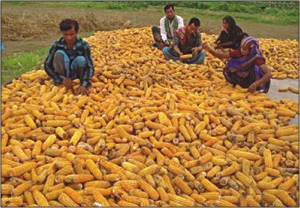
Farmers sorting out maize that has grown abundantly in once unproductive sandy lands on in Teesta shoal.Photo: STAR
Once quiet and lifeless Teesta shoals are now buzzing with activities. Introduction of maize cultivation by Agriculture Extension Department (AED) under its crop diversification programme ahs changed the socio-economic scenario on several thousand hectares of land on Teesta shoals in Nilphamari and Lalmonirhat districts. Five years ago, AED tested the soil in shoal areas that had been left barren and unproductive for decades and found the soil suitable for this crop. Next, year maize was cultivated on an experimental basis which achieved an unexpected success. From then maize is being cultivated there and increasing tremendously. Last year, maize was cultivated on about 23,270 hectares of land in Nilphamari and Lalmonirhat districts. But this year maize was cultivated on 37,000 hectares of land to produce 2,59,000 tonnes of maize. Now thousands of landless farmers in Teesta shoals including Char Kharibari, Purbo Kharibari, Fakrater Char, Vendabari, Jharsingheswar, Gopaljhaar, Bhasanir Char, Tapur Char Baishpukur and others areas of Nilphamari district. The Teesta shoals in Lalmonirhat district where maize is being cultivated are Saniajan, Bhotmari, kishorganj Char, Dauabari Char, Holdibari Char, Dhubuni Char, Sindurnar Char, Guddimari Char and others. People are vibrant with hopes that monga (a pre-harvest lean period between September and late November when there is no farm work) will not affect them this year. The maize cultivation has created job opportunity for a number of unemployed people in the region. “We are hopeful that we can go a long way to combat monga with maize cultivation,'' said Eunus Ali, the deputy director of AED, Nilphamari. Sandy and sand-alluvial soil in the Teesta shoals is very suitable for maize cultivation, he said, adding that several thousand women and men have been provided short training under AED's North West Crops Diversification Project (NCDP) to cultivate maize and other crops. AED sources said the Asian Development Bank (ADB) provided fund for giving loans to farmers in Rajshahi region under NCDP's Rajshahi Division zone. A few NGOs are cooperating in this project while some commercial banks are providing soft loans to poor farmers in the shoals of Teesta. AED block supervisors of and some NGO workers are providing technical support. The shoal lands where silt is deposited during yearly floods, are suitable for maize cultivation, Lalmonirhat AED Deputy Director Md Abtabuddin said. However, it is very difficult to grow other crops in the sandy and barren shoals, he added. Farmer Motaleb of Char Purbo Kharibari said about 500 acres of land in his shoal was covered with to 2-3 feet layer of sand due to flooding of the area after a Water Development Board embankment burst in 2000. One thousand families became virtually beggars and there was none to buy the sand-covered lands even at Tk 200 per decimal, he said. Motaleb got a new life when maize cultivation began in this shoal last year. "This sandy land is my asset,'' he said. “I cultivated hybrid maize on two acres of land and got 140 maunds worth Tk 56,000. Presently a maund (around 40 kg) of maize is selling at an average rate of Tk 400. But last year it was Tk 500. Despite the lower price, maize brought us profit as production is higher,” Farmer Hatem Ali of Char Saniajan said. Maize farmers Yunus Ali, Abul Hasem, Zulhas, Wasuddin and other farmers of the char areas also echoed the same. Abdul Latif, chairman of Purbo Chhanai union in Dimla upazila, an area worst affected by monga said maize has changed the socio-economic condition of his area. “People who would queue for relief in front of the union parishad office earlier are not seen now,” he said.
 For all latest news, follow The Daily Star's Google News channel.
Comments