


Country not in danger due to US trade deal
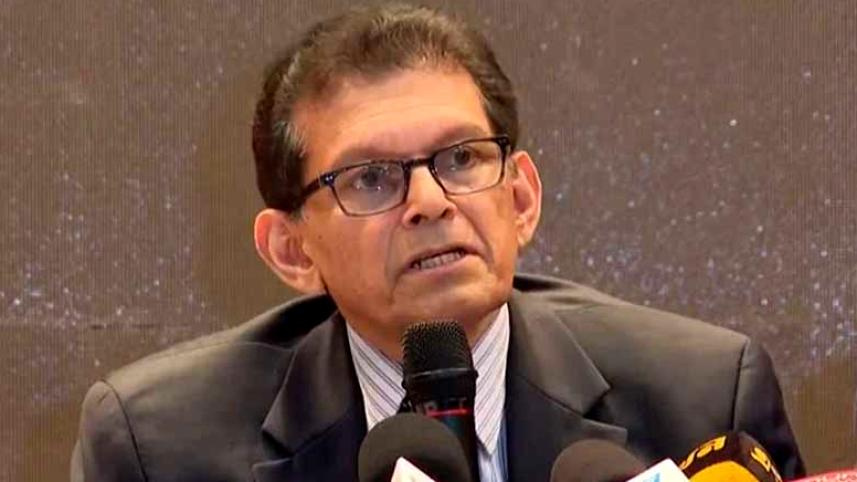
Foreign Minister Khalilur Rahman has backed the reciprocal trade agreement signed by the interim government with the US on February 9 and said that the major political parties, BNP and Jamaat-e-Islami, gave consent to the deal.
“We have not put Bangladesh in any danger by signing the deal. It is not at all in conflict with the ‘Bangladesh First’ policy,” he told journalists after a meeting with US Assistant Secretary of State for South and Central Asian Affairs S Paul Kapur at the foreign ministry yesterday.

Kapur arrived in Dhaka on Tuesday night for a two-day visit on the second leg of his Asia tour.
Yesterday, he met Khalilur; State Minister for Foreign Affairs Shama Obaed; Minister for Power, Energy and Mineral Resources Iqbal Hasan Mahmud Tuku, and Commerce Minister Khandaker Abdul Muktadir at the Secretariat.
Today, he is scheduled to meet representatives of political parties, including the BNP, Jamaat-e-Islami, and the National Citizen Party.
The foreign minister, during the meeting with Kapur, said it will be difficult for countries like Bangladesh to bear the economic cost if the Middle East war is prolonged.
Khalilur, who was the national security adviser to the interim government, requested that the US make diplomatic efforts to resolve the conflict at the earliest.
At the meeting, Kapur underscored the importance of implementing the provisions of the agreement on Reciprocal Trade to foster greater bilateral trade and investment, while Khalilur reiterated the government’s commitment to policy continuity, particularly in the economic domain.
THE DEAL
During a post-meeting press briefing, Khalilur was asked if the interim government was under pressure to sign the deal since it was sealed just three days before the election and includes provisions restricting trade deals or purchases from non-market economies, which could mean China.
He responded in the negative and said the deal needs to be analysed in comparison with those signed by other countries like India, Cambodia, Indonesia and Vietnam with the US.
“We are in a better position if you analyse the language of the deals…. Bangladesh committed to purchasing $22 billion worth of goods over 15 years from the US. Compared to a country like India, which received an 18 percent tariff and committed $500 billion in purchases over five years, Bangladesh’s 19 percent tariff is favourable.
“Could you sustain a 37 percent tariff if we did not sign the deal? Compare what we have gained and what others got.”
Khalilur added that the deal was not “suddenly finalised” and that the interim government first began talking to the US in February 2025.
“Initially, Bangladesh received a 20 percent tariff, but Dhaka requested zero reciprocal tariffs on garments made with American cotton or man-made fibre, while the US sought more time to finalise the Rules of Origin.
“The US Trade Representative also spoke with the two major political parties, who gave their consent before the election…. We did not sign the deal in the darkness.”
The foreign minister said the agreement has both “entry” and “exit” clauses and that it does not become effective until notification. “We can exit with a 60-day notice. Therefore, we have not put Bangladesh in any danger.”
He said that regarding border measures, Bangladesh has stated that any measures taken will be in accordance with Bangladeshi law.
Kapur, however, was assured that Bangladesh will continue implementation of the agreement.
After the US Supreme Court cancelled the tariffs on different countries imposed by US President Donald Trump, he announced a 15 percent global tariff on February 21, which is also applicable to Bangladesh. Khalilur requested Kapur to lower the tariff from 19 percent.
 For all latest news, follow The Daily Star's Google News channel.
 At the meeting, the two sides also discussed the process of returning irregular Bangladeshis living in the US with dignity and ease.
A diplomatic source said the US wants to repatriate over 4,000 irregular Bangladeshis quickly. Over the last year, about 400 were repatriated.
Kapur expressed satisfaction over the current bilateral relations and hoped they would become stronger and more expansive in the coming days.
He also conveyed his greetings to Prime Minister Tarique Rahman on his victory in the polls and expressed satisfaction with the festive atmosphere of the election.
Comments