


Political system will be renewed for inclusive polls

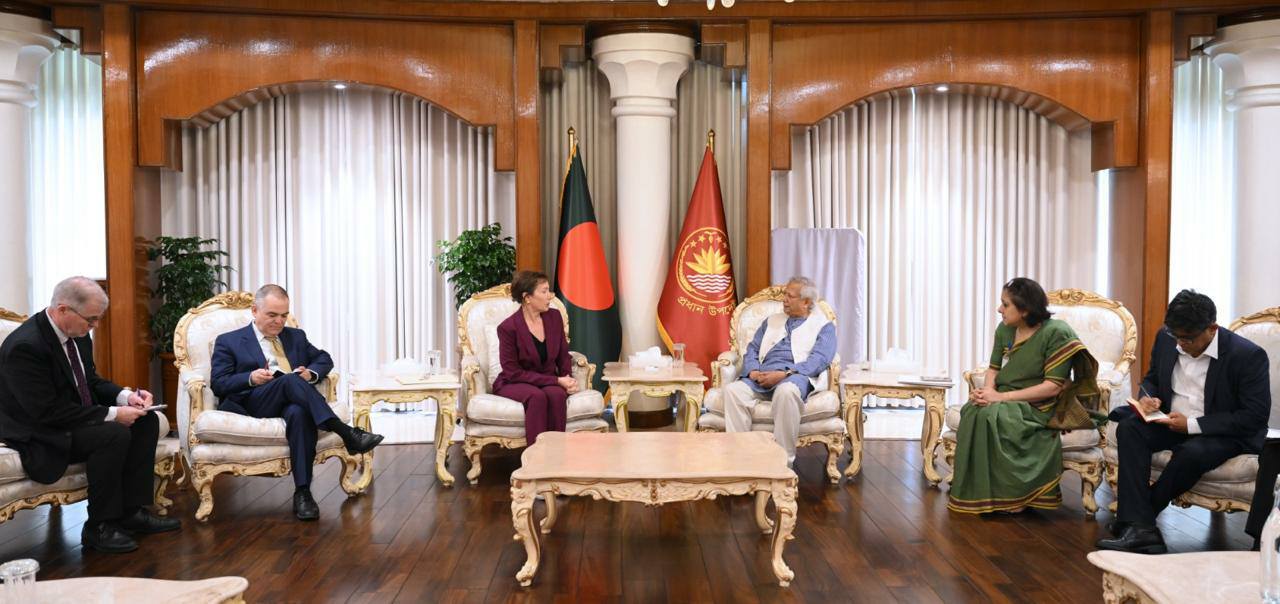
Chief Adviser Prof Muhammad Yunus yesterday said the government is working to build a broad national consensus around a renewed political system that will deliver inclusive, participatory, and credible elections.
"The goal is clear: to establish a society where all Bangladeshis can live in peace, with pride, with freedom, and with dignity," he said at the "July Commemoration Event: Implementation of UN Fact-Finding Mission's Report Recommendation" at the InterContinental Hotel in the capital.
 For all latest news, follow The Daily Star's Google News channel.
 The event was organised by the United Nations Human Rights Mission, marking one year since the July uprising.
"Our work is far from finished. Alongside our reform agenda, we are pursuing legal accountability for those responsible for gross violations.
"But justice is not only about punishment," he added. "Justice is also about ensuring that state power can never again be used to suppress, silence, or destroy its own people."
Yunus said reforms are not just about surface-level changes, but about deep, transformative shifts.
"Without such changes, chances remain for tyranny to return. Maybe in a different form, but it will return. No matter how many laws we enforce or how many reforms we attempt, the change we need must go far deeper."
About the UN Fact-Finding Mission's recommendations, the chief adviser said, "We have taken these recommendations to heart not out of obligation to others, but out of responsibility to ourselves."
The United Nations Office of the High Commissioner for Human Rights (OHCHR) conducted the fact-finding mission to investigate allegations of human rights abuses between July 1 and August 15, 2024, on the invitation of the interim government.
The OHCHR report, released in February 2025, revealed the staggering scale of the atrocities: an estimated 1,400 lives lost in just a few weeks.
"The report described the violence as systematic, directed, and coordinated from the highest levels of the previous regime. It raised urgent concerns about potential crimes against humanity," Yunus said.
"We believed that an impartial and credible account of the truth was essential -- not for justice alone, but also for healing."
He said the government has begun implementing wide-ranging reforms, including amending the Code of Criminal Procedure and acceding to the International Convention for the Protection of All Persons from Enforced Disappearance.
Earlier this month, the government signed a Memorandum of Understanding with the OHCHR to establish a facilitating mission in Dhaka.
The mission will provide technical support for reform initiatives, as well as capacity-building for government institutions, local authorities, and civil society actors working to safeguard human rights.
Yunus remembered those who gave their lives in pursuit of that vision. "Their sacrifice paved the way for a new chapter in the country's history. They created a new Bangladesh, one that is rooted in hope, human rights, and democratic renewal."
He thanked the United Nations for standing with Bangladesh. "The UN has been a vital partner in the country's transition… I look forward to [our] continued partnership as we move forward."
He also expressed his gratitude to UN Secretary-General António Guterres for his unwavering support.
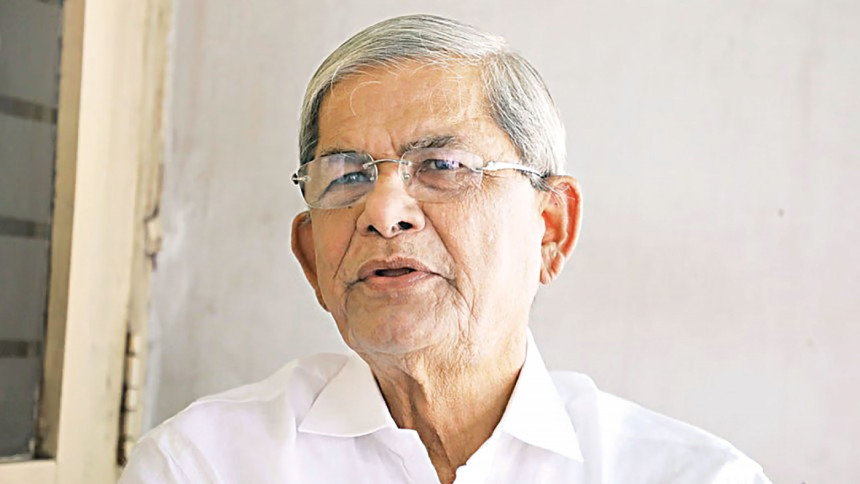
Speaking at the programme, BNP Secretary General Mirza Fakhrul Islam Alamgir said his party wants the prompt trial of those responsible for the killings during the uprising as well as the quick implementation of the much-needed reforms in the country.
He, however, said it is important to remember that the country needs a government that truly represents the people. "Because there is a difference between working with a public mandate and working without it."
Fakhrul expressed hope that the chief adviser will fulfill his commitment of holding a free and fair election. "Through this election, a representative government and parliament of the people will be established."
He added, "Many of our problems come from the fact that national institutions were weakened or broken by the Awami fascists. These institutions need to be rebuilt. This is not an easy task. It will take time and will be difficult. We must be patient."
The BNP leader mentioned that one of the biggest challenges the country now faces is the lack of tolerance among people. "We must overcome this. We need to be more patient. Surely, if we have managed to face so many challenges in the past, we can overcome this too."
After so much bloodshed and sacrifice, Fakhrul said, the people of Bangladesh must now come together to build a democratic nation.
"I want to put special emphasis on the word 'democratic'. I truly believe that democracy, as a system, has the ability to gradually solve our problems. Of course, the solutions will not come overnight. There won't be any sudden miracle. But I strongly believe that real change will come through a democratic process."
He also said political parties have already reached consensus on 12 core issues, and that the remaining issues can be solved by the next elected government through political will and commitment.
Meanwhile, Jamaat Ameer Dr Shafiqur Rahman said he does not see any visible progress in the trial of the heinous crimes committed by the Awami League regime.
"Please do whatever is needed for justice," he said, adding that it has to be done without flaws.
He called for preparing a full list of those martyred during the July uprising and their recognition.
Shafiqur said conducting an election without holding trials for the July perpetrators will result in a "disaster". He also called for an impartial judiciary.
Comments