


‘Freedom fighters gave us a map, a dignified flag’
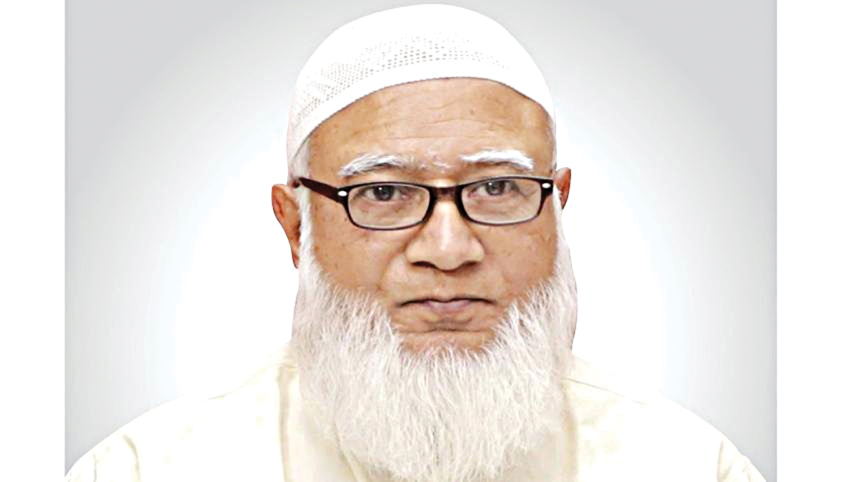
Despite the sacrifices made in the 1971 Liberation War, Bangladesh has only changed outwardly but not from within, opposition leader and Jamaat-e-Islami Ameer Shafiqur Rahman said yesterday.
Expressing “deep gratitude from the innermost depths of the heart” to the freedom fighters, he said they had given the nation “an independent map and a dignified flag”.
 For all latest news, follow The Daily Star's Google News channel.
 “With this flag and map in hand, Bangladesh was supposed to change. But in reality, only external change has happened; the inner change has not,” he said as the chief guest at a discussion marking Independence Day. It was organised by Dhaka South Jamaat at the National Press Club in the capital.
Shafiqur extended greetings on Independence and National Day to Bangladeshis at home and abroad and paid tribute to those who fought and died in the Liberation War.
“An independent nation does not always fully realise the value of freedom, but a subjugated one does. The people of this land had remained bound in the chains of subjugation for nearly 190 years and had therefore understood the true meaning of independence,” he said.
Shafiqur added that people had once been assured that, in the name of Pakistan, there would be no discrimination in this land, justice would be established, and people would live with dignity as citizens of an independent country. “But that goal was not achieved. Instead, it was violated at every step. As a result, the Liberation War of 1971 became inevitable.”
Referring to the pre-1971 election, the opposition leader said it had been held under military rule, when the constitution was suspended and the process was conducted under military orders.
“But the Pakistani ruling group and the military failed to respect the people’s verdict…. Ignoring that verdict, they tried to suppress the aspirations of countless people with bullets. They killed people indiscriminately. They violated people’s honour. They destroyed property. They turned the country into a scorched land.”
He added that even after 54 years of independence, the people have not received the outcomes they were meant to achieve.
Drawing a comparison with Japan after the Second World War, he said the country had turned around within a short time and amazed the world through industrial development.
“Today, they are established as a developed and dignified nation. Why could we not do it? The main reasons are the failure of leadership, greed, short-sightedness, and limitless corruption.”
The Jamaat ameer also said corruption is not limited to the embezzlement of money. “Depriving people of their rights, placing unqualified people in positions requiring merit, and devaluing the qualified are also major [forms of] corruption.”
“Unless the poisonous effects of corruption are eliminated from society, it will not be possible to enjoy the true benefits of independence.”
Chief discussant Colonel Oli Ahmed Bir Bikram, president of the Liberal Democratic Party (part of the Jamaat-led 11-party alliance), said the first reason he “rebelled” in 1971 as a young captain was discrimination, and the second was the absence of good governance.
He said that despite more than 50 years having passed, politicisation had not stopped except for a brief period. “Except during [late] president Zia’s time, politicisation has never stopped. We have not been able to ensure good governance. We have not been able to make appointments on the basis of merit.”
Speaking as a special guest, Jamaat Secretary General Mia Golam Parwar said that when a ruling group suppresses people’s rights, equality, and aspirations for an independent life, it leads to a mass uprising.
“Looking at the history of our independence or Liberation War, it seems that we won this country’s independence within nine months. But is the history of our struggle for independence really limited to these nine months? No.”
Also speaking as a special guest, Jamaat Assistant Secretary General and MP Maulana Rafiqul Islam Khan said, “This beloved Bangladesh was achieved in exchange for the blood of lakhs of martyrs. But the goal for which Bangladesh was made independent…. that goal has still not been achieved.”
The meeting was conducted by Jamaat Dhaka Metropolitan South Secretary and MP Shafiqul Islam Masud. Other central and metropolitan leaders of the party also spoke.


Comments