


Haor harvest stifled by rain, labour shortfall


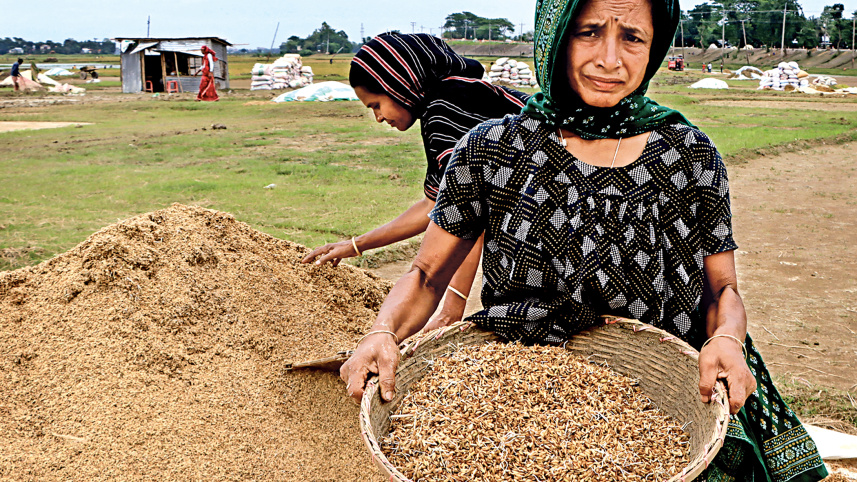
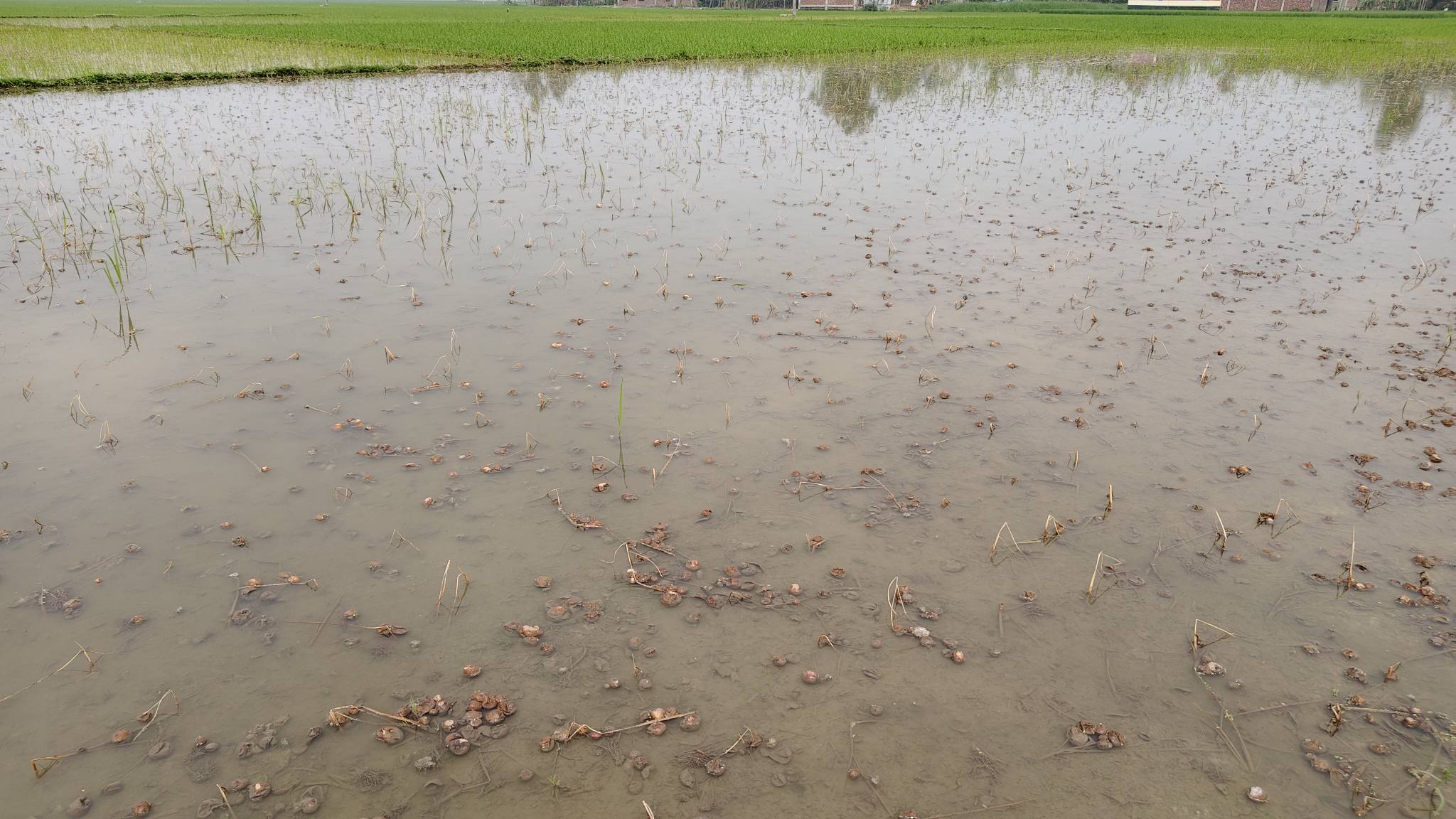
Continuous rainfall over the past week has triggered a severe labour shortage in the haor region, compounding the challenges for farmers already racing against time to harvest their Boro crops.

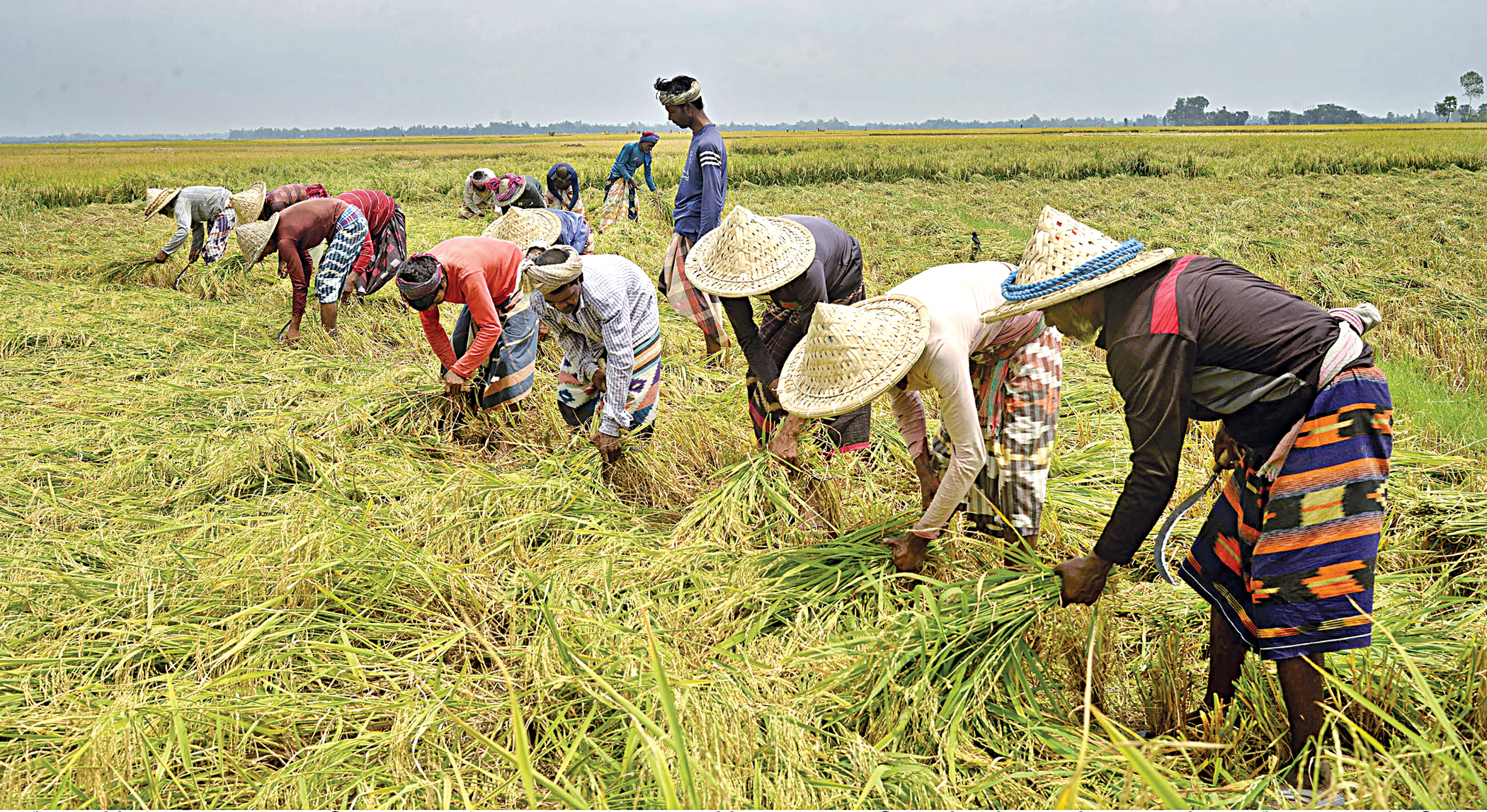
Even after offering daily wages as high as Tk 2,000, farmers said they are struggling to find workers amid worsening waterlogging, torrential rains, and deadly lightning strikes.
Boro accounts for nearly 55 percent of Bangladesh’s annual rice output, with the season running from December to April.
In seven haor districts, Boro has been cultivated on 4.55 lakh hectares of land. Harvesting has so far been completed on 3.24 lakh hectares, or 71.26 percent, according to Md Jamal Uddin, additional director for monitoring and implementation at the Department of Agricultural Extension’s (DAE) Field Services Wing.
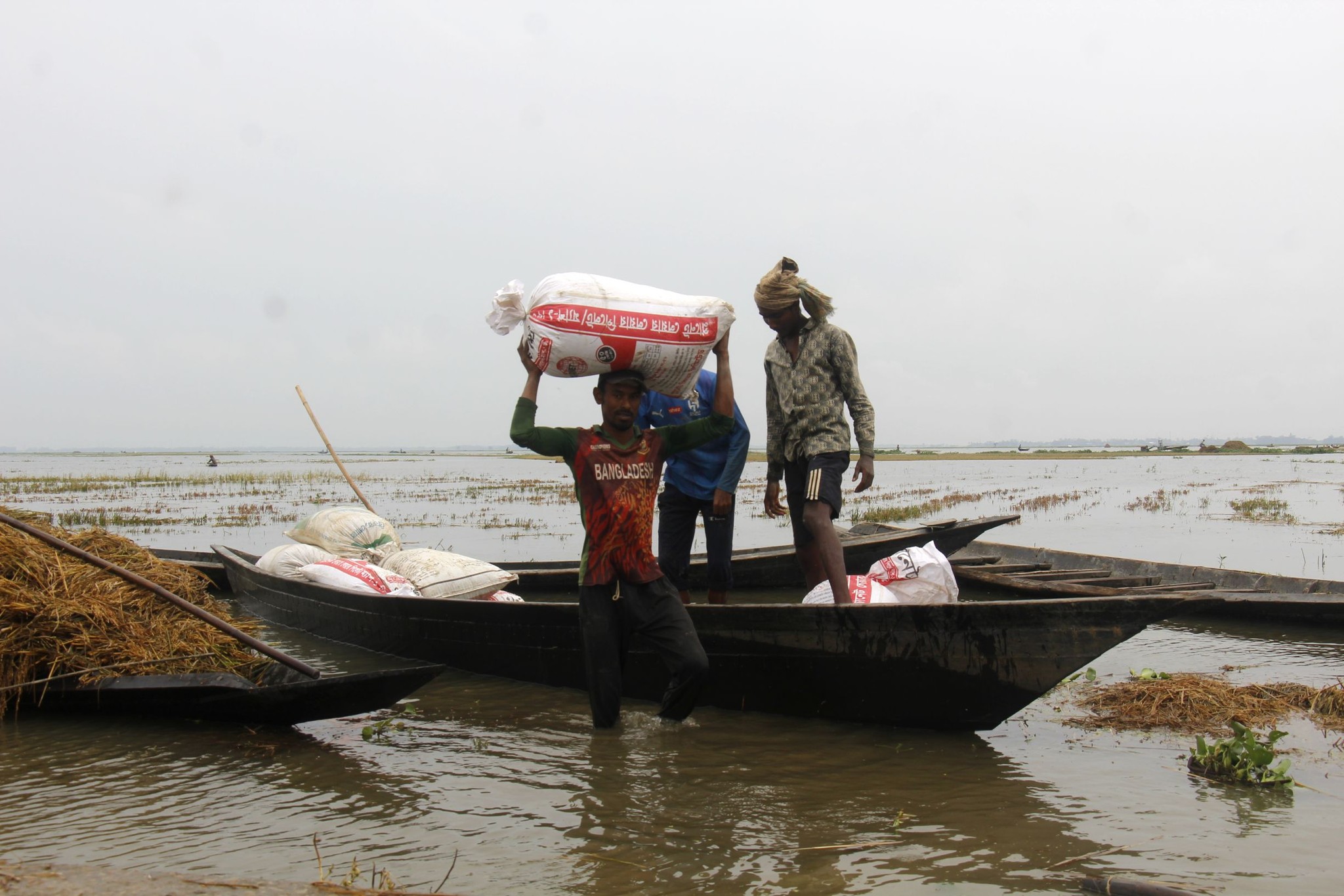
He said heavy rainfall between April 26 and May 2 submerged 46,730 hectares of Boro fields, 10.27 percent of the total haor land. To give a complete picture, it will take three to four more days after the water recedes.
On Saturday afternoon at Karimganj’s Boro Haor in Sylhet, farmer Saidur Rahman was seen harvesting paddy with a sickle while standing in knee-deep water, assisted by his sons, a ninth-grade student and another from class 12.
His 10-year-old girl was carrying the bundles of paddy to a dinghy.
Before the rainfall, labourers were available for Tk 800 to Tk 1,000 per day, but now even Tk 1,500 to Tk 2,000 is not enough, Saidur said.
“For paddy selling at Tk 700 per maund [37.3242kg], what remains for the farmer if Tk 2,000 must be paid for a day’s labour? That is why I am harvesting with my entire family,” he added.
In Baratia Haor, Abdul Qadir echoed the crisis, harvesting with six family members.
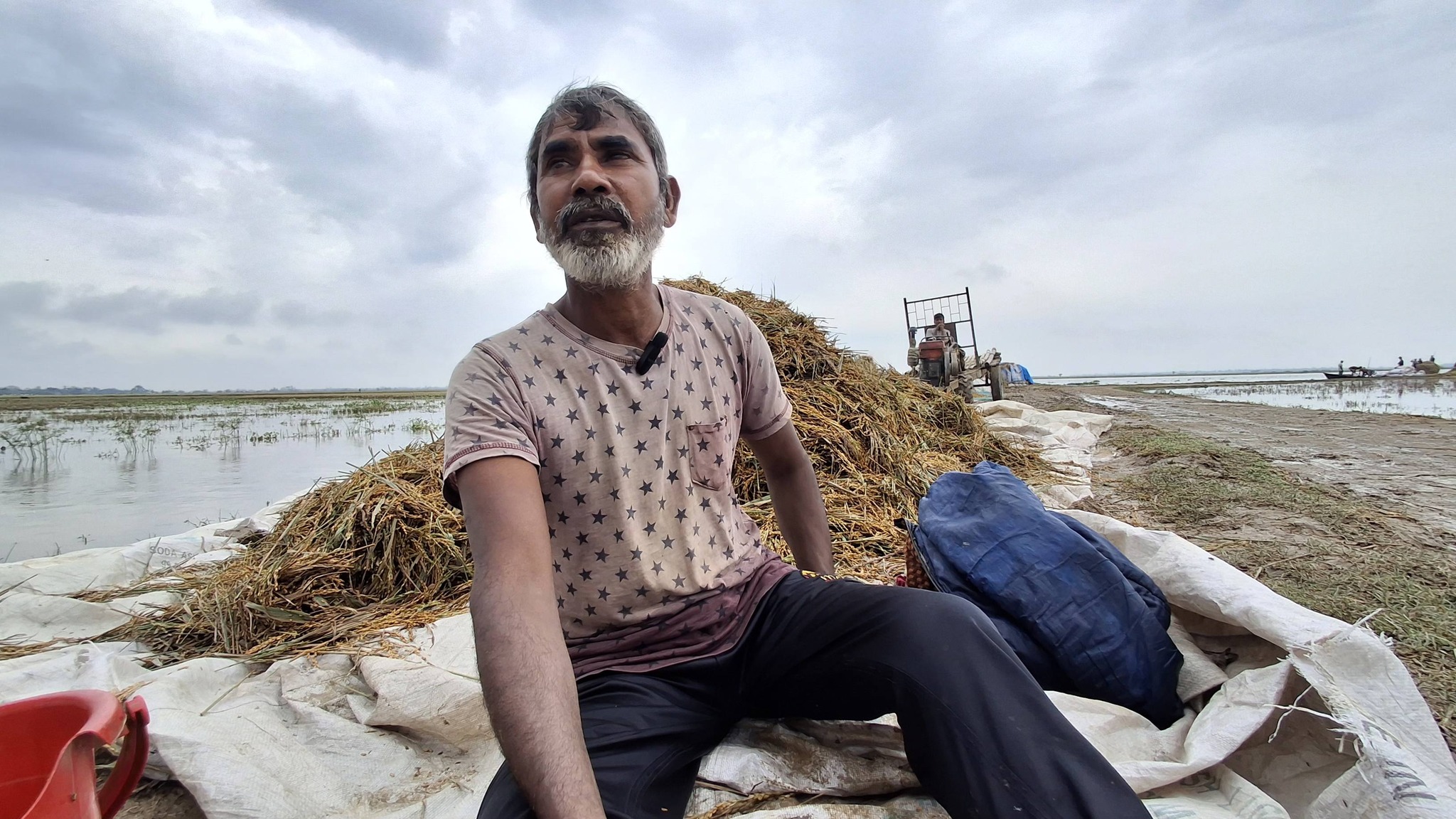
He said combine harvester owners are delaying service, worsening the situation.
The owners also nearly tripled harvester rent. “In less affected areas, the cost would be Tk 6,000 to Tk 7,000 per acre. But here it is Tk 20,000 to Tk 25,000 now. Farmers are the most neglected,” Abdul said.
“How can farmers survive if they have to sell paddy at Tk 600 to Tk 700 per maund? It feels like no one is addressing this situation. Farmers seem like the most neglected,” he added.
Farmers also reported difficulties drying harvested paddy due to waterlogged fields, while harvester wheels are getting stuck in mud, slowing operations.
In Kishoreganj, district DAE data showed 9,045 hectares of paddy land have been submerged, affecting around 32,000 farmers.
Its Deputy Director Md Sadiqur Rahman said 367 combine harvesters have been allocated for the haor, though demand far exceeds supply.
Farmer Farid Mia of Sadar upazila said, “Even with money, we can’t find labourers, and machines can’t enter the water.”
 For all latest news, follow The Daily Star's Google News channel.
 “The paddy is ready, but we cannot harvest it. I have agreed to pay Tk 1,600 per katha, whereas last year it was only Tk 500. I am trying with five workers, but nearly five acres of my land are already submerged.”
Shamim Mia of Holavanga Beel in Barhatta said, “Workers demand Tk 2,000 per katha. Even if we sell all our crops, we can’t cover that cost.”
Labourers themselves are working under life-threatening conditions.
In Kalian Beel of Kendua in Netrokona, worker Babul Mia said, “Even a slightly cloudy sky scares us. Lightning strikes are frequent. A few days ago, a worker died in Khaliajuri. Everyone says we charge more, but they don’t see the risks.”
In Habiganj’s Ajmiriganj, Sujan Mia said, “There is always some risk during this season, but this time it is more severe. Many workers are afraid to go to the haor due to lightning.”
This year, the labour shortage has worsened not only due to adverse weather at the start of the season but also because rising living costs have reduced workers’ availability and willingness to take up farm work.
According to the Bangladesh Bureau of Statistics, inflation has outpaced wage growth for 50 consecutive months up to March. Wage growth stood at 8.09 percent in March, 0.62 percentage points below inflation of 8.71 percent. In February, the gap was even wider at 1.05 percentage points.
Agricultural economist Jahangir Alam Khan noted that every year groups of agricultural workers from Rangpur and Kurigram travel to the haor regions to harvest paddy. This year, however, their numbers have declined.
One major reason, he explained, is that harvesting has already begun not only in the haor areas but also across the plains, reducing the pool of available labour for haor farmers.
He added that the situation has been aggravated by the lack of proper government planning and management regarding the use of combine harvesters.
“The government must take swift and effective action by ensuring better coordination, timely deployment of machinery, and adequate support for farmers,” Jahangir said.
Md Mosharraf Hossain, additional director of DAE in Sylhet division, warned that if the weather persists, submerged paddy will be completely damaged. “Moreover, paddy in the threshing floor was also damaged by rain, and we are calculating the loss too,” he said.
According to Sylhet Divisional DAE data, harvesting has been completed on 75 percent of haor areas and 33 percent of non-haor areas, with an overall average of 57 percent. Damage has been reported on 33,913 hectares so far.
[Our correspondents Mintu Deshwara and Dwoha Chowdhury contributed to this report]
Comments