


Judiciary, NHRC reforms rolled back
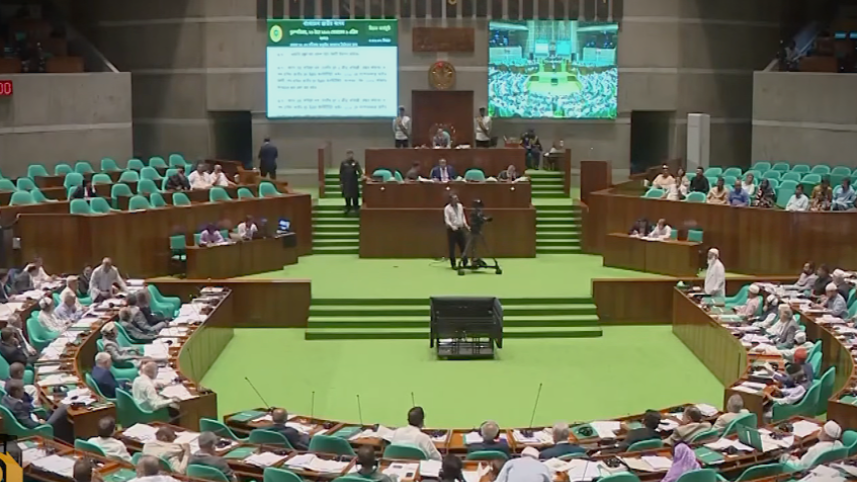
Amid strong opposition, the Jatiya Sangsad yesterday repealed three Supreme Court ordinances and one on the National Human Rights Commission, delivering a major blow to judicial independence and the rights watchdog.
The ordinances related to the judiciary were the Supreme Court Judges Appointment Ordinance, 2025, the Supreme Court Secretariat Ordinance, 2025 and its 2026 amendment, all enacted during the interim government to buffer the courts from the influence of the state’s executive organs.

The National Human Rights Commission Ordinance 2025, which had given the body expansive autonomy, was repealed, while the 2009 NHRC Act was reinstated.
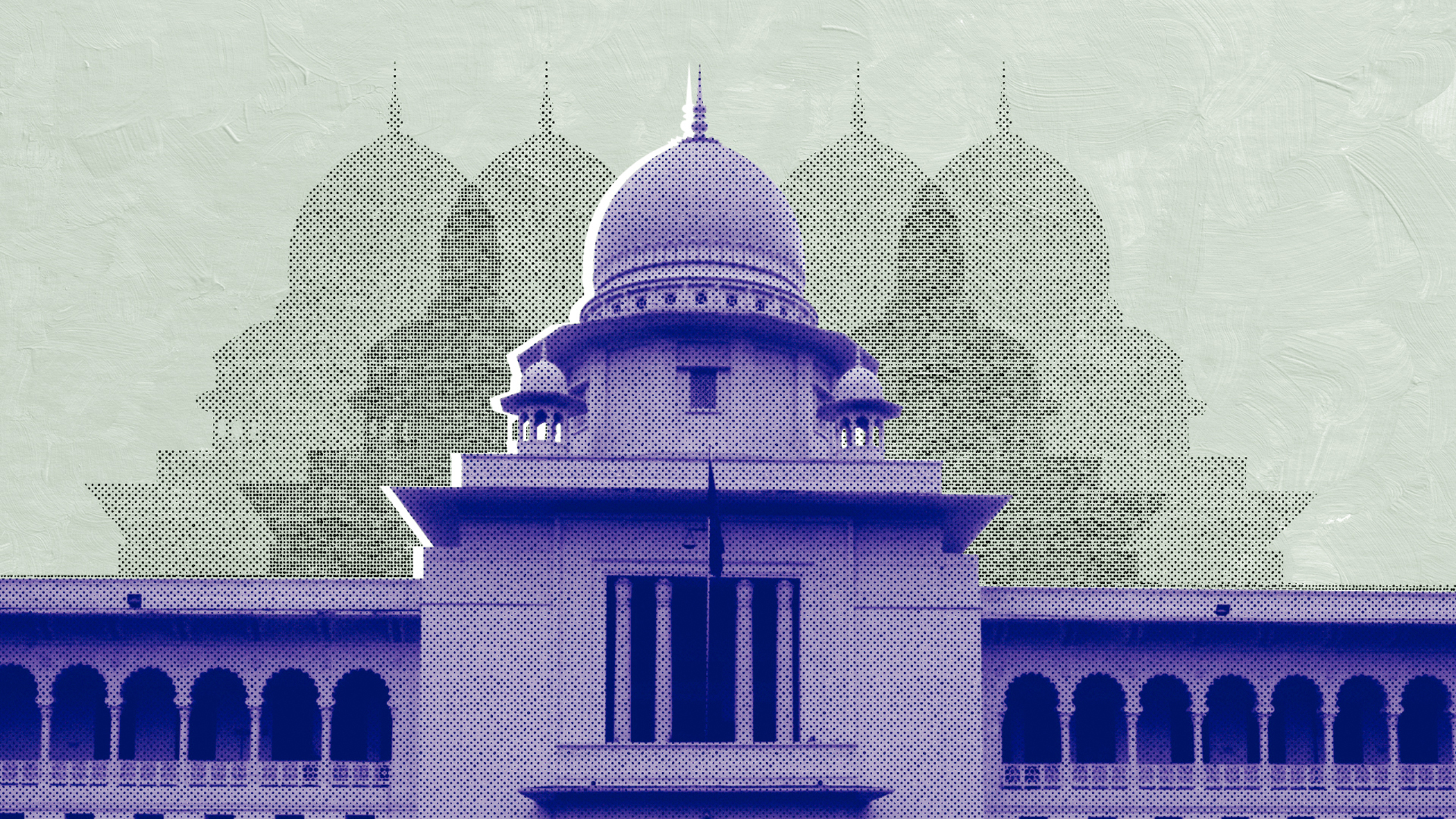
The opposition bench walked out of the Jatiya Sangsad around 5:55pm after the bills were passed, in response to what they called “anti-people bills”.
“Regrettably, despite our logical objections, several anti-people bills have been passed today. We do not want to take responsibility for them,” said Leader of the Opposition and Bangladesh Jamaat-e-Islami Ameer Shafiqur Rahman.
Law Minister Md Asaduzzaman tabled the Supreme Court Judges Appointment (Repeal) Bill; Supreme Court Secretariat (Repeal) Bill; and the National Human Rights Commission (Repeal and Reinstatement) Bill on April 6 and yesterday sought the House’s consideration.
Although the constitution requires a law for appointing judges, no such law existed before the 2025 ordinance; the executive previously selected candidates, with the president giving final approval.
The 2025 ordinance had established a Supreme Judicial Appointment Council, led by the chief justice, to recommend candidates for the Appellate and High Court divisions.
Another ordinance provided for an independent Supreme Court Secretariat with budgetary discretion and authority over the transfer, promotion, and discipline of lower court judges.
Similarly, the 2025 NHRC Ordinance had overhauled the top human rights custodian, unshackling it from a 15-year bar on probing members of the security forces, and granting it autonomy over budgets and appointments.
The repeals followed recommendations from a 13-member parliamentary committee, chaired by BNP MP Zainul Abedin, which reviewed 133 ordinances issued by the interim government.
A report analysing the ordinances, which was given to the lawmakers for perusal, recommended repealing the 2025 ordinance to dissolve the current NHRC.
It also recommended attaching the NHRC to the Legislative and Parliamentary Affairs Division and increasing government representatives in the selection committee tasked with appointing commissioners.
The report noted that the cabinet secretary is the sole bureaucrat in the committee and suggested adding two more bureaucrats instead of civil society representatives.
It also proposed making government permission mandatory for investigating or arresting members of disciplined forces or government officials.
The committee further argued that the 2025 Supreme Court ordinances gave the chief justice excessive powers that could “hinder coordination with the government’s operations”.
It said that appointments and transfers are recommended by the government and accepted by the Supreme Court, to maintain “checks and balances” and ensure that nobody falls victim to a senior judge’s “unfair decision”.
Regarding the Supreme Court Judges Appointment Ordinance, 2025, the report said that judicial appointments will be made as per the “subjective satisfaction of the Chief Justice” and concluded that the ordinance “conflicts with the constitution and so there is no chance of passing this in parliament.”
DEBATE AT JS
 For all latest news, follow The Daily Star's Google News channel.
 Before walking out, opposition MPs sparred with law minister Asaduzzaman, noting that he was the interim government’s attorney general when the ordinances were passed.
NCP MP Akhtar Hossen objected to repealing the judges’ appointment ordinance, alleging that “partisan” appointments in the past led to the rise of party loyalists like Justice AHM Shamsuddin Choudhury Manik under the influence of Sheikh Hasina.
He also recalled that a writ petition once challenged the ordinance as unconstitutional, but Asaduzzaman, then attorney general, had defended it.
Jamaat MP Muhammad Nazibur Rahman opposed the repeal of the Supreme Court Secretariat ordinance. “The bill amounted to a blatant interference in judicial independence and a grave violation of the independence of the apex court,” he said.
He accused the government of trying to control lower courts, saying that judges who did not comply with ministry instructions were previously transferred to remote postings such as Khagrachhari. “This bill is an attempt to bring back that practice,” he said.
Nazibur also termed the move “tantamount to deceiving the people”, adding that the BNP had not recorded any note of dissent on the idea of a separate Supreme Court Secretariat in the July National Charter.

NCP lawmaker Hasnat Abdullah argued that the 2009 NHRC law enabled rights violations during the Awami League era.
“We have seen the application of this law for 17 long years. During that time, the Human Rights Commission was used as a tool to suppress the opposition and dissenting voices. The commission produced the legitimacy to suppress the BNP. I have heard the commission saying, ‘It is legal to shoot Jamaat leaders and activists in the interest of maintaining human rights.’
“If the 2025 ordinance is allowed to lapse today, the nation will go backward again. This will remain in this parliament as a ‘textbook example’ of a nation falling behind,” Hasnat said.
The 2009 law effectively turned the commission into a government-controlled body through a selection committee dominated by ruling party figures, he said. Even BNP leader and LGRD Minister Mirza Fakhrul Islam Alamgir had once described the NHRC as a “Commission to Suppress the Opposition”, he added.
“Under the 2009 act, prior government permission is required to conduct investigations against these forces. Every member of this parliament knows how transparent an investigation into human rights violations will be if government permission is required to investigate the government itself,” the NCP MP said.
The law is also related to the Enforced Disappearance Ordinance and the July Mass Uprising Indemnity Ordinance, he said, adding that by letting the Human Rights Commission ordinance lapse, the other two ordinances will “effectively be made ornamental”.
The law minister acknowledged the opposition’s concerns about judicial independence but defended the move.
“The transparency you demand in judicial appointments, the standards you want in judges, the judiciary you envision -- we want the same. We too do not want another ‘Manik’ to be born in Bangladesh,” he said.
He argued that no state organ, including the judiciary, can function without accountability, and invited the opposition to join a special committee for constitutional amendments to define criteria for judicial appointments.
He explained that he had defended the ordinance as attorney general because “the state’s lawyer follows government instructions”.
Responding to Hasnat’s objection, he retorted, “These speeches are much more ‘juicy’ and relevant for street rallies like Paltan Maidan, the Press Club, or Muktangon. I think he [Hasnat] has read everything except the bill itself.”
“If any law is made with such a malafide intent that it will prevent the BNP from functioning upon coming to power, such a biased law will be ineffective from the start,” he said.
He maintained that the government was not scrapping the 2025 provisions but seeking time for broader consultations, alleging that the ordinance had been enacted without adequate stakeholder input.
He claimed that the commission will not be accountable to the government or anyone, because the 2009 law too gives it supremacy.
31 BILLS PASSED
In total, the Jatiya Sangsad yesterday passed 31 bills to ratify or repeal ordinances issued by the interim government.
These included the Bangladesh Labour (Amendment) Bill, which expands the coverage of the Labour Act, particularly by extending freedom of association and collective bargaining rights to include workers who were previously excluded from these rights. The ordinance related to the law had included domestic workers in the law.
The bills also included National Sports Council (Amendment) Bill; Bangabandhu Sports Welfare Foundation (Amendment) Bill; Sheikh Hasina National Youth Development Institute (Amendment) Bill; Bangladesh Energy Regulatory Commission (Amendment) Bill; Public Procurement (Amendment) Bill; Overseas Employment and Migration (Amendment) Bill; Local Government (Union Parishad) (Amendment) Bill; and Legal Aid Services (Amendment) Bill.
Among the others are Jatiya Muktijhoddha Council (Amendment) Bill; Land Use Control and Agricultural Land Protection Bill; Bangladesh Telecommunication (Amendment) Bill; Bangladesh Gas (Amendment) Bill; Human Organ Transplantation Bill; Foreign Donations (Voluntary Activities) Regulation (Amendment) Bill; Prevention and Suppression of Human Trafficking and Smuggling of Migrants Bill; Forest and Tree Conservation (Amendment) Bill; Bangabandhu Sheikh Mujibur Rahman Novo-Theatre (Amendment) Bill; Bangabandhu Science and Technology Fellowship Trust (Amendment) Bill; Zila Parishad (Amendment) Bill; Local Government (Municipalities) (Amendment) Bill; Local Government (City Corporation) (Amendment) Bill; Upazila Parishad (Amendment) Bill; Rajdhani Unnayan Karatapakkha Bill; Personal Data Protection Bill; Bangladesh House Building Finance Corporation (Amendment) Bill; Negotiable Instruments (Amendment) Bill; and Bangladesh Building Regulatory Authority Bill.
Comments