


Over 4,000 cases pending in tribunals
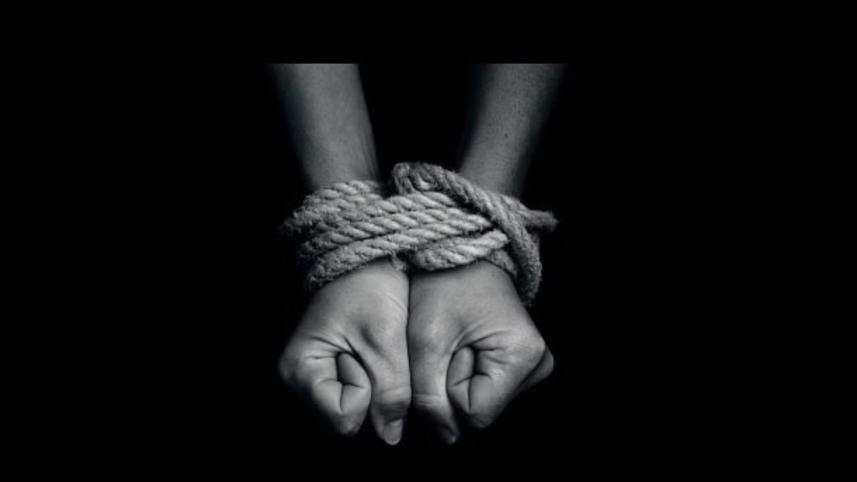
The government is pursuing a zero-tolerance policy against human trafficking while calling for coordinated action to dismantle organised trafficking networks, said speakers at an event yesterday.
Speaking at the national observance of World Day Against Trafficking in Persons 2025, they also highlighted ongoing institutional and legal efforts to prevent and prosecute trafficking crimes.
 For all latest news, follow The Daily Star's Google News channel.
 The event was jointly organised by the Ministry of Home Affairs and the Bangladesh chapter of the United Nations Network on Migration at a city hotel.
At the programme, Khandakar Mohammad Mahbubur Rahman, additional secretary (Political and ICT Wing) of the Public Security Division under the home ministry, said seven divisional anti-trafficking tribunals have been established, with further plans to expand to high-risk areas and operationalise a national referral mechanism for victim support.
In a keynote presentation titled "The Current State of Anti-Trafficking Efforts in Bangladesh", Aminul Islam, deputy secretary of the Security Division under the ministry, said as of 2024, 4,291 human trafficking cases were pending in special tribunals.
Around 16,000 accused traffickers have been arrested, and 662 cases have been resolved. Additionally, 1,079 new cases were filed, and five traffickers have received life sentences under the existing law, he said.
Bernd Spanier, chargé d'affaires of the EU Delegation to Bangladesh, expressed concern that despite numerous trafficking cases being filed in the country, only a few have led to convictions.
"Behind every person who has returned home lies a long line of others still trapped in the shadows of traffickers," he said. "Trafficking thrives when governments are weak, migration is unsafe, and opportunities are scarce. Traffickers exploit that despair."
According to IOM data presented at the event, over 9,000 Bangladeshis crossed the Mediterranean to Italy in the first half of 2025, bringing the total since 2009 to over 90,000.
Many of these migrants, aged between 14 and 35, were lured by false promises of employment.
A significant number ended up in Libyan camps, where they were subjected to extortion and torture. As a result, Bangladesh is now one of the top countries for irregular migration to Europe.
Additional DIG of Police Ashiq Saeed said law enforcement agencies remain active in counter-trafficking efforts, with many traffickers already arrested and others being pursued internationally through Interpol.
Ikramul Habib of the Criminal Investigation Department identified Khulna as a trafficking hotspot due to its economic vulnerability and proximity to border districts like Jhenaidah, Meherpur, and Chuadanga.
Abul Hasnat, deputy secretary of the law ministry, said in many cases, victims are deceived by people close to them.
Lance Bono, chief of mission of IOM Bangladesh, pointed out the disproportionate impact of trafficking on women and children.
Sujin Kong, deputy country director of the Korea International Cooperation Agency (KOICA), described trafficking as one of the most serious forms of crime.
He said Bangladesh remains one of the major source countries for human trafficking.
The event began with a welcome speech by Jasim Uddin Khan, joint secretary of the home ministry.
Md Asad Ullah Chowdhury from the Special Branch's Immigration Unit also attended the programme.
Comments