


Passion fruit farming gains ground in Jhenaidah

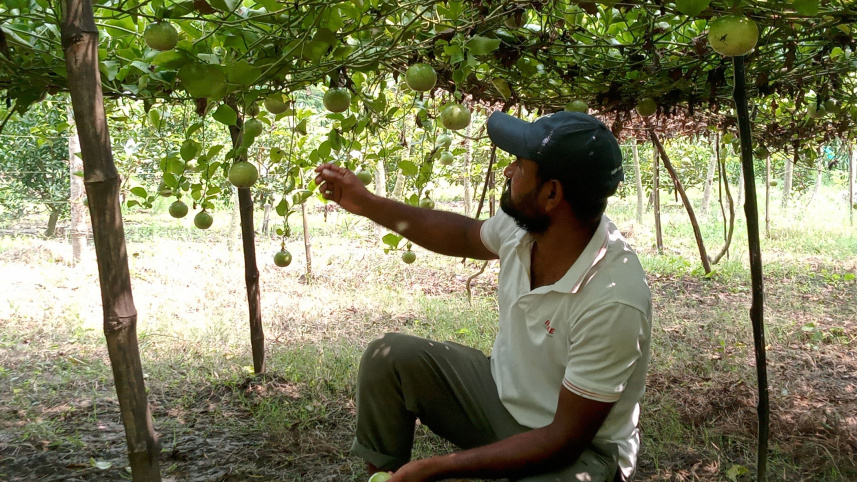
Commercial cultivation of passion fruit, native to South America, has begun in Maheshpur upazila in Jhenaidah, with a local entrepreneur expanding production and attracting interest from other farmers.
Mahmudul Hasan Stalin, an agricultural entrepreneur from Pantapara village, started cultivating the fruit on an experimental basis after learning about it on YouTube.

He initially collected a small number of saplings from India. Encouraged by early results, he expanded cultivation to 3.5 bighas this year.
The initiative is prompting a gradual shift among local farmers, with around 35 growers already collecting saplings from Stalin for commercial cultivation, while others have taken them out of curiosity or as a hobby, he added.
Stalin has been cultivating various foreign fruits for the past seven years.
Passion fruit is cultivated in Brazil, Paraguay and Argentina. Known locally by different names, including “Anarkoli” and “Tang”, the fruit is valued for its taste and nutritional properties. Stalin said he is cultivating the yellow variety.
The crop is grown on scaffolds, similar to other creeper fruits and vegetables. According to Stalin, cultivation costs range between Tk 70,000 and Tk 80,000 per bigha.
“From my experimental cultivation, I found it to be a profitable crop,” Stalin said. “It requires relatively low inputs. Organic fertiliser is sufficient, and no significant irrigation or pesticide use is needed.”
He said passion fruit plants bear fruit twice a year, and each bigha can yield around 1,00,000 fruits. The produce is currently selling at Tk 15-30 per piece in wholesale markets, with the highest price reaching Tk 78-80 per fruit, he said.
The fruit is harvested during Ashar and Shrabon (June-August), which he identified as the most suitable period for cultivation.
Stalin also said that traders from Chattogram are purchasing the fruit directly from the fields.
Maheshpur Upazila Agriculture Officer Yasmin Sultana said officials are assessing the suitability of local soil and management requirements for the crop. “We are gathering information about this fruit and will visit the project. Once we have a clearer understanding, we will be able to guide farmers,” she said.
 For all latest news, follow The Daily Star's Google News channel.
Comments