


Bangladesh’s wheat imports surge to all-time high

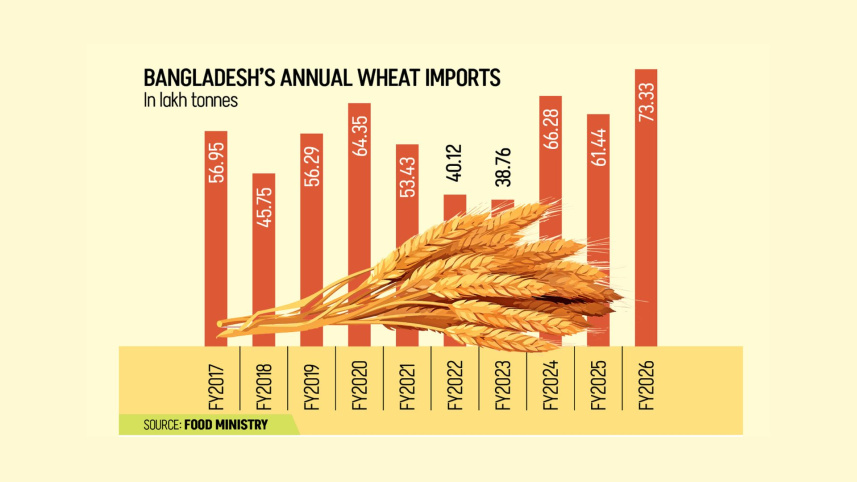
Wheat imports surged to a record high of more than 73 lakh tonnes in the just-concluded fiscal year 2025-26 as the private sector capitalised on lower international prices.
Private imports rose 16 percent year on year to 65.8 lakh tonnes in the fiscal year ended June 30, according to data from the Ministry of Food.

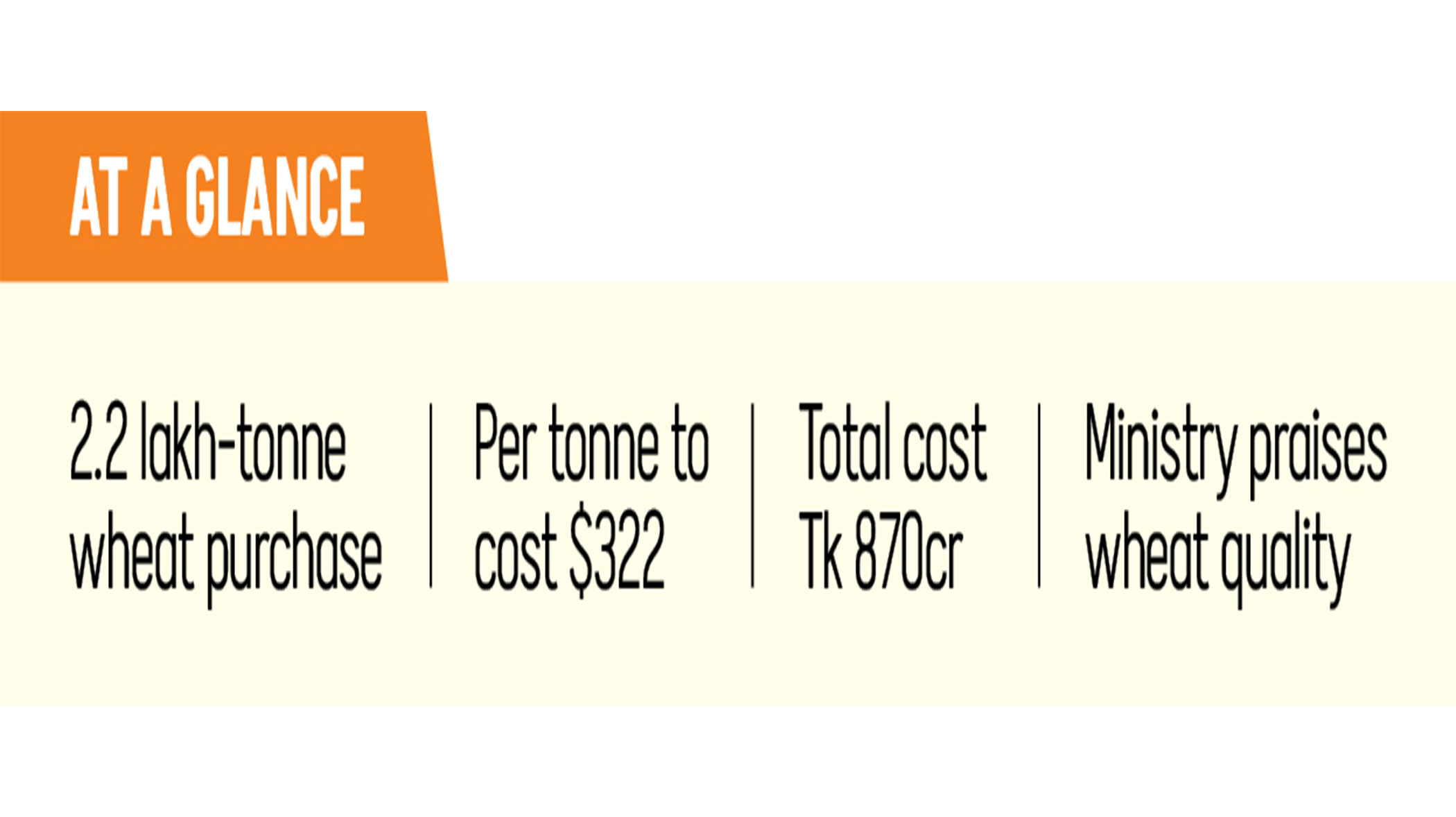
Public sector imports jumped 61 percent year on year to 7.51 lakh tonnes in FY26, driven largely by purchases from the United States after the government signed a memorandum of understanding with the US Wheat Associates.
The then interim government signed the agreement with the US organisation in July 2025, committing to buy 7 lakh tonnes of US wheat annually over the next five years in a bid to reduce the bilateral trade imbalance between the United States and Bangladesh and avoid higher reciprocal tariffs imposed by the Trump administration.
“The government’s imports buoyed the overall arrival of wheat in Bangladesh. Last year’s imports were an all-time high,” said Md Aminul Islam, managing director and CEO of Nabil Group of Industries.
Wheat is the second most-consumed cereal in Bangladesh for household and industrial use, and the country produces roughly 10 lakh tonnes annually. It meets the rest of its demand through imports, mainly from Argentina, Canada, Ukraine, Russia, the United States and Brazil, according to a report by the US Department of Agriculture (USDA).
During the July-September period of 2025, prices of US soft red winter and hard red winter wheat fell from the previous quarter, encouraging imports, according to the World Bank Commodities Price Data.
In a report published in April, the USDA said Bangladeshi wheat millers and traders imported large volumes of wheat every month throughout marketing year 2025-26 due to lower international prices and steady demand for wheat flour in the local market for both human consumption and animal feed.
Aminul said some new players entered the market and imported wheat, anticipating a supply gap in the local market, as a number of traditional commodity importers and processors were struggling to repay bank loans.
A top official of a leading commodity importer and processor said wheat imports have already declined over the past couple of months.
“It may pick up during the harvesting season in key producing countries,” he added.
Anup Kumar Saha, chief executive officer of Akij Flour Mills Ltd, said population growth and the expansion of formal bakeries are fuelling demand for wheat.
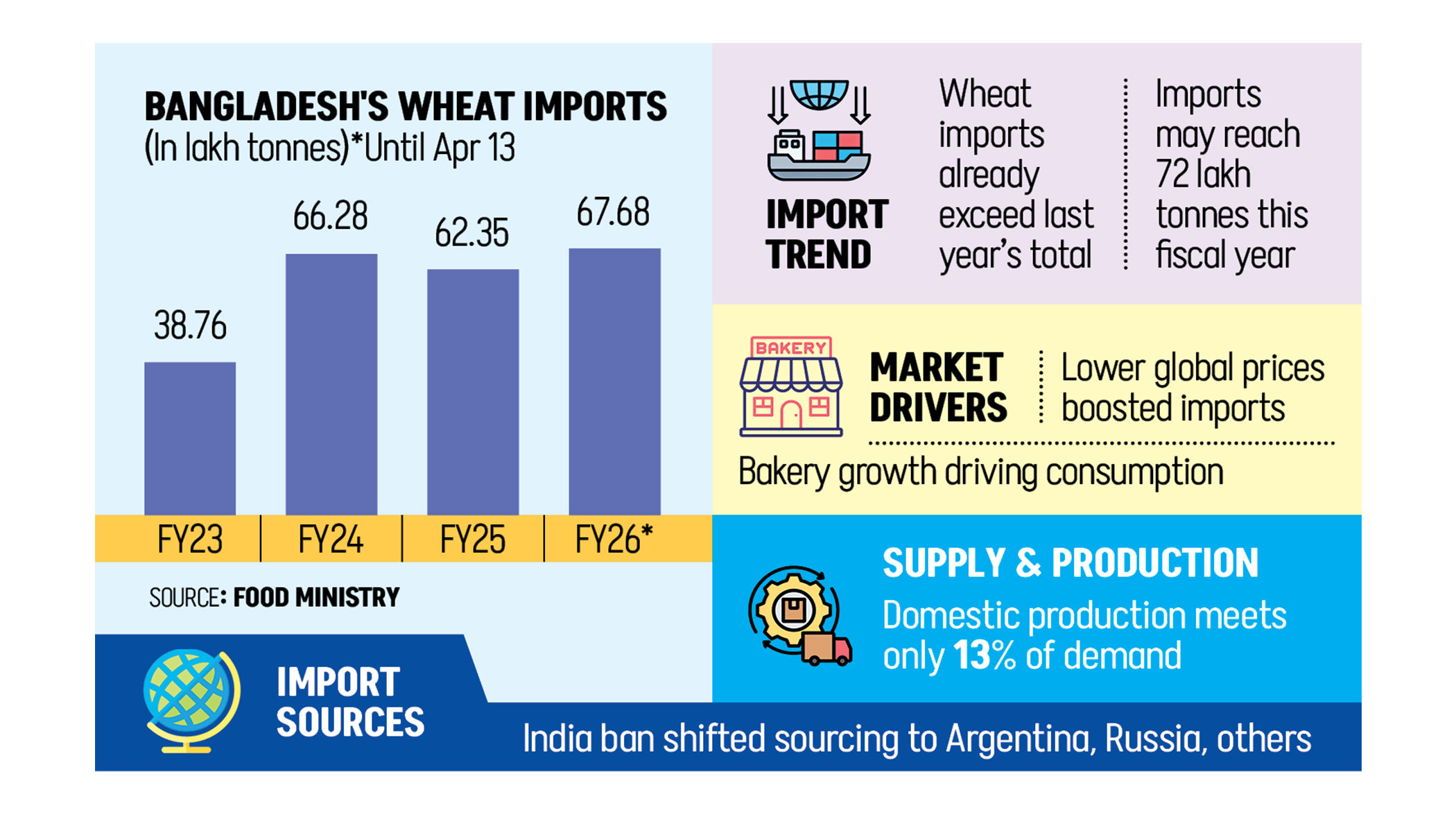
Formal bakeries are growing by 16-17 percent, while informal bakeries are in decline, he said.
More than 40 lakh tonnes of wheat were imported between September and December of the last fiscal year. Imports declined during the February-June period because of the war in the Middle East, he added.
Looking ahead, Aminul of the Nabil Group said increased imports have created a surplus in the domestic market.
“So, imports may drop this fiscal year.”
The USDA also forecast wheat imports to decline to 66 lakh tonnes in fiscal year 2026-27, assuming a larger carryover stock from the previous year.
The agency, however, raised its projection for wheat consumption in Bangladesh to 80 lakh tonnes, up 1.3 percent from its estimate for marketing year 2025-26, driven by stronger demand for atta and maida from households and industry.
 For all latest news, follow The Daily Star's Google News channel.
Comments