


BNP’s vision is equal rights for all faiths
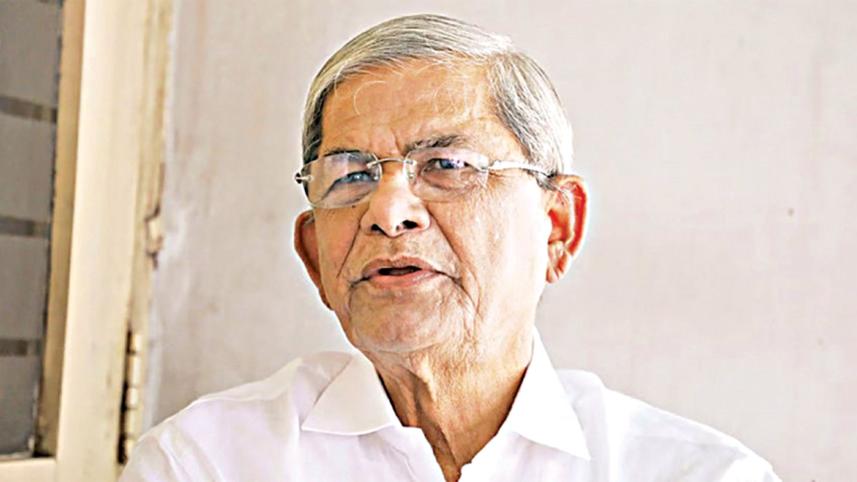
BNP Secretary General Mirza Fakhrul Islam Alamgir has said that secularism is not the party’s objective, asserting that the term is not “congenial” for the politics of Bangladesh.
Speaking to Al Jazeera recently, Fakhrul defended party chief Tarique Rahman’s leadership and outlined a vision focused on equal rights for all faiths rather than secularist ideology.

Addressing the 1977 removal of “secularism” from the constitution by BNP founder Ziaur Rahman, Fakhrul said, “Secularism is not our goal.”
He explained that the decision reflected the “philosophy of the party at that time”.
Highlighting the country’s demographics, he added that the word “is not at all very congenial for Bangladesh’s politics”.
Instead, Fakhrul argued that the BNP’s framework ensures religious freedom.
Regarding party chairman Tarique Rahman, Fakhrul described him as the “most capable man” to lead the nation should the BNP win the upcoming election.
He rejected the 80-plus cases previously filed against Tarique as “totally baseless” and “politically motivated”, claiming the previous “fascist regime” failed to prove any allegations over 15 years.
Responding to a question on the upcoming election and exclusion of Awami League, Fakhrul said, “Now the question is when a political party or the leader of the political party has killed no less than 2,000 students and the agitators or the people who demonstrate against them... They involved themselves with and used the state apparatus, including the police and others, to kill those people. Naturally, there will be demand for those people to be tried, and so they were tried. It was the Awami League in general that was involved in these things. All the ministers and all the members of the party were involved.”
He, however, expressed his personal opposition to banning political parties, including the Awami League or Jamaat-e-Islami.
“I personally don’t support this sort of banning a political party,” he said, suggesting that individuals responsible for “genocide” should be tried rather than the entire organisation.
On international ties, Fakhrul said the BNP would “diplomatically try” to repatriate Sheikh Hasina from India to face execution of her convictions.
He expressed hope that relations with New Delhi would improve, describing a recent letter of condolence from Indian Prime Minister Narendra Modi following Khaleda Zia’s death as a “very good gesture”.
 For all latest news, follow The Daily Star's Google News channel.
Comments