


Elon Musk, the world's first trillionaire, and his empire of ashes

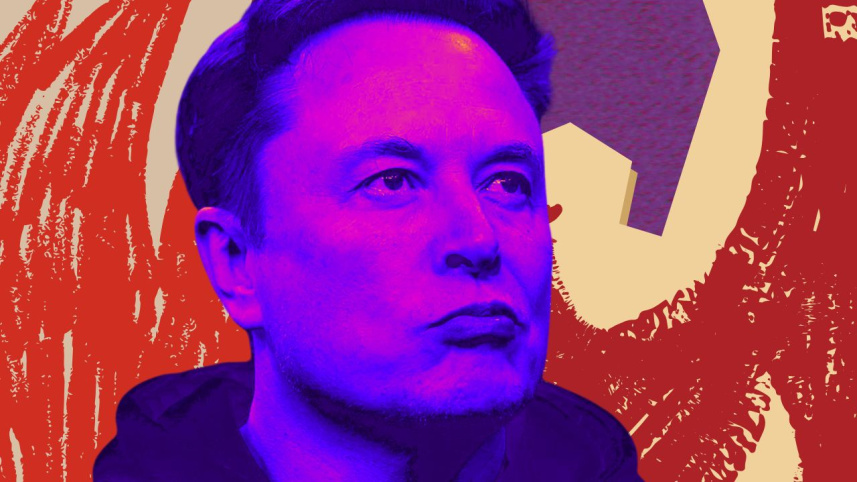
This week, for the first time in recorded history, a single human being's net worth crossed the trillion-dollar threshold. When SpaceX began trading on the Nasdaq on Friday at $150 a share, Elon Musk's stake in the company alone became worth more than $766 billion. Combined with his Tesla holdings, valued at roughly $280 billion, his net worth from the two companies reached approximately $1.05 trillion. That figure is nearly four times the size of the world's next-richest person, and exceeds the combined fortunes of the second, third, and fourth wealthiest individuals on the planet put together.
It is, by any measure, a staggering moment. As recently as the summer of 2024, Musk, Jeff Bezos, and Bernard Arnault were trading the title of world's richest person on a near-daily basis, with fortunes hovering around $200 billion. Less than two years later, Musk's fortune is worth twice as much as the other two combined. A trillion dollars is not really a number most people can hold in their heads. It is closer to a geological feature than a bank balance.

And yet, look past the headline figure, and the empire generating it looks less like a triumphant monument and more like a building site after a fire alarm. Several, actually.
The AI venture that ate itself
Start with xAI, the artificial intelligence company Musk founded in 2023 and recently folded into SpaceX in what was described as the largest corporate merger in history, valuing the combined entity at $1.25 trillion. Of the twelve people who co-founded xAI alongside Musk, all but two have now left the company, with departures accelerating sharply in early 2026. Musk himself acknowledged the scale of the exodus in a social media post, apologising to "many talented people" who had been turned down for roles or interviews at the company.
Barely six weeks after Tesla's board approved a $2 billion investment into xAI, and only weeks after SpaceX completed its acquisition of the company, Musk publicly conceded that xAI "was not built right first time around" and is "being rebuilt from the foundations up," adding that the same thing had happened with Tesla. It is a remarkable admission: the company that SpaceX just bought for a quarter of a trillion dollars, and that Tesla shareholders just funded, was—in its founder's own words—broken from the start.
That funding flow is now the subject of litigation. Tesla shareholders are suing Musk for breach of fiduciary duty, arguing that he diverted artificial intelligence talent and resources away from Tesla to benefit a private company he controls personally. The Musk v. Altman trial currently under way has added fuel to that argument. During testimony, OpenAI's lawyers presented emails showing Musk had, years earlier, recruited a key OpenAI researcher to Tesla and acknowledged in writing that his former colleagues would be furious about it.
The picture that emerges, across multiple court filings and shareholder complaints, is of a man simultaneously running several companies whose interests do not always point in the same direction, and resolving the tension by simply moving people, money, and technology between them.
The pollution problem
Then there is the matter of how xAI actually runs its servers. The company has been operating dozens of methane gas turbines across two data centre sites in Tennessee and Mississippi, many without the permits typically required under the Clean Air Act, with its own filings suggesting the combined facilities could emit more than six million tons of greenhouse gases annually. This sits awkwardly alongside Tesla's own sustainability reporting, and even more awkwardly alongside Musk's own history as a vocal advocate for carbon taxes and climate action at international forums. Thermal imaging from earlier this year reportedly showed the turbines still running at the Mississippi site even after regulators closed a loophole that had been used to justify the arrangement.
Meanwhile, Grok has drawn international regulatory attention of its own. Investigators in multiple jurisdictions have examined the tool after it was found to allow users to generate non-consensual sexual images, including of minors, by manipulating photos of real people.
The promises that keep slipping
None of this would matter quite so much if the underlying products were delivering on schedule. But on Tesla's first-quarter 2026 earnings call, Musk acknowledged that the current generation of self-driving hardware lacks the processing capacity needed for the company's long-promised unsupervised driving feature, pushing the target yet again—the latest in a decade-long pattern of missed deadlines for full autonomy.
And then there is the matter of Musk's political profile, which has followed him into boardrooms and onto balance sheets in ways that are difficult to disentangle from the business itself. A stiff-arm gesture Musk made at a rally in January 2025 was widely interpreted by historians and commentators as resembling a Nazi salute, prompting protests against Tesla and calls in parts of Europe for Musk to be barred from entering the country. It was a reputational damage that landed directly on a publicly traded company's brand.
The other side of the ledger
None of this is the whole story, and a fair reckoning has to include the case Musk's defenders would make. SpaceX's valuation did not appear from nothing: the company has genuinely rewritten the economics of spaceflight through reusable rockets, and its IPO reflects real revenue from real launches and a real satellite internet business, not vapour. Tesla, whatever its current struggles, did more than any other company to drag the auto industry towards electrification. And founder churn, missed deadlines, and chaotic restructuring are not unique to Musk's ventures. They are, for better or worse, close to the default operating mode of fast-moving technology companies, several of which have stumbled badly before delivering breakthroughs. Musk has been written off before, more than once, and has come back from the brink each time, most notably when both Tesla and SpaceX nearly collapsed simultaneously in 2008.
There is also a question of proportion. Every large technology fortune rests on some combination of genuine innovation, aggressive risk-taking, regulatory grey areas, and a workforce that absorbs the consequences of a founder's restless pivots. Musk's empire is unusually visible, and unusually entangled with his own political activity, which makes its messes more newsworthy than equivalent dysfunction at quieter companies.
What is harder to dispute is the gap between the number and the reality underneath it. A trillion dollars is, in the end, mostly a valuation. It's a bet on what these companies might be worth in the future, assuming the robotaxis arrive, the AI gets rebuilt successfully this time, the lawsuits resolve favourably, and the turbines either get permitted or shut down before they become a liability too large to absorb. Whether that bet pays off, or whether the trillion-dollar figure turns out to be the high-water mark of an empire already smouldering at the edges, is the question that will define not just Musk's legacy, but a great deal of how the public comes to think about extreme wealth in the AI era.
 For all latest news, follow The Daily Star's Google News channel.
Comments