


Specialised police unit needed for highway safety: Transport minister
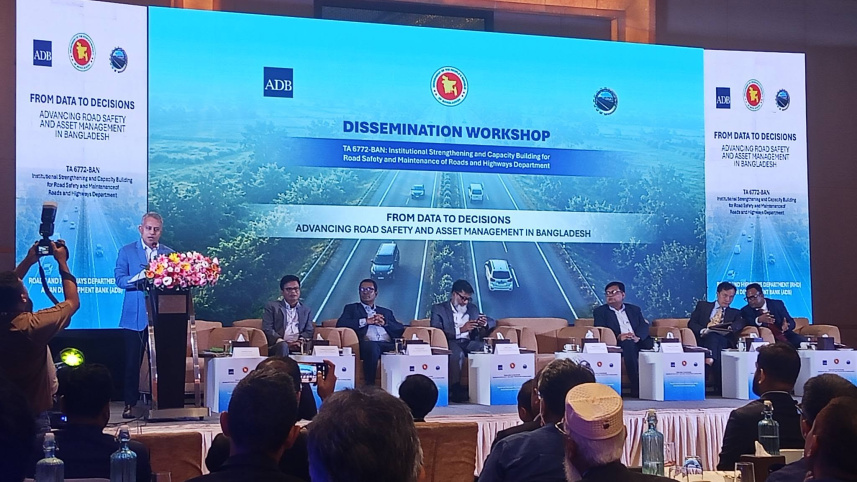
Roads and Highways Minister Shaikh Rabiul Alam today called for a specialised police division for road safety and highway management, saying officers should be trained and allowed to build experience in the field instead of being routinely transferred to general policing duties.
“They should be trained, gain experience and, at some point, be able to make the roads functional,” he said while speaking as the chief guest at a workshop at a hotel in Dhaka this afternoon.

The workshop was organised to develop the capacity of the road safety and highways divisions.
Rabiul said effective highway policing required specialised knowledge and experience.
“Can it work if someone is in general police today and highway police tomorrow? Definitely not,” he said.
Officers assigned to the unit should be able to build their careers within the same structure, he said, adding that a similar approach should be taken for engineers and other officials working on road safety.
The minister also identified inadequately trained drivers as a major concern.
“Several projects had been undertaken for driver training, fitness tests, drug tests and other checks, but their effectiveness needed to be assessed,” he said.
Ensuring roadworthy vehicles, competent drivers, speed control, helmet use among motorcyclists and greater public awareness were essential to improving road safety, he added.
Rabiul said nearly 5,000 people die in road crashes every year because of mistakes, reckless driving or negligence.
“We have to come out of this situation,” he said.
The government is committed to enacting a comprehensive road safety law by December 2027 and is working towards its road safety goals for 2030, the minister said.
He also stressed preventive maintenance, saying roads should be repaired before they become badly damaged.
On vehicle safety, Rabiul said the government had introduced policies setting the service life of buses at 20 years and trucks at 25 years. Policies for scrapping and recycling unfit vehicles had also been formulated, but their implementation was still pending, he said.
The minister also questioned whether the large sums being spent on road safety programmes were producing sufficient results.
He said the World Bank had several road safety projects in Bangladesh, while the ADB was providing technical assistance and financing.
“We are spending continuously, but people have questions about what we are actually achieving,” he said.
Rabiul said Bangladesh was good at organising seminars and formal programmes but remained weak in putting lessons and recommendations into practice.
“Authorities should identify accident-prone areas, analyse recurring crashes and make decisions based on data rather than assumptions,” he said.
Such findings should also guide future infrastructure and mega projects so that safety is incorporated from the planning stage, he added.
 For all latest news, follow The Daily Star's Google News channel.
 Financing and technical advice from development partners would have limited impact unless the lessons were translated into action, Rabiul added.
Comments