


Missions working 24/7 to protect Bangladeshis in war-hit countries: Shama Obaed
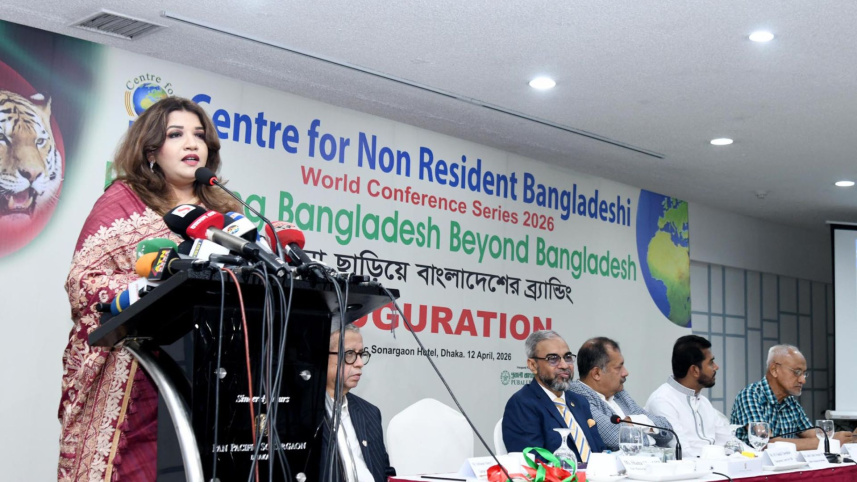
Bangladeshi missions are working round the clock to ensure the safety of expatriate Bangladeshis in war-affected countries, State Minister for Foreign Affairs Shama Obaed said today.
She made the remark at a programme, titled "Word Conference Series 2026", organised by the Centre for Non-Resident Bangladeshis at a Dhaka hotel. At the programme, Information Minister Zahir Uddin Swapan was also present, and he handed over Remittance Awards to 13 banks, one institution, and an individual.

Shama said expatriate Bangladeshis have played a major role during different crises in the country and continue to contribute far beyond remittance.
She said Bangladesh has many strengths, but often fails to present them properly on international platforms.
She said there is a perception that Bangladeshi missions abroad do not provide proper services, but she observed that the missions were not adequately empowered.
Referring to the ongoing war situation in the Middle East, she said many Bangladeshi workers are employed in Gulf countries, and the missions are "working 24/7" so that expatriate Bangladeshis remain safe and secure.
She also said eight Bangladeshis have so far been killed in the war, and the government is working to bring the bodies back home, while continuing efforts to protect those still living there.
Information Minister Swapan said readymade garment exports and remittances are the country’s main sources of foreign currency, and increasing both should be a core agenda of Bangladesh’s foreign policy.
State Minister for Expatriates’ Welfare and Overseas Employment Nurul Haque Nur, who also spoke at the event, said the government is considering a plan to develop a dedicated area for expat Bangladeshis, possibly in Purbachal, as part of a proposed “expatriate city”.
He said similar initiatives were also being considered at the district level, subject to the prime minister’s directives and feasibility assessment.
Nur said many returning migrant workers fail to receive government support because they did not go abroad after completing Bureau of Manpower, Employment and Training (BMET) registration.
He said workers who return within six months or a year can receive rehabilitation support and training from the ministry if they had completed BMET registration before departure.
Referring to Bangladeshis killed in the Middle East war, he said families of those with BMET cards were eligible for burial support, immediate family expenses and insurance benefits.
Nur also expressed concern over irregular migration, saying Bangladeshi nationals are often found among those involved in boat-tragedy incidents in the Mediterranean, which creates embarrassment for the country and affects its image.
He said isolated incidents involving a few migrants in countries such as Japan, Vietnam, and Romania were also harming Bangladesh’s prospects in overseas labour markets.
Urging wider awareness, Nur called on the media and relevant organisations to speak more about the damages caused by irregular migration and negative conduct abroad.
 For all latest news, follow The Daily Star's Google News channel.


Comments