


Dreams of Europe end in saltwater


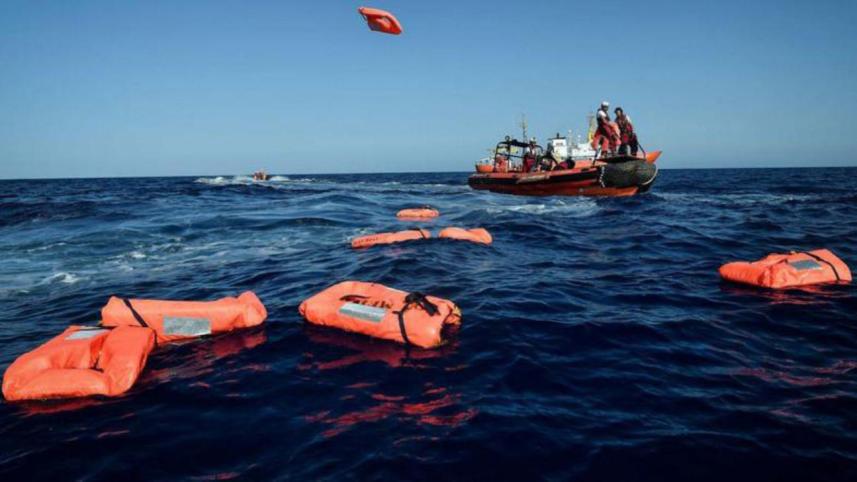
For months, Sajidur Rahman’s family hoped the 28-year-old would reach Europe and change their fortunes.
Instead, they are now mourning his death -- from hunger, on a boat adrift in the Mediterranean.

The second of three brothers from a farming family in Tarapasha village of Sunamganj’s Dirai upazila, Sajidur had taught at a madrasa before deciding to try his luck in Europe, like many young men in his area.
Several Bangladeshis attempting the perilous crossing from Libya to Europe were rescued and taken to hospitals or detention centres in Greece. Sajidur was not among them.
“For two months and eight days, they kept giving excuses. Then they said he had been sent on the crossing. The next day, they said he had already reached Greece. Later, we came to know my brother had died on the boat.”
He was one of at least 18 Bangladeshis who died in the tragedy, confirmed Md Nurul Haque Nur, state minister for expatriates’ welfare and overseas employment.
Sajidur left home on January 14 after his family struck a Tk 12 lakh deal with local broker Mujibur Rahman, his father Abdul Gani said.
Promised passage on a large steel boat, Sajidur was instead confined for 17 days without food in a so-called “game ghar”, a deceptive term used by trafficking syndicates for detention centres where migrants are held, tortured and extorted.
Later he was forced onto a plastic boat to cross the sea.
“His last call came before boarding on March 21. They gave him no food there [in the detention centre], and even after being put on the boat, he got nothing to eat. My son died,” Gani said.
Tarapasha village is grieving for another loss.
Nuruzzaman Sardar Moyna, 30, also perished. His elder brother Helal said Nuruzzaman left home on January 15 and reached Libya a week later. After that, the family was repeatedly told he had not yet been put on a vessel.
“For two months and eight days, they [traffickers] kept giving excuses. Then they said he had been sent on the crossing. The next day, they said he had already reached Greece. Later, we came to know my brother had died on the boat,” Helal said.
The family had agreed to pay Tk 12 lakh to broker Jasim from Habiganj, now based in Libya, and had already paid Tk 6 lakh after Nuruzzaman reached Libya.
“They said he would be sent on a big ship or steamer. But they kept him in the game ghar for 16 days without anything to eat and later put him on the boat without food or water.”
Helal urged other families not to let their loved ones fall into the hands of local brokers of trafficking rings, saying they did not do what they promised and were still demanding money even after the failed journey.
Two more men from the same village, Mohammad Sahanur and Rohan Mia, were also on the boat. Sahanur was initially reported dead, but his brother Md Zakaria now believes he may be alive and in critical condition at a hospital.
Elsewhere in Sunamganj, families are grieving Mehedi Hasan Tayef and Sohanur Rahman.
Sohanur, born after four sisters, had left without informing his family.
His father, Salikur Rahman, said an agency had been processing his son’s journey to Serbia under a Tk 13 lakh deal.
 For all latest news, follow The Daily Star's Google News channel.
 The agency had kept his passport, which Sohanur retrieved after leaving home, and later called from Dhaka to say he was heading to Greece via Libya.
Salikur said his son had struck a deal with broker Saleh Ahmed of Jagdal village.
“A month after leaving, my son called and said he had been stranded in the desert and asked us to contact the broker. After we paid some money, they sent him to the game ghar,” he said.
At least 11 of the dead were from Sunamganj, with others from Habiganj and Kishoreganj, according to families and law enforcers.
A video circulating online shows a survivor claiming 43 people were on the small boat, including 38 Bangladeshis and five Sudanese.
He alleged the group had been promised passage on a bigger boat but was instead put on a smaller one without a satellite phone, GPS device or any means of communication. He said those who died began decomposing in the salt water and were later thrown into the sea.
The survivor also named several alleged brokers and traffickers, claiming many were from Sylhet.
He said some migrants had spent months in Libyan camps before the crossing.
The boat left Tobruk in eastern Libya on March 21. Late Friday, the Greek coastguard said 26 people, including a woman and a minor, were rescued off Crete by a European border agency vessel.
Bangladesh has long been among the top source countries for irregular migration to Europe, said Shariful Hasan, associate director of BRAC’s Migration Programme. The latest deaths are alarming, he added, as thousands more Bangladeshis are believed to be waiting in Libya for the same journey.
He urged stronger government action at home and abroad with Libya, Greece and Italy to stop such crossings.
“These deaths are very sad and unexpected,” said state minister Nur, adding that the Bangladesh mission is contacting Greek authorities. The government, with the International Organisation for Migration, is supporting survivors and exploring ways to bring back bodies.
Those responsible must be punished under domestic or international law, said Shama Obaed Islam, state minister for foreign affairs. Missions have been asked to identify how the trafficking was carried out and who is behind it.
“The perpetrators, whether Libyan or Bangladeshi, must be brought to justice.”
She said the immediate priority is treatment of survivors, followed by nationality verification before repatriation. Embassies in Athens, Lebanon and Libya are working on the matter.
Comments