


Dolphin deaths must be investigated
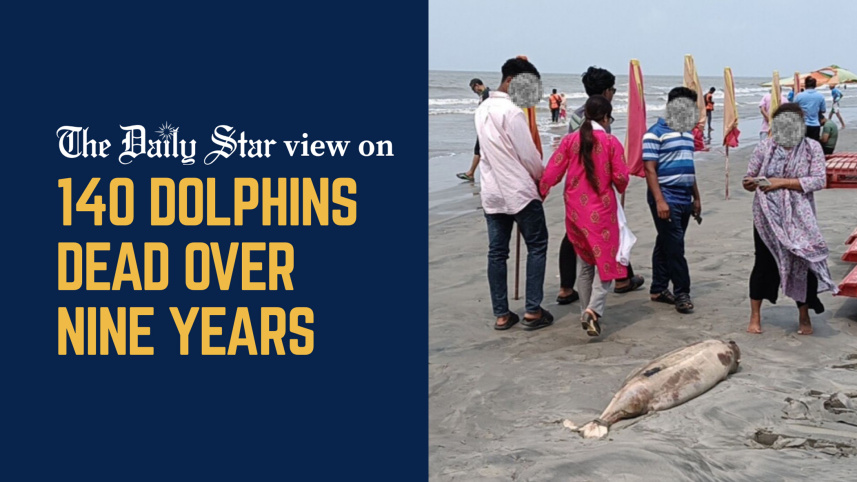
We are deeply saddened and alarmed by the news that some 140 dolphins have washed up on Kuakata’s beaches over the past nine years, with four found dead so far this year alone. The estimate is unofficial and comes from a volunteer group that tracks dolphin strandings in the area. The actual numbers are expected to be higher, which should raise alarm bells, as this may signal deteriorating health in our coastal and marine ecosystems.
The absence of an official estimate is itself unacceptable, given that dolphins are protected under the Wildlife (Conservation and Security) Act. The lack of an official figure suggests ambivalence at best and negligence at worst—neither of which reflects well on the relevant authorities. Given dolphins’ status as marine wildlife, they should be a concern for both the forest and fisheries departments; however, experts argue that a lack of institutional clarity often prevents the establishment of processes that would allow the causes of death to be scientifically determined and enable possible rescue and rehabilitation work.

The latest of the dead was a 10-foot Irrawaddy dolphin, and the reasons behind the animal’s death remain speculative. One suspected cause of dolphin deaths is entrapment in fishing nets, from which the animals cannot resurface to breathe or are freed too late to survive. Many of the carcasses have deep wounds and injury marks, with ship propeller strikes often cited as the second leading suspected cause of dolphin deaths.
Stranded marine animals along our shores are, unfortunately, not a new phenomenon. From 2007 to 2020, at least 200 marine mammal deaths were reported in the maritime border of Bangladesh, suggesting that other, more complex factors may be at play, including the use of poison in coastal fishing operations, microplastic pollution, warmer water temperatures, underwater noise, and food shortages. These concerns come amid broader signs of stress in the marine environment, with declining fish yields in recent years. However, it is impossible to know just what is killing the marine life without scientific observation, which the authorities haven’t been able to do due to the lack of laboratories equipped to carry out necropsy procedures.
We call on the government to adopt a more coordinated approach to protecting marine life, especially dolphins, whose death rate is already feared to outpace their reproductive rate. There should be a clear protocol for responding to animal strandings, and authorities must strengthen community awareness to reduce accidental deaths. Dolphins are widely regarded as indicators of marine ecosystem health. Therefore, a dedicated effort is needed to unearth what is killing these wonderfully intelligent animals, as the answers may contain warnings about our marine habitat and inform future conservation and economic strategies.
 For all latest news, follow The Daily Star's Google News channel.
Comments