


Harassment of PM’s adviser unacceptable
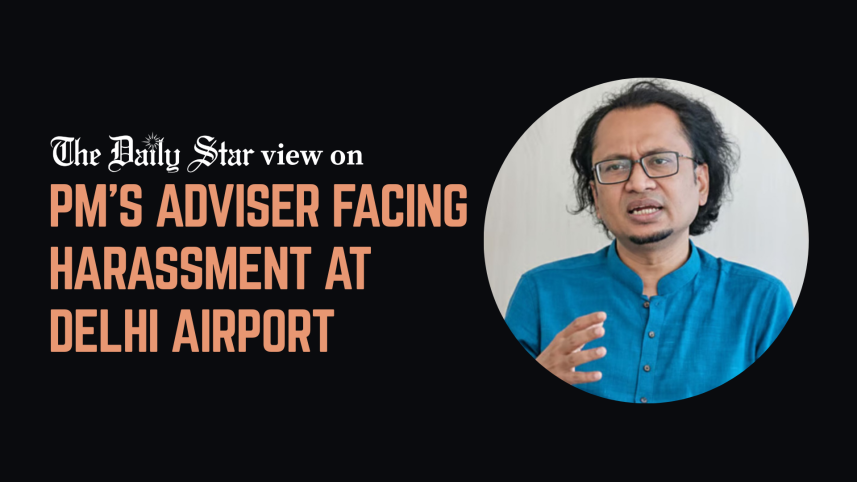
The harassment of Dr Zahed Ur Rahman, the prime minister’s adviser on policy and strategy affairs, by Indian immigration officials at Delhi’s Indira Gandhi International Airport on Sunday, is unwarranted and unacceptable. The incident sends the wrong message at a time when bilateral relations between Bangladesh and India, which have been strained following Sheikh Hasina’s fall and escape to India in 2024, appeared to be warming up. Indian Prime Minister Narendra Modi congratulated Prime Minister Tarique Rahman on his party’s landslide win in the February 12 national election, while Indian Lok Sabha Speaker Om Birla joined the swearing-in ceremony of the new cabinet. However, the inexplicable and unwelcoming behaviour by Indian immigration officials stands in stark contrast to that earlier diplomatic messaging.
Although little is known about exactly what unfolded at the Indira Gandhi International Airport, there has been no ambiguity about Dr Zahed’s purpose and protocol of the visit. He was not there in his personal capacity, but was representing Bangladesh officially at the 28th Meeting of the Committee of Senior Officials (CSO) of the Indian Ocean Rim Association (IORA), organised by India’s Ministry of External Affairs (MEA), scheduled for June 15-16. Both the Bangladesh foreign ministry and Bangladesh’s High Commissioner to India had informed India’s MEA of Dr Zahed’s visit. Yet, for two hours, he was “detained and harassed” by immigration officials at the airport, while the rest of the Bangladeshi delegation were allowed entry. Though Dr Zahed, too, was later permitted to pass through immigration, he decided to return to Bangladesh as an “instant protest” against the untoward behaviour of the Indian officials.

The discourteous attitude displayed by Indian officials at the Delhi airport echoes what has been happening on the Bangladesh-India border for the past couple of weeks. Since the Bharatiya Janata Party’s win in the West Bengal election, the political antagonistic rhetoric about Bangladeshis has increased, along with the number of push-in attempts and prolonged stranding of groups of people—women, children, and elderly—at various points along the border. Besides, border killings by India’s BSF continue, with no commitment to curbing this international crime in the latest Bangladesh-India border talks. These run contrary to a stable and neighbourly relationship.
We hope that the Indian government conducts a proper probe into the incident and takes appropriate action. We also expect nothing short of a satisfactory explanation on the part of the Indian government. They should acknowledge and make amends for this mistake. Since this sort of incident often acts as fodder for rhetoric that can negatively impact bilateral relations between the two neighbours, we urge both governments to take note and resolve the issue with diplomatic urgency. There should not be any slip-ups that can further fuel resentment and strain future relationships.
 For all latest news, follow The Daily Star's Google News channel.
Comments