


ICT ruling in Abu Sayed case marks a vital step to justice for July killings
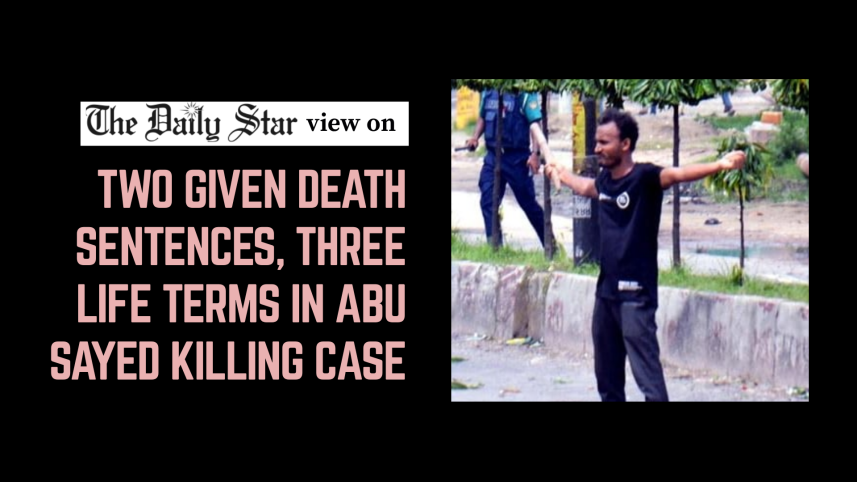
This was one of those cases that always seemed likely to be resolved sooner than most others being tried at the International Crimes Tribunal (ICT) following the July uprising, not just because of its seemingly open-and-shut nature, but also because of what it symbolised: a defining moment of accountability for one of the uprising’s most significant episodes. Abu Sayed’s killing on July 16, 2024, as he stood with his arms outstretched before a marauding group of cops, became a turning point that transformed the movement from one of quota reform to a revolt against state repression and eventually ousted Sheikh Hasina’s autocratic regime. On Thursday, ICT-2 sentenced two former policemen to death, for directly shooting Abu Sayed, and 28 others to various jail terms in this connection. This is a moment worth reflecting on.
By holding not only those who pulled the triggers but also others accountable under the doctrine of command responsibility and complicity, the tribunal has reinforced an essential principle: that abuses of power, especially against unarmed citizens, cannot go unanswered regardless of the perpetrators’ rank or position. In doing so, it has offered a measure of institutional response to a crime that came to symbolise the total breakdown of law, accountability, and trust in the very institutions meant to protect citizens.

This is the fourth judgment in cases filed on charges of crimes against humanity committed during the uprising, with two each delivered by ICT-1 and ICT-2. While reactions have naturally varied—from the victim’s family and co-protesters expressing relief but also a sense that those higher up the chain of command have not been punished sufficiently, to the defence signalling its intent to appeal upon review of the full judgment—the verdict has nonetheless reopened the conversation on accountability for the July killings. However, the fact that only six of the 30 convicted were present in the dock to receive the judgment, with the rest remaining absconding, has raised concerns about whether it can be implemented fully. The credibility of this process will depend a lot on whether those still beyond reach are brought to justice.
The ICT’s ruling is more than a legal conclusion in one case, however. It is part of a wider undertaking to assign accountability and offer some closure to wounds that still remain politically and emotionally raw. It is, therefore, vital that we don’t remain fixated on the symbolism of convictions. The consistency and fairness with which justice is pursued across all cases arising from the uprising are of equal importance, especially amid allegations of impropriety levelled against a section of the tribunal’s prosecution in recent times as well as questions surrounding the lengthy pre-trial detentions of some of the accused. Without sustained institutional follow-through, there is a risk that even landmark verdicts may come to be seen as inadequately reached.
Finally, this moment is also a clarion call for the authorities to ensure that the conditions and failures that led to a tragedy like Abu Sayed’s are never repeated. Otherwise, the lessons of July 2024 may fade without truly being learned.
 For all latest news, follow The Daily Star's Google News channel.
Comments