


No time for complacency
The recommendation of the United Nations Committee for Development Policy (UN CDP) to postpone Bangladesh’s graduation from the Least Developed Country (LDC) status until November 24, 2029 comes as encouraging news. But it should not become an excuse for procrastination in LDC graduation preparations, as three years can pass very quickly. Moreover, this recommendation, which follows Bangladesh’s formal request in February to extend the preparatory period, is not the final decision on deferment. For it to take effect, the extension must be approved by member states at the United Nations General Assembly (UNGA) in September.
Therefore, our response to this development must be grounded in realism. As things stand presently, Bangladesh, which meets all three graduation criteria by a considerable margin, is set to graduate from LDC status on November 24, 2026. Following graduation, whenever it happens, the country will lose several preferential treatments including duty-free access to European markets and a WTO waiver that allows the production of generic versions of patented drugs. The LDC status also provides access to some concessional financing and international development funds. In fact, compared to others, Bangladesh makes the most extensive use of LDC-specific trade preferences offered by developed and developing economies, with around 73 percent of its exports dependent on such arrangements. Losing these benefits could prove particularly damaging at a time when geopolitical uncertainties are straining Bangladesh’s import-dependent economy, while domestic challenges—ranging from high inflation and weaknesses in the banking sector to sluggish foreign direct investment—continue to undermine macroeconomic stability.

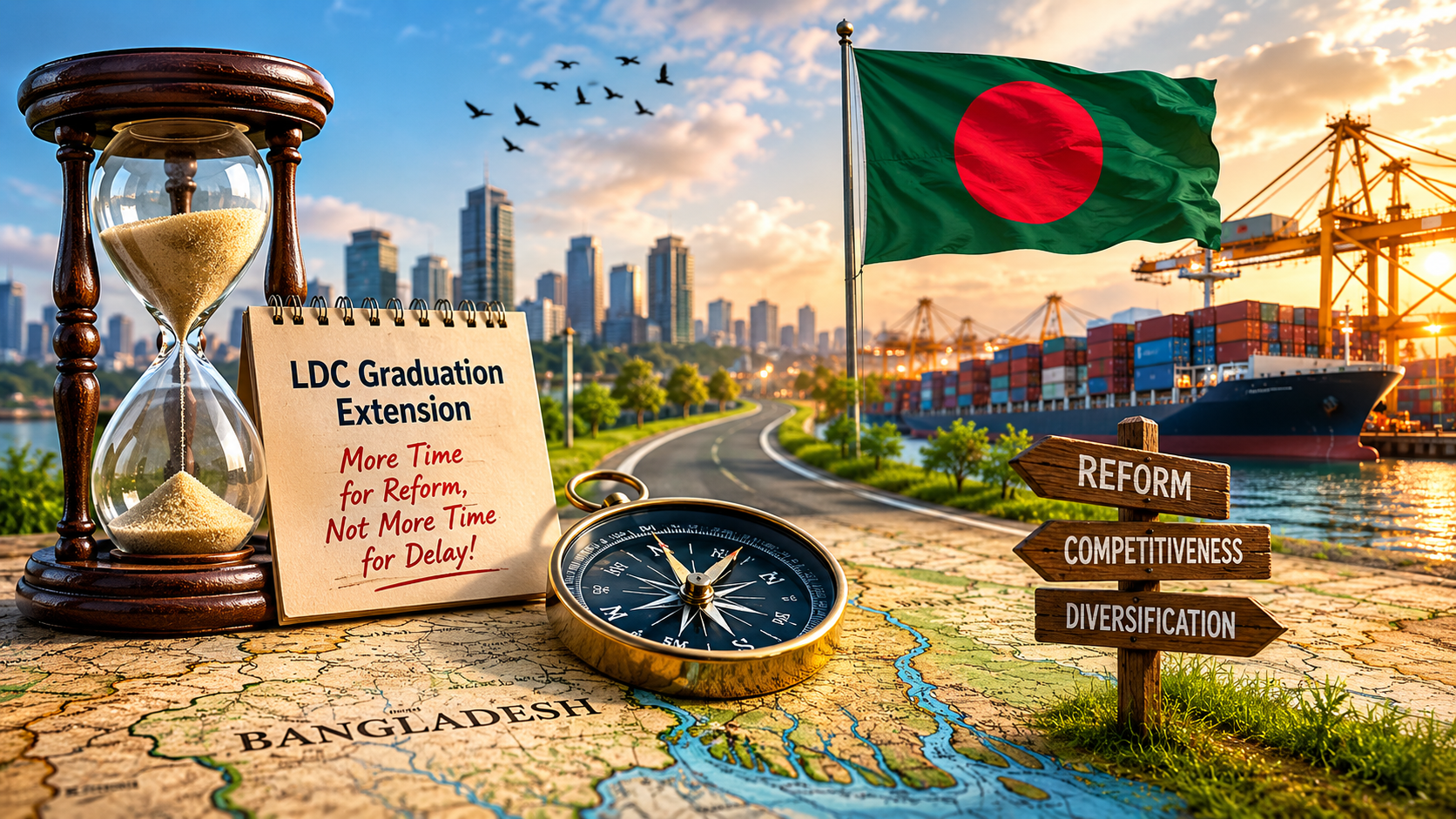
This is why business leaders and economists have long been advocating a deferment of graduation. This advocacy must now continue at the diplomatic level to secure the support of UN member states—particularly major trading partners such as India, China, and the European Union—for the extension. Diplomatic engagement should also clearly communicate our commitment to implementing concrete reforms, assuring partners that the country remains firmly on the path to graduation. At the same time, both the government and the private sector must pursue all necessary preparations regardless of the outcome at the UNGA.

This includes securing post-graduation trade arrangements with the EU, diversifying export markets and products, strengthening forward and backward linkages, investing in research and development, and advancing fiscal, governance, and institutional reforms. The list of tasks is long, but the time available is short. The government must take this into account and avoid policy decisions that may appear attractive in the short term but add little to our preparedness for a post-LDC environment marked by stricter trade rules and compliance requirements. We hope this sense of urgency is also reflected in the upcoming budget as well as sector-wise allocations and decisions. By 2029, Bangladesh must be fully prepared to transition beyond LDC status.
 For all latest news, follow The Daily Star's Google News channel.
Comments