


Ordinances lapsed, reforms missed
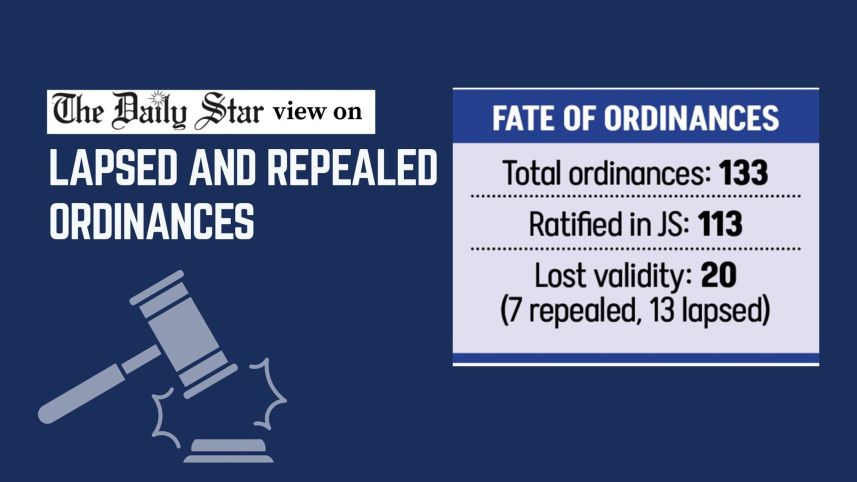
It is unfortunate that we must note the end of this government’s first month in parliament with much disappointment. As had been feared, many ordinances that had to do with major reforms for judicial independence, human rights, and anti-corruption were allowed to expire on April 10. The repealed ordinances included the National Parliament Secretariat (Interim Special Provisions) Ordinance, 2024; three concerning judicial independence; and three ordinances related to the notoriously ineffectual National Human Rights Commission (NHRC). Among the lapsed ordinances are the Referendum Ordinance, two ordinances on the prevention and remedy of enforced disappearance, the Anti-Corruption Commission (Amendment) Ordinance, and the Right to Information (Amendment) Ordinance.
That so many of the expired ordinances could have created reforms, which the people of Bangladesh have been seeking for so many years, is disturbing. Whatever the BNP government’s future plans may be in terms of effecting laws which prioritise justice over politics, it has so far failed to take the pulse of the people. And while the opposition’s allegation that the government had gone back on prior understandings on key ordinances is concerning, we must also criticise its apparent lack of ineptitude in debating the ordinances in parliament. While all 133 ordinances had been presented promptly on March 12 (the first day of the 13th parliament’s first session) by the law minister, the opposition seemed more preoccupied with pushing its agenda for a reform council—deemed unconstitutional by the government—than deliberating on and debating the ordinances presented. This betrays a lack of preparation on the part of the opposition, most of whose members have never sat in parliament until now.

At this point, one cannot help theorising that the contents of the expired ordinances had not been to the liking of the BNP government and that it would like to reintroduce them in the future. Needless to say, it does not bode well if ordinances ensuring the depoliticisation of the judiciary, the independence of the NHRC, and justice for and prevention of enforced disappearances are not to the liking of this new government. We hope we will be proven wrong in our grim assessment of why such urgent ordinances were repealed and allowed to lapse. Each member of this parliament must be aware that their current position is solely due to the fatal sacrifices suffered by the people of Bangladesh in the July uprising. They owe it to the survivors of the movement to preserve the spirit of that uprising. And this must be reflected in the legislation this government passes—and soon.
 For all latest news, follow The Daily Star's Google News channel.
Comments