


Prioritise mosquito control
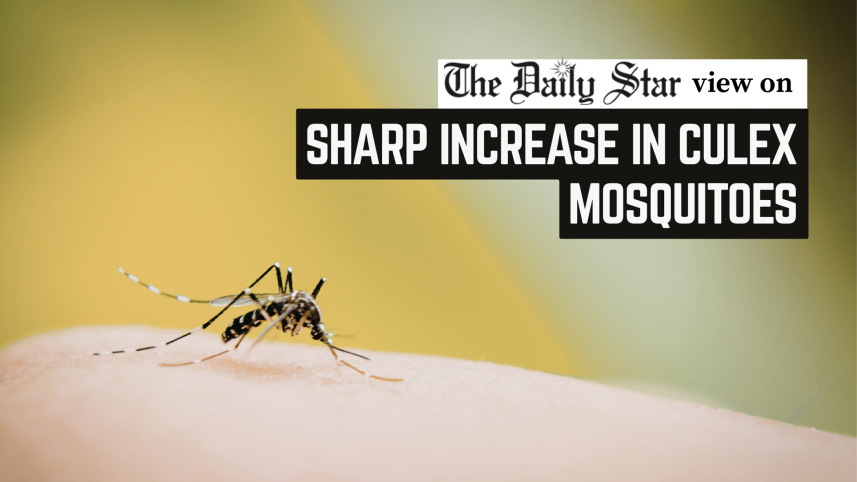
The short winter this time has brought in the menace of Culex mosquitoes for Dhaka citizens earlier than usual, and as always, our city corporations have largely failed to predict and manage the situation. According to a report in this daily, the worst-affected areas include Mirpur, Eskaton, Ramna, Gandaria, Mohammadpur, Razabazar, Tejturibazar, Uttara, Hazaribagh, Kamrangirchar, Hatirpool, Moghbazar, and parts of Old Dhaka, among other places.
Although officials of both Dhaka North and South City Corporations claimed that mosquito control drives are ongoing, these have reportedly been sporadic and largely ineffective. According to experts, the methods being used—fogging and spraying larvicides—are not sufficient to control the Culex population. Culex mosquitoes lay eggs in ditches, drains, and sewers during the dry season, when the water in these depositories becomes stagnant due to lack of rainfall. Since there was a small number of cold days this winter, the warmer conditions of breeding grounds acted in the Culex’s favour. In fact, as an entomologist told this daily, the current density of Culex mosquitoes is unusually high, about 40 percent higher than in December. Therefore, proper cleaning of drains, ditches, and sewers to ensure free flow of water is crucial.

Something as basic as the birth cycle of mosquitoes common in our country should not be unknown to city officials. Yet, proactive action and planned measures appear absent or insufficient year after year. The authorities must realise that climate change is, and will be, affecting mosquitoes’ breeding seasons, and so control efforts must be designed accordingly. While the absence of elected representatives has partially impacted the operations of city corporations in the last 18 months of interim administration, this alone cannot be a reason for the slow and lacklustre mosquito control measures. City officials, too, are accountable to the public and must ramp up efforts in line with expert advice.
More importantly, they must heed experts’ warnings that the dengue season may start earlier this year. Since temperatures did not drop significantly during winter, the Aedes population remained intact. This means the first rain could potentially release scores of dengue carriers. We hope the newly elected administration will not wait for a city government election to adopt an Integrated Mosquito Management System—a unified system covering surveillance, source reduction, appropriate insecticide use, community engagement, etc.—not just in the capital but across the country. The preventable menace of mosquitoes and related diseases should be easy to control if priorities, funds, and, above all, political will are firmly in place.
 For all latest news, follow The Daily Star's Google News channel.
Comments