


A school that has no toilet!
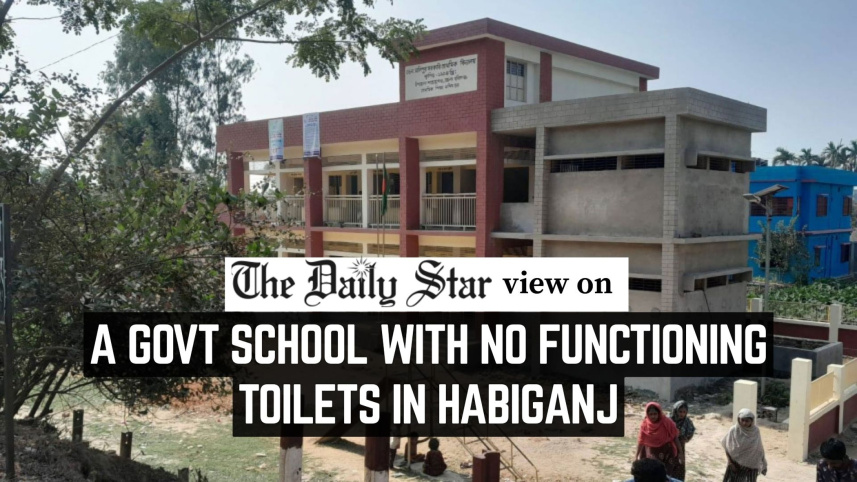
It is difficult to imagine how students and teachers can spend their entire day in a school without access to even a basic toilet. Yet, this has been the reality at a government primary school in Habiganj for nearly two years. With around 180 students and four female teachers, Olipur Government Primary School in the district’s Shayestaganj upazila has been operating without usable sanitation facilities on the campus, forcing children to seek access to the houses nearby when they need to. While there is a toilet at a nearby mosque, it is in a dilapidated condition and not usable. This has become a matter of embarrassment on a daily basis for the school’s students and teachers.
The situation has gotten to the point where regular classes are getting disrupted, and attendance has reportedly declined as many students are reluctant to come to school. In a country where retaining children in primary education still remains a challenge, such a situation undermines years of effort to improve enrolment and attendance. The problem is even more serious for female students, for whom the absence of safe and private sanitation facilities create significant physical and psychological discomfort. Absence of a basic sanitation facility can severely hinder girls’ education as many are compelled to miss school during menstruation due to stigma and inadequate infrastructure.

Reportedly, the construction of a wash block by the local public health engineering office began two years ago. However, it remains unfinished due to prolonged negligence by contractors. Such delays raise serious questions about oversight and accountability in public infrastructure projects, particularly when the beneficiaries are schoolchildren. That the relevant authorities have remained oblivious to this critical matter for so long is equally concerning. This is just one example of how the absence of basic sanitation facilities can hamper academic activities. Many schools across Bangladesh continue to lack clean and hygienic sanitation facilities, undermining a proper learning environment.
We, therefore, urge the authorities to complete the wash block at the school and make it fully functional without further delay. At the same time, they must investigate why construction was stalled for so long and hold those responsible to account. More importantly, this incident should prompt the authorities to review the conditions nationwide to ensure that all government schools have adequate and properly maintained sanitation facilities. Authorities must also ensure gender-friendly toilets that can improve attendance, comfort, and confidence of female students.
 For all latest news, follow The Daily Star's Google News channel.
Comments