


Secure cooking fuel for Bhasan Char residents urgently
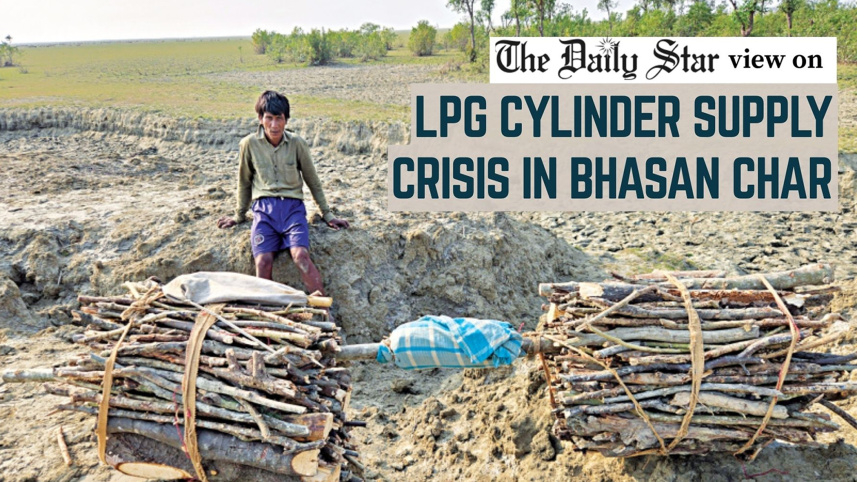
It is disheartening to learn that Rohingya refugees living in the camps of Bhasan Char are struggling due to an LPG shortage. According to a report in this daily, with the supply of LPG cylinders halted because of a fund crunch, residents of the island are forced to cut down trees to harvest firewood for cooking. This has been going on for months as LPG supply began to dwindle in August last year. Since then, more than 250,000 trees have reportedly been cut down.
The consequence of this LPG shortage and the resultant tree felling is two-pronged. Not only are the Rohingya refugees being deprived of reliable cooking fuel, but the chopping down of trees at such a large scale is also causing rapid deforestation in an already environmentally vulnerable area. Being a coastal area, it is the vegetation that keeps Bhasan Char safe from the dangerous impact of cyclones, storm surges, and erosion. While the Rohingya—around 34,000 of them—living on the 40 sq-km island have little choice but to adapt to the fuel shortage this way, it is the authorities’ lack of action to prevent this crisis that disappoints us the most.

The Islamic Relief Bangladesh, a local subsidiary of a US-based NPO by the same name, has been supplying 8,000 Rohingya families with a 12kg LPG cylinder each on a regular basis since 2020. However, due to the US president’s slashing of foreign aid last year, the supply of LPG cylinders to the island took a hit in August last year. Over the following months, this supply slowed and then halved against a requirement of 5,000 cylinders per month. No solution has yet been found despite repeated correspondence from the Bhasan Char and Cox’s Bazar offices of the Refugee Relief and Repatriation Commissioner (RRRC) and the NGO Affairs Bureau.
More concerningly, there is apparently no government fund to ensure an uninterrupted supply of LPG to Bhasan Char. We find it unacceptable that a project like Bhasan Char, which has been planned extensively, should be deprived of an item as essential as cooking fuel for so many months. We urge the government to take note of this urgent matter and work with funding organisations to find a lasting solution. Planning for this island also involved massive afforestation efforts. That must not be undone as it would make the island population even more vulnerable than they already are.
 For all latest news, follow The Daily Star's Google News channel.
Comments