


A tragedy rooted in systemic failure
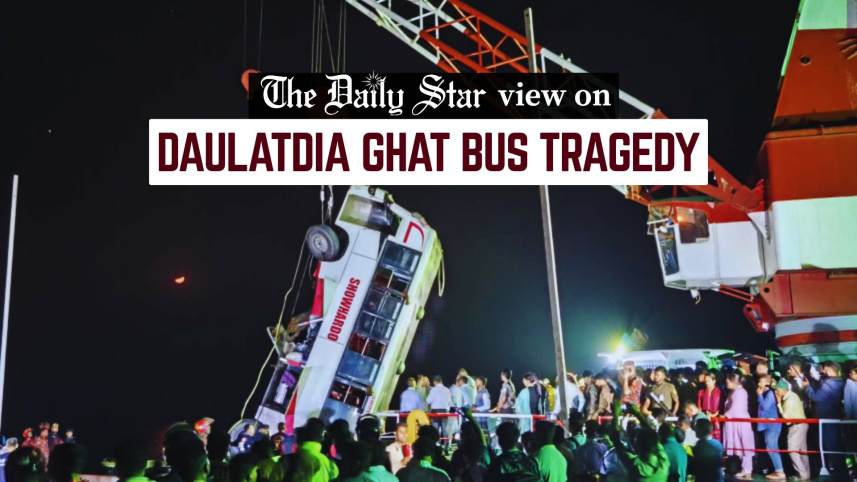
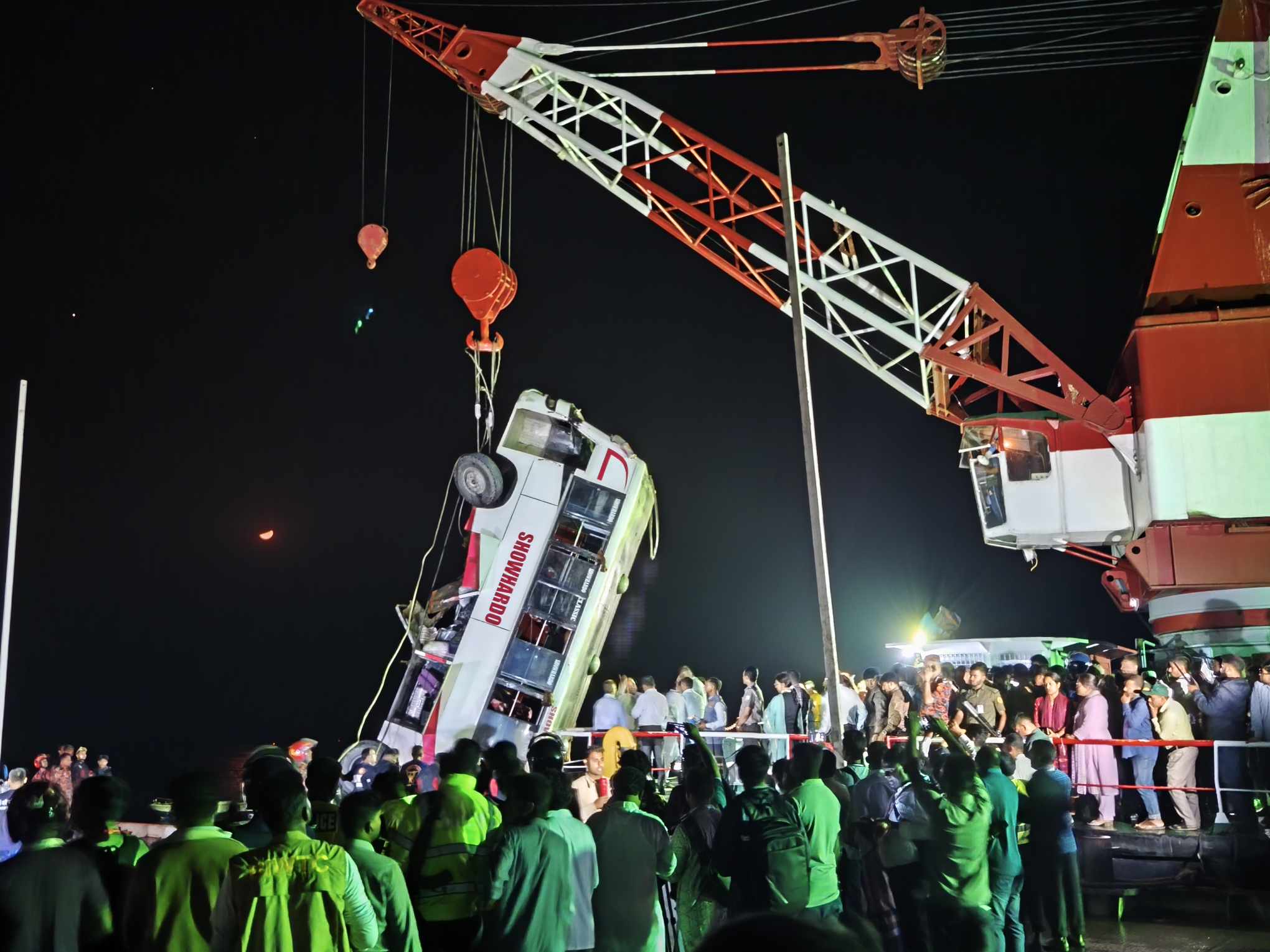
It is tempting to think of life in Bangladesh in terms of something expendable given how easily it is cut short almost every day, every month, and during every festival—often in unimaginable yet preventable accidents. The incident that took place at the Daulatdia ferry terminal in Rajbari on Wednesday is a stark reminder of this reality that citizens have to live with. It involved a bus carrying at least 40 passengers that rolled off a ferry pontoon before plunging into the Padma as onlookers watched in horror. While the exact cause of this tragic accident remains unclear, there is little uncertainty about what became of most passengers inside the bus. As of writing this editorial, 26 bodies have been recovered, and at least nine rescued alive. Many are still missing, however, as rescue efforts continue.
After every such tragedy, we see officials undertake a routine response, and this time was no exception. But why does so little change despite the repeated loss of lives in transport accidents? Earlier this week, a train-bus collision in Cumilla claimed 12 lives. Between March 19 and 24, at least 28 more people were killed in accidents across the country. With the long Eid holiday period still underway, the toll is likely to rise further. What is both tragic and unconscionable is that such tragedies keep recurring every year across roads, railways, and waterways. In most cases, they are rooted in human negligence, enabled by systemic mismanagement in a sector deeply influenced by political power play and mismanagement. Unfortunately, not even the non-political interim government was able to fix this, which showed how deeply dysfunctional the sector has become.

The pattern that follows each major accident is all too familiar by now: a committee is formed, findings are submitted, and a few individuals are punished. Meanwhile, powerful actors within the transport sector remain beyond accountability. As a result, meaningful reform never materialises, leaving the system vulnerable to repeat tragedies. In the case of the Daulatdia incident, the probe body will probably identify a definitive cause, but it remains to be seen whether the broader safety concerns will be addressed. Passenger safety at ferry terminals—through adequate railings, safe boarding and disembarking practices, etc.—demands urgent attention. So too does the chaotic environment at terminals, where vehicles race along narrow, uneven approach roads in competition to board ferries.
Accident risks in the transport sector cannot be mitigated on a piecemeal basis. What is required is a holistic assessment of risks, followed by strict measures to resolve or reduce them, even if some actions call for heavy-handed discipline of those within the sector. The government must not shy away from such measures because of partisan interests. The safety of citizens should matter above all other considerations.
 For all latest news, follow The Daily Star's Google News channel.
Comments