


Ration cuts without work rights may worsen the Rohingya plight

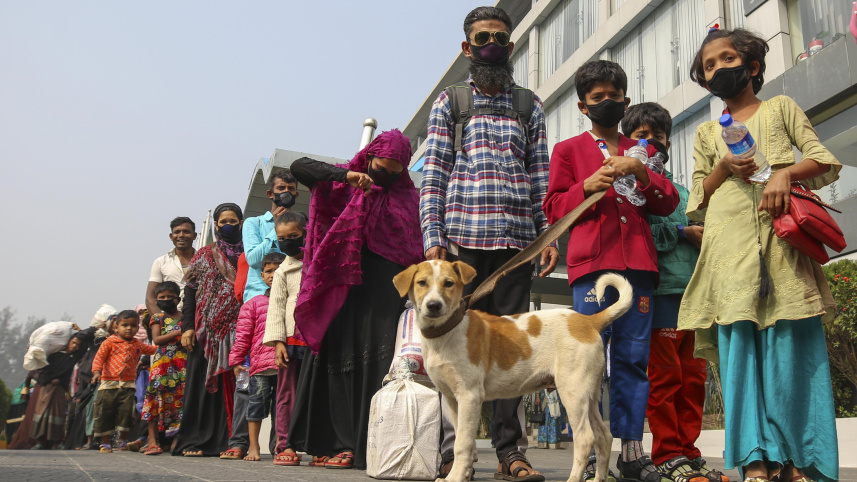
While global attention is on tensions involving the United States, Israel, and Iran, another crisis continues quietly in Bangladesh. Recently, the World Food Programme (WFP) introduced a revised Targeting and Prioritisation Exercise (TPE) for nearly 12 lakh refugees living in Cox’s Bazar and Bhasan Char. Under the new system, refugee households will receive food assistance of $12, $10, or $7 per person per month. The amount depends on their assessed level of food insecurity. Previously, all refugees received $12 per person. On paper, vulnerability-based targeting appears reasonable. In many humanitarian crises, such systems help ensure that limited resources reach those most in need. However, the Rohingya context is slightly different.
Unlike refugees in some other countries, Rohingya in Bangladesh have extremely limited freedom of movement, and they have restrictions on the work they can do. Refugees are also generally not formally employed by humanitarian organisations, except as volunteers, who receive small daily allowances. As a result, they remain almost entirely dependent on humanitarian assistance. Within this context, reducing aid raises serious concerns, as when refugees are not legally permitted to engage in meaningful economic activity, food insecurity becomes less of a household condition and more of a structural outcome. Humanitarian agencies have provided life-saving support for years, and their efforts should not be overlooked; however, survival is not the same as stability. Instead of creating pathways toward self-reliance for Rohingya and local communities in Cox’s Bazar who are affected due to refugee settlements, the current system has largely institutionalised dependency.

Many programmes labelled as “livelihood initiatives” have not produced meaningful outcomes. Skills training programmes—such as electrical repair or other technical courses often fail to translate into real opportunities because refugees do not own motorbikes, electricity access is limited in many camp areas and they cannot legally move beyond the camps to seek work. This raises difficult questions: why invest donor resources in skills that cannot realistically be applied? And what long-term strategy do these initiatives serve? The new targeting model categorises refugees as extremely food insecure, highly food insecure, or food insecure. Some vulnerable households—such as those led by elderly individuals, persons with disabilities, or children—will continue receiving the highest level of assistance. Yet, the broader reality remains unchanged: the entire Rohingya population in Bangladesh faces severe restrictions on economic participation.
Recent protests in the camps are often described as reactions to ration reductions. In reality, they reflect deeper concerns about uncertainty and the absence of long-term planning. This can include discussions about ensuring safe and dignified lives in the camps until the Rohingya are able to return to Myanmar, expanding economic participation for refugees, and creating policies that allow them to contribute economically while remaining under appropriate regulation. At the same time, Bangladesh itself is going through a transitional period after the February 2026 election. The new government has said they will work closely to make Rohingya repatriation possible and shared data on 8.29 lakh Rohingyas with Myanmar. But the crisis facing the Rohingya on the ground cannot be a lesser priority. The new government also needs to recognise that prolonged encampment cannot be managed indefinitely through restriction and aid relief alone. Carefully regulated work opportunities—such as camp-based enterprises, pilot employment schemes, or limited work authorisation programmes could help reduce humanitarian dependency while preserving government oversight. If even one or two members of each refugee household were allowed to work legally under controlled frameworks, the humanitarian costs could gradually decline, camp economies could stabilise, and youth frustration could decrease.
As global funding pressures increase and donor fatigue grows, humanitarian assistance is being recalibrated downward. Without structural reforms, this risks managing dependency more efficiently rather than reducing it. The Rohingya crisis requires more than improved targeting of aid. It requires policies that combine protection with participation and living with safety. The global community has shown it can keep the Rohingya fed. The real challenge is whether it will ensure they can live with dignity until they are able to return to Myanmar safely and with their rights guaranteed. If not, families will continue to cut back on meals, young people will be pushed into unsafe, informal work, and the risks of child labour, early marriage, hazardous migration, and involvement in illicit activities will only grow.
Mohammed Zonaid is an award-winning Rohingya journalist, photographer, and fixer. He can be reached at zonaidmohammed92@gmail.com.
Views expressed in this article are the author's own.
Follow The Daily Star Opinion on Facebook for the latest opinions, commentaries, and analyses by experts and professionals. To contribute your article or letter to The Daily Star Opinion, see our guidelines for submission.
 For all latest news, follow The Daily Star's Google News channel.
Comments