


Who truly pays for the Ramadan price spike?

In much of the Muslim world, Ramadan brings discounts on staples, state-subsidised markets, and public messaging about restraint. In Bangladesh, it brings something else: a predictable surge in prices. The holy month, meant to cultivate self-discipline and solidarity with the poor, has become a season of extraction. And nowhere is the cruelty felt more sharply than in our women’s kitchens.
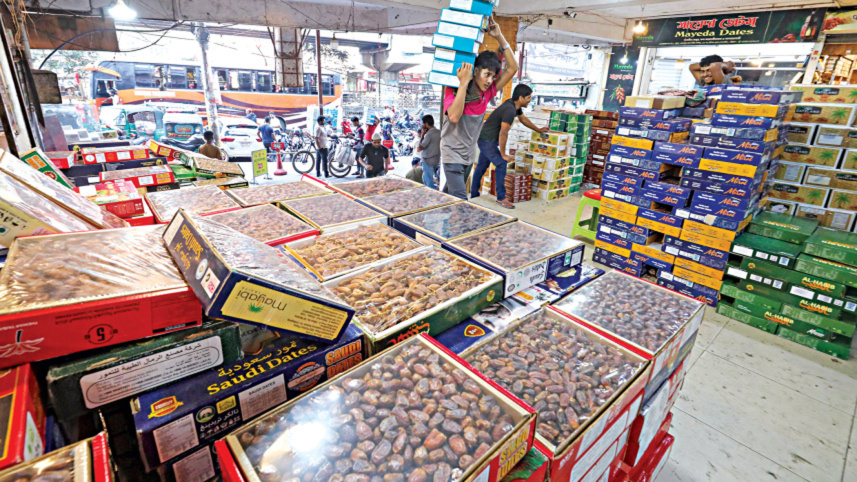
The annual hike in the cost of essentials is now treated as routine. The price of rice, lentils, edible oil, sugar, meat, and fruit rises steeply in the weeks before the month of fasting begins. Iftar items such as dates and chickpeas become conspicuously dear. But the inflationary fever does not stop at food. Clothing, footwear, and transport fares swell ahead of Eid. Demand is predictable while profiteering is rehearsed.

This pattern is not inevitable. In countries such as Pakistan and Indonesia, governments routinely expand subsidised sales. Even in low-income countries across North Africa, Ramadan markets are often associated with discounts rather than mark-ups. Seasonal demand spikes are anticipated, not exploited. Bangladesh’s opposite trajectory is, therefore, not a cultural destiny but a policy failure and an ethical collapse.
Traders cite port congestion, supply chain bottlenecks, currency pressures, and rising global prices. While these factors exist, they do not explain the regularity or brazenness of the Ramadan price spike. Nor do they justify the open secret that some wholesalers hoard goods to engineer scarcity.
Blaming shadowy syndicates alone is too easy: a small group of traders and importers controls the market, holding power to set higher prices. It absolves the rest of the value chain. Retailers adjust price tags without question. Transport operators invoke holiday demand to rationalise higher fares. Opportunism trickles down because it is tolerated upwards.
The economic consequences are severe. With inflation already high, low- and fixed-income families enter Ramadan stretched thin. For day labourers, garment workers and the urban poor, the month becomes a calculus of anxiety: how to honour a sacred tradition without falling into debt. Yet, this hardship is not gender-neutral. It is profoundly feminised.
Ramadan in Bangladeshi households rests on women’s labour. They wake before dawn to prepare sehri. They cook iftar while fasting. They clean, host, serve, and manage the domestic rituals. Religious discourse often reinforces this arrangement by promising spiritual reward for feeding family members and elevating domestic service into devotion. Housework, long romanticised as an expression of love and sacrifice, intensifies during Ramadan.
When prices rise, it is women who absorb the shock. They stretch budgets that no longer stretch. They negotiate with shopkeepers who will not budge. They dilute lentils, substitute beef with cheaper protein, slice fruits thinner, cook with less oil, and serve smaller portions. They try to manage children’s expectations about Eid clothes when they suddenly cost more. Many go without new clothes. Women carry the emotional burden of scarcity so that the family’s sense of celebration remains intact. This is invisible labour layered upon economic precarity.
Men dominate the market—wholesalers, transport operators, shop owners, and association leaders. Women, largely excluded from these spaces of price-setting power, confront the consequences without meaningful agency. The gendered irony is stark: women are charged with sustaining the moral atmosphere of Ramadan at home, while men in commercial networks extract profit from the rituals women sustain.
The normalisation of this cycle is perhaps its most corrosive feature. Each year, headlines lament rising prices, authorities conduct publicised raids, and the pattern repeats. Breaking this cycle requires more than seasonal crackdowns. It demands structural reform and a moral reckoning.
Price monitoring must be continuous, not theatrical. Permanent market surveillance, real-time publication of wholesale and retail benchmarks, and accessible complaint mechanisms would reduce the space for arbitrary mark-ups. Enforcement must be consistent; token fines that can be absorbed as a business expense only embolden repeat offenders.
Predictable demand should be met with planned supply. Advance import scheduling for high-demand goods, temporary duty adjustments where necessary, and expanded subsidised outlets in low-income neighbourhoods can blunt artificial scarcity. Demand spikes during Ramadan and Eid are not surprises; they are annual certainties.
Accountability must extend beyond “syndicates.” Trade associations and chambers of commerce should adopt public pledges of price stability in Ramadan, with reputational incentives for compliance. Corporate social responsibility cannot mean distributing iftar packs while quietly raising prices. Ethical commerce should be a badge of honour.
Crucially, women must be recognised as economic actors, not merely household shock absorbers. Supporting women-led cooperatives and small-scale enterprises can shift the bargaining power. Including women’s organisations in market oversight would bring perspectives currently largely absent from price-setting conversations. When women gain agency in markets, not merely responsibility in kitchens, the balance begins to tilt.
Ramadan is meant to discipline appetite and cultivate empathy. To convert it into a season of calculated escalation is to betray both the spirit of the month and the households that keep its rituals alive. Breaking the cycle is not merely an economic imperative, but a feminist one and a moral one.
Farah Kabir is country director at ActionAid Bangladesh.
Views expressed in this article are the author's own.
Follow The Daily Star Opinion on Facebook for the latest opinions, commentaries, and analyses by experts and professionals. To contribute your article or letter to The Daily Star Opinion, see our guidelines for submission.
 For all latest news, follow The Daily Star's Google News channel.
Comments