


Boost TCB supply and distribution
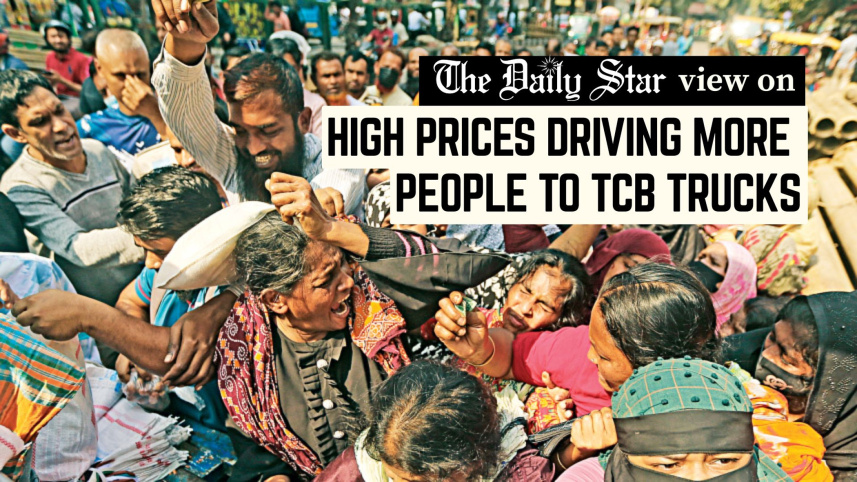
It is deeply disturbing to see how the rising prices of essentials, coupled with stagnant incomes, is pushing more families towards financial hardship, forcing them to increasingly rely on subsidised food programmes for basic sustenance. This is reflected in the growing queues of people at TCB truck sale points across Dhaka, where men and women are seen jostling for their spots every day. An average package of basic iftar items of soybean oil, lentils, sugar, chickpeas, and dates that costs around Tk 950 in the open market is available for just Tk 550 at the TCB trucks. For many families, this Tk 400 difference is significant.
The scenes at the sale points are heartbreaking. Reportedly, 40-year-old Nasir Khan, waiting at Kazipara metro station with his leg in plaster following a serious accident, struggled to secure a package for his family. Seventy-year-old Mulkuch Bibi had to prepare the night before to ensure she could get cooking oil and sugar. Young mother Minuara Begum stood in line for hours with her baby because she had no one at home to help. Stories like these unfold across the city every day, highlighting the urgent need for more effective, humane support for vulnerable families.

According to BBS, food inflation rose to 8.29 percent in January, reversing the earlier signs of easing. Meanwhile, projections by the World Bank last year suggested that the national poverty rate could climb to 22.9 percent, with extreme poverty nearly doubling compared to three years ago. Findings from the PPRC indicate an even sharper rise, with nearly 28 percent of the population now living below the poverty line, and about 1 in 10 surviving in extreme poverty. The numbers are indeed alarming and deserve urgent action.
At present, 450 mobile trucks of the TCB are operating nationwide, aiming to distribute 23,000 tonnes of essentials to 35 lakh consumers during Ramadan. Clearly, this is not enough. The government must increase the volume of TCB’s open market sales in line with demand. It must modernise the distribution process and consider area-based distribution in labour-dense neighbourhoods, factory zones, and informal worker hubs to reduce crowding at central points. Special arrangements should be made for the elderly, persons with disabilities, and working-class people who cannot afford to lose hours of income. Moreover, as the government prepares to inaugurate its family card programme on March 10, which will provide four crore families with Tk 2,500 or essential commodities of equivalent value, poor households must be included urgently and without any political affiliation.
While providing subsidised food is essential, safeguarding the dignity of citizens is equally important. The sight of thousands waiting in queues for hours should not become a normal feature of our urban landscape. Instead, it should serve as a call to ensure that assistance is delivered efficiently and respectfully. In times of economic distress, compassion must be matched with competence.
 For all latest news, follow The Daily Star's Google News channel.
Comments