


Can the new government get the renewables policy right?

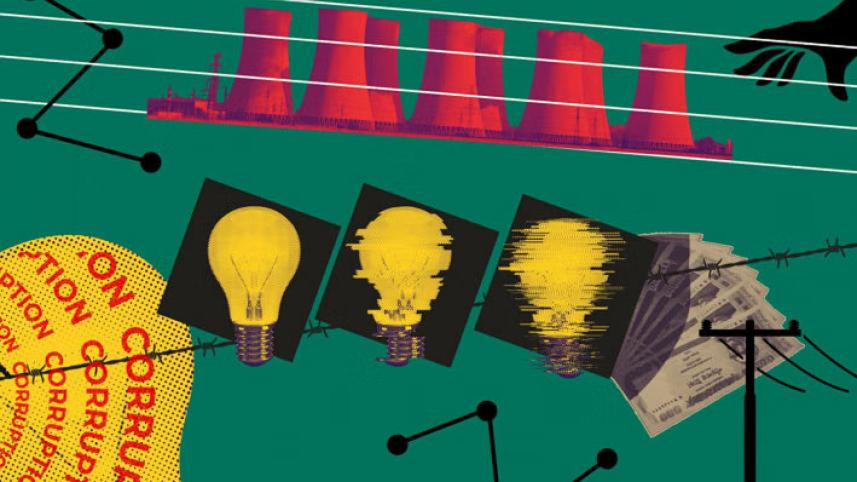
Bangladesh relies primarily on fossil fuels, especially coal and natural gas, to generate power. In addition to jeopardising the nation’s long-term viability and harming the environment, this reliance leaves it vulnerable to fluctuations in the world’s energy prices. The expansion of the renewable energy sector is challenged by high upfront prices and a lack of supportive regulations, despite notable advancements, especially in solar household systems and grid-connected solar projects. In this context, the government adopted the Renewable Energy Policy (REP) 2025 to facilitate a sustainable energy transition. Though this policy marks a strategic pivot towards sustainable energy, aligned with national plans such as the Integrated Energy and Power Master Plan (IEPMP), Delta Plan 2100, and international climate commitments under the Paris Agreement, it has several critical limitations.
The targets of the REP2025 are ambitious and unrealistic. The policy sets a goal of 20 percent of electricity generation from renewable sources by 2030 and 30 percent by 2040. It also sets ambitious capacity targets of 6,145MW by 2030 and 17,470MW by 2041. In the REP2008, a modest target of 10 percent power by 2020 was set. That deadline came and went. As of September 2025, the country’s installed renewable energy capacity was 1,636.5MW, or 5.22 percent of its total capacity. To meet the 2030 goal, the country must add 750MW annually. However, only 400 MW of utility-scale projects are under construction, and foreign investment remains limited due to policy instability. Even China, a global leader in renewables, has set a target of achieving 25 percent non-fossil fuel by 2030. This raises serious doubts about the feasibility of achieving similar targets, as Bangladesh lacks the financial resources, infrastructure, investment, and technological capacity compared to China.

The policy also does not clearly specify mechanisms for financing in the renewable energy sector. An assessment by the Institute for Energy Economics and Financial Analysis (IEEFA) reveals that Bangladesh will require up to $980 million annually to meet its renewables goal of 2030. And during the next decade, the country will need up to $1.46 billion a year. In that case, we will require to increase the current annual investment flow of $238 million by four to six times in the next 5-15 years.
Another big obstacle to renewable energy expansion is the continued high dominance of fossil fuel subsidies. Bangladesh allocates nearly $4 billion in subsidies to the energy sector each year. Capacity payments to idle plants and fuel subsidies continue to consume a large share of public resources, leaving very little for renewable energy investment. Furthermore, currency instability, frequent regulatory changes, and the lack of reliable guarantees discourage many foreign investors from committing long-term capital. Domestic finance is also constrained as local banks offer short-term lending horizons, which are not well-suited for projects requiring financing over 15-20 years. Besides, the country faces a lack of strong bankable projects due to the abesence of feasibility studies and unresolved issues around land or rooftop access.
The policy lacks clarity too. There is no strong approach to foreign direct investment (FDI). Achieving national energy goals requires a balanced mix of both FDI and domestic financing. Additionally, the incentive structure under the current policy is uneven and not inclusive enough. While companies implementing renewable energy projects are granted full income tax exemptions for 10 years and partial exemptions for five years, solar panel user households get no incentives. In contrast, many countries provide direct financial support of up to 30 percent for rooftop solar panel installations. The absence of similar provisions limits the potential for decentralised renewable energy adoption in Bangladesh.
The country needs to set realistic and feasible electricity generation targets from renewables that are aligned with existing capacity, financing potential, and institutional readiness. The government should reduce taxes on components like solar panels, inverters, batteries, etc. It also needs to adopt a unified total tax incidence reduction strategy across sectors (solar, wind, biomass, nuclear) to improve affordability and attract investment. Encouraging grid-integrated solar irrigation pumps (SIPs) with subsidies for smaller farms, enabling energy export during off-peak times and revising the duty structure for electric vehicles are also vital. Feed-in-tariff is another policy to accelerate domestic and foreign investment in renewable energy technologies by providing a tariff above the retail power rate.
Ultimately, REP2025 represents a vital strategic intent, but its success hinges on moving beyond ambitious rhetoric towards practical execution. To bridge the gap between five percent and 20 percent renewable capacity, the government must prioritise fiscal reforms, incentivise private and household investment, and overhaul the current financing infrastructure.
Md. Razib is research associate at South Asian Network on Economic Modeling (SANEM). He can be reached at mdrazib329@gmail.com.
Views expressed in this article are the author's own.
Follow The Daily Star Opinion on Facebook for the latest opinions, commentaries, and analyses by experts and professionals. To contribute your article or letter to The Daily Star Opinion, see our guidelines for submission.
 For all latest news, follow The Daily Star's Google News channel.
Comments