


From fuel queues to measles confusion: Lessons for our policymakers

Across Bangladesh, people have been queueing for hours to access fuel, often navigating new documentation and rationing requirements. In some cases, individuals are refuelling repeatedly, fearing future shortages. The government is now preparing to roll out a QR code-based digital “fuel pass.” At the same time, enforcement drives are targeting “hoarders” and rationing systems are being tightened. In March alone, authorities reportedly recovered 2.96 lakh litres of hoarded fuel during 3,559 drives and filed 1,244 cases across the country.
While this flurry of government activities is meant to maintain stability with the war in Middle East showing little sign of slowing down, one must acknowledge that the picture that emerges from the persistent queues, administrative bottlenecks and interventions, as well as business and individual uncertainties is one of chaos and suffering. The problem is often being described as one of fuel supply alone. But on the individual level, the issue is also behavioural, driven by expectations, trust, and fear of being left behind.


From a policy perspective, it is normal for authorities to regulate access, issue directives, and bolster enforcement. But people’s behaviour in practice suggests that many are not responding primarily to what the government says, but acting according to what they believe will happen next: whether prices will rise, whether supply will tighten, and whether others will rush ahead of them. In such an environment, hoarding is not irrational. It is individually rational behaviour in a setting of uncertainty and low trust. If people expect others to stock up, not doing so becomes risky. What emerges then is a coordination problem: actions that make sense for the individual but worsen the situation for everyone. Announcements and enforcement do little to change this dynamic because they do not directly stabilise expectations or rebuild trust.
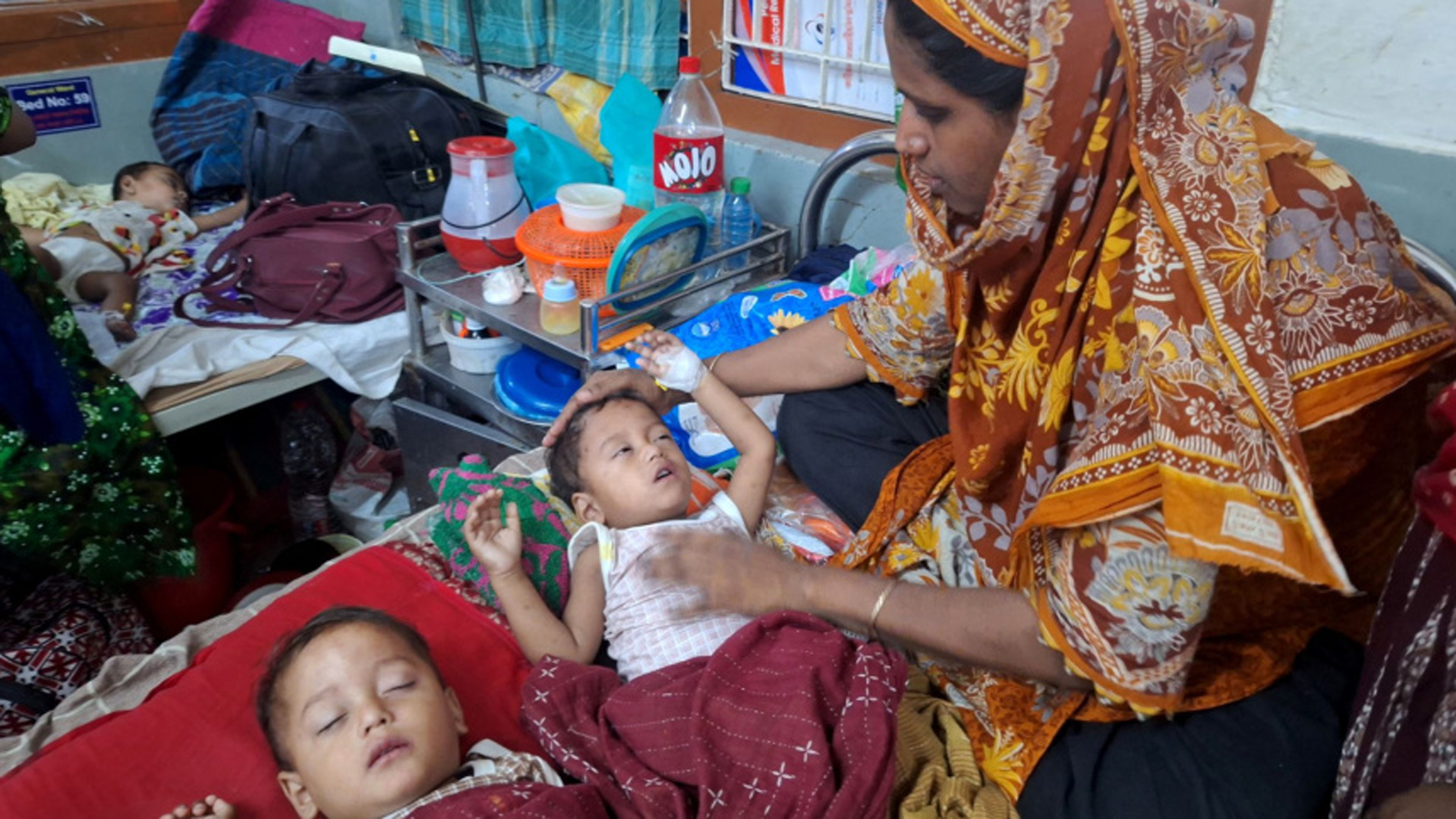
A similar pattern can be seen regarding the ongoing measles outbreak, though the mechanism is different. This is not a conventional case of vaccine hesitancy driven by refusal. Routine measles immunisation in Bangladesh did not suddenly stop. But disruptions in coverage, combined with contradictory public statements, have created widespread confusion about what actually happened. A senior minister’s claim that the measles vaccine had not been administered for the last eight years—later contradicted by immunisation data and officials within the Expanded Programme on Immunization—spread quickly and unsettled parents who had already vaccinated their children. In the absence of clear and consistent institutional signals, misinformation filled the gap. Parents began questioning whether previous doses “counted,” whether their children were protected, or whether waiting for clarification was safer than acting. In this context, delay is not avoidance. It is a rational response to conflicting signals.
The issue is not simply about awareness or the lack thereof. It is the fragmentation of belief caused by inconsistent communication and contested explanations. When institutional signals are weak or contradictory, people rely on rumours, social cues, and reigning political narratives.
At first glance, fuel rationing and a measles outbreak may seem unrelated. In one case, people rush to secure fuel. In the other, they hesitate or delay. But the underlying issue is the same. Policy assumes behaviour will follow clear signals: prices, rules, or information. In reality, behaviour follows expectations, trust, and beliefs about what others will do.
Bangladesh has developed relatively strong capacity in designing policies around supply, pricing, and administration. In fuel markets, attention is focused on imports, reserves, distribution, or stock management. In public health, the emphasis is on access and coverage. But what is often missing in policy circles is a systematic understanding of how people respond. Do citizens trust official signals? Do they expect others to comply? How do they interpret conflicting information? What small frictions delay action? When these questions are overlooked, policies may be well-designed on paper but fragile in practice.
There is some irony in calling for an additional layer of policy design while criticising reliance on traditional tools. Yet this shift is already underway elsewhere. Governments in the OECD have established dedicated behavioural insights units to improve policy effectiveness by aligning interventions with how people actually think and behave. Similar approaches are emerging across the Middle East and in other developing countries. These approaches do not replace conventional tools but they make them work better.
Designing better policies in times of crisis is not the challenge, but designing them for real behaviour is. Bangladesh’s policy toolkit has helped address many structural challenges. But the problems we increasingly face are not only structural, but behavioural. Until policy begins to engage seriously with how people think, decide, and act, we will continue trying to solve 21st-century problems with 20th-century tools.
Ananta Neelim is senior lecturer at University of Tasmania and a behavioural economist and author on public policy design.
Views expressed in this article are the author's own.
Follow The Daily Star Opinion on Facebook for the latest opinions, commentaries, and analyses by experts and professionals. To contribute your article or letter to The Daily Star Opinion, see our guidelines for submission.
 For all latest news, follow The Daily Star's Google News channel.
Comments