


As mob violence persists, we must confront the roots of impunity

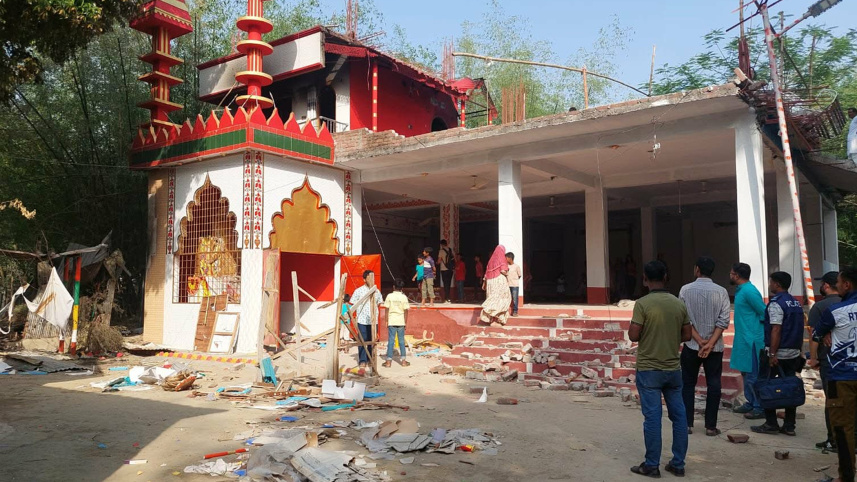
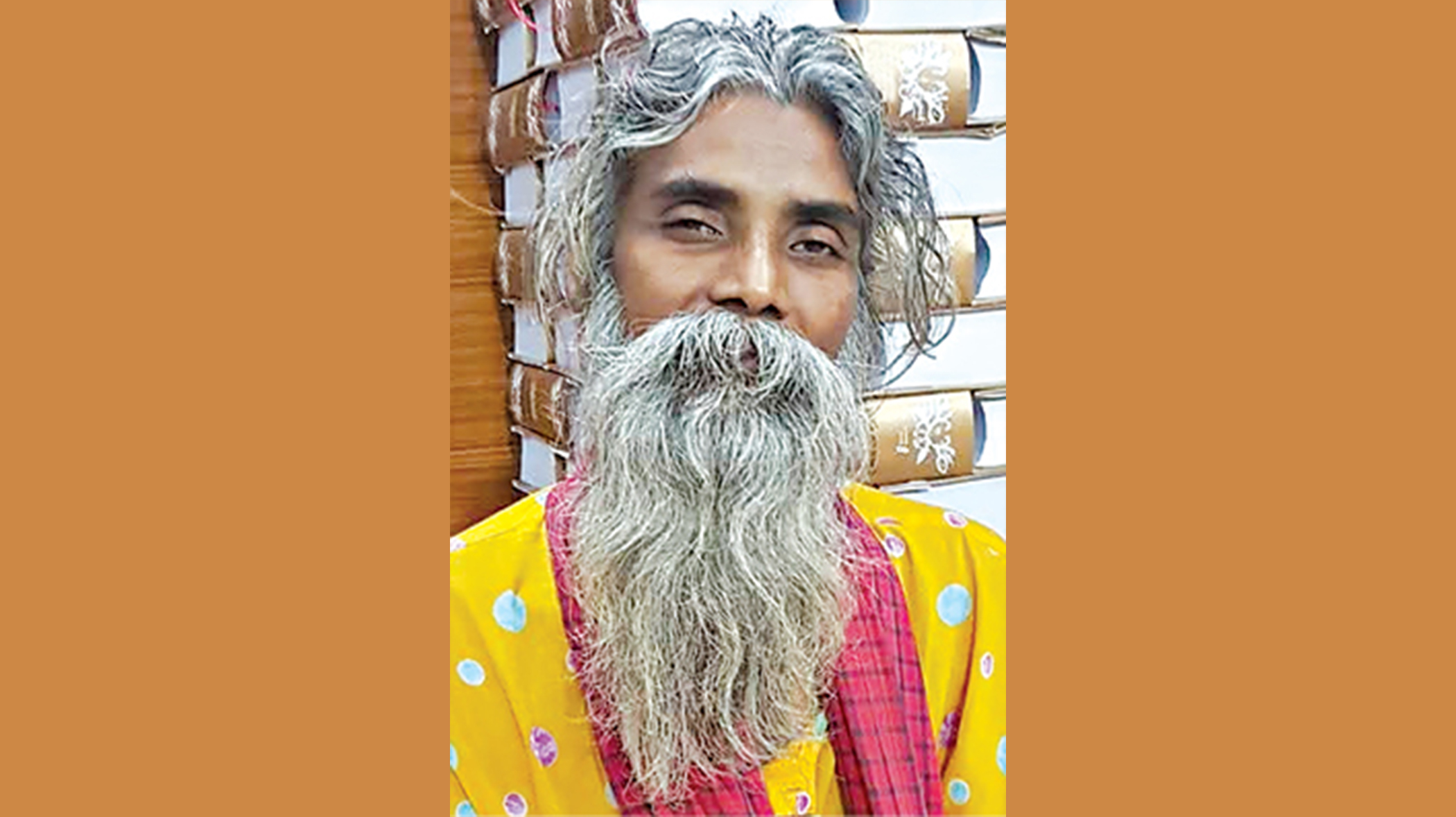
A new incident seems to shake the nation almost every week. Last Saturday (April 11) saw the shocking lynching of a Sufi pir, Shamim al-Jahangir, inside his shrine in Kushtia. A mob vandalised and set fire to the shrine after allegations spread on social media over an old video that was claimed to contain derogatory remarks about religious sentiments. Police recovered the victim from the scene in critical condition and rushed him to a hospital, where he was declared dead on arrival.

By now, incidents like these have largely lost their sense of novelty in Bangladesh. Just a day before the Kushtia killing, several people were assaulted and harassed (including women) in the capital’s Shahbagh area by a group operating under the name “Azadi Andolon,” who had labelled the victims as being homosexual. The pattern is unmistakable: it has become easy to launch attacks—even fatal ones—against anyone simply for holding or even seeming to hold different ideologies, beliefs, or opinions.
These incidents demonstrate how quickly collective violence can be executed, and how the perpetrators often get off scot-free. And if social media reactions are any indication, a sizable section of the population not only rationalises such incidents but also, in some cases, openly celebrates them. This is uncomfortable if not shocking. Incidents like these hardly ever occur in a vacuum. And, given the prevailing conditions, it would be naïve to assume we have seen the last of it.
According to the Human Rights Support Society (HRSS), at least 49 people were killed in mob violence and lynching incidents across Bangladesh in just the first three months of 2026, across 88 separate incidents. Some of these incidents were triggered by accusations of theft or robbery, others by personal disputes, and increasingly, by allegations of religious insult circulated on internet platforms.
In fact, the trend of mob attacks on shrines becomes more disturbing when viewed over a slightly longer timeline.
A recent study by Maqam: Center for Sufi Heritage, disclosed in February, documented 97 attacks on shrines across the country between August 2024 and December 2025, leaving three people dead and 468 injured. Despite the scale of violence, only 11 cases were filed, and investigations in 10 of those cases showed “no progress.” In many instances, victims were beaten, displaced, or forced to abandon the shrines altogether, leaving them in no position to even pursue legal action. The study further found that most attacks were carried out by mobs under banners such as “tawhidi janata,” with alleged involvement of political activists. In some cases, attackers used bulldozers and loudspeakers to mobilise crowds and destroy shrine structures.
Apart from shrines, Baul practitioners, cultural events, and artistic spaces have repeatedly been attacked in recent months and years. These are not random victims. They represent a long tradition of pluralism in Bengal’s religious and cultural life—spaces where faith, music, and local traditions have historically coexisted. What makes these spaces particularly vulnerable today is not just ideological hostility, but a growing sense of social permission allowing it. Over time, a form of collective consent has been manufactured—through sermons, online videos, informal local preaching networks, and social media bots—that frames shrines and similar institutions as being anti-Islamic. Once that perception takes root, attacks are no longer perceived by some as violations, but as corrections.
This sense of permissibility is reinforced in more subtle ways as well, including through the language of mainstream media. In the Kushtia case, many outlets were quick to describe the victim as a “so-called” or “self-proclaimed” pir, or to place the word pir within quotation marks. On the surface, this may appear as an attempt at neutrality or scepticism. But, in effect, it introduces a dangerous ambiguity: as if the legitimacy of a spiritual identity has any bearing on whether killing a person can ever be justified. There was, in fact, little journalistic necessity to foreground or question in headlines whether the pir was “legitimate” or not; careful wording could have conveyed the facts without inserting doubt over his identity. If international agencies such as AFP can use descriptors like “spiritual leader” to cover this news, what prevents local media from adopting the same standard of clarity and restraint?
Sadly, unnecessary and flawed debates on classic literary writings on shrines are being used to divert attention away from the main issue. For example, some people are criticising Syed Waliullah’s Lalsalu (1948)—which examines blind faith and the manipulation of religion by fraudulent authority—as if it encouraged violence against pirs and shrines. Such a ludicrous claim connecting literature to mob killings is uncalled for, as literature does not function as an instruction manual for violence; if anything, it compels reflection and discomfort. Therefore, it is also reductive and almost implausible to assume that the readership of Lalsalu and the actors of recent mob violence emerge from the same social and educational spaces. Conflating the two only serves to distort the discussion rather than clarify it.
Furthermore, it shifts the attention away from a more pressing question: why is there so little accountability from contemporary religious authority when violence is carried out in the name of religion? When mobs attack or kill by invoking faith, does that not directly contradict the moral order that religious leaders claim to uphold? Also, why do abuses within religious institutions, including repeated reports of sexual violence in madrasas, rarely become a central concern in sermons or organised religious discourse? The imbalance is unmistakable: progressive critique is subjected to intense scrutiny, while questions of internal accountability within religious structures are often addressed selectively, if at all.
The persistent attacks on shrines, even under the current government, expose another uncomfortable truth. During the interim administration, such violence was often attributed to weak governance and a lack of willingness to take firm action. The continuation of the same pattern of violence under a different, elected authority proves that this explanation was incomplete. Mob violence did not suddenly originate from within the interim government, as stated by a rights organisation in February this year; it became more visible during that period. The conditions enabling such violence were already entrenched in society, and what we are witnessing now is the extension of a longer deterioration that transcends any single regime or moment in power.
The authoritarian rule under Sheikh Hasina for more than 15 years significantly contributed to the deeper consolidation of religious fundamentalism in our society. While projecting an image to the outside world of being the safeguard against Bangladesh slipping into a Pakistan- or Afghanistan-like trajectory, her government, in practice, kept accommodating and mainstreaming various influential religious actors to consolidate domestic legitimacy. Over time, this process helped institutionalise certain extremist forces within the country’s political and social fabric. The consequences are now steadily visible, as some of those actors operate with greater confidence and impact, fuelling the instability and tensions being witnessed today.
It is equally necessary to critically examine the institutional response, which remains uneven, reactive, and often too late to be effective. In many recent incidents, law enforcement has either been present but failed to prevent escalation or arrived after violence had already unfolded. Even legal follow-through remains slow and largely invisible. This lowers the perceived cost of participation in collective violence and effectively turns crowds into substitutes for institutions. It showcases a deeper legitimacy crisis, where formal justice is seen as being too slow to be meaningful, encouraging a distorted demand for instant, extrajudicial “justice.”
Expectations from the elected government were sky-high, but its response has so far been underwhelming. As frustration grows, comparisons are increasingly being drawn with the interim period, which does not indicate nostalgia but rather the fear of an eroding confidence in state capacity to control mob violence and protect the marginalised. The sooner the government realises this, the better.
Jannatul Naym Pieal is a writer, researcher, and journalist. He can be reached at jn.pieal@gmail.com.
Views expressed in this article are the author's own.
Follow The Daily Star Opinion on Facebook for the latest opinions, commentaries, and analyses by experts and professionals. To contribute your article or letter to The Daily Star Opinion, see our guidelines for submission.
 For all latest news, follow The Daily Star's Google News channel.
Comments