


Our coasts demand more than recycled political pledges

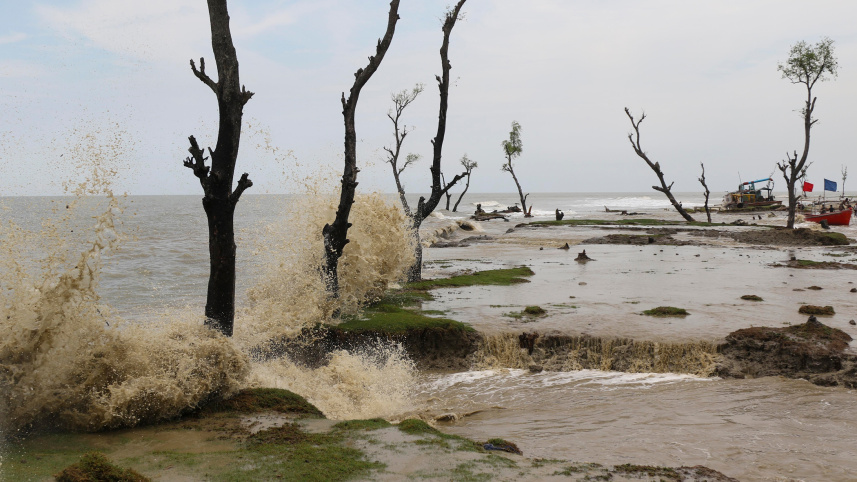
As Bangladesh approaches another parliamentary election, political rhetoric is intensifying, development pledges are being recycled, and candidates are once again courting voters with familiar promises. Yet for the people of the southwestern coast—particularly Khulna’s Koyra-Paikgachha belt—this election arrives with more anxiety than optimism. For many coastal residents, voting feels hollow because electoral promises have rarely translated into tangible improvements in their lives. Instead, they continue to live in a state of chronic vulnerability.
This southern coastal region remains one of the most disaster-prone zones in the country. Government and international studies consistently identify it as highly exposed to cyclones, tidal flooding, storm surges, salinity intrusion, and river siltation. Cyclones Sidr (2007), Aila (2009), Amphan (2020), and Yaas (2021) were not isolated calamities but part of a persistent pattern of climate-induced crisis that has steadily eroded livelihoods, infrastructure, and human security. In Koyra and Paikgachha, entire villages have been inundated, embankments have repeatedly collapsed, and families have lost homes, farmlands, and shrimp enclosures built with years of toil and savings.

The official figures from Cyclone Amphan are stark: more than 51,000 houses were damaged in Koyra alone, 4,500 hectares of shrimp farms were washed away, and over 1.7 lakh people were affected. But beyond these numbers lies a deeper humanitarian tragedy. Rising salinity has undermined agricultural productivity, while asset loss has pushed fishing and farming households into predatory debt. Many families are forced to change occupations during prolonged floods, disrupting social stability and economic security. Flooded schools have deprived a generation of children of consistent education, while saline water has created an acute drinking water crisis—placing an unfair burden on women who must travel long distances for safe water. Waterborne diseases, including diarrhoea, spike during flooding, disproportionately affecting women and children.
Compounding this suffering is weak governance and ineffective flood management. Coastal protection remains largely reactive rather than preventive. Fragile earthen embankments are repaired only after breaches occur—often by local communities using bamboo, sandbags, and their own labor—while promised durable embankments and integrated river management projects remain delayed or poorly implemented.
Policy responses continue to prioritise short-term relief over long-term resilience. Rice distribution and emergency aid, though necessary, do little to address the structural vulnerabilities that keep these communities trapped in perpetual risk. Equally troubling is the political economy of flooding: local elites have sometimes benefited from waterlogged lands for commercial shrimp cultivation, while ordinary farmers bear the losses—an unjust outcome shaped more by power than public interest.
In the spirit of the July uprising—which demanded equity, justice, and inclusive development—such neglect can no longer be tolerated. The next member of parliament (MP) from this region must move beyond symbolic concern and adopt a clear, people-centred coastal agenda. What the coast needs is not charity, but representation and justice.
Coastal communities expect concrete commitments from their leaders. For instance, constructing climate-resilient embankments using modern engineering, combined with community-based monitoring and properly managed sluice gates to regulate salinity and flooding, would bring tangible benefits to the community. A transition towards salinity-resilient agriculture—including salt-tolerant rice varieties, floating gardens, and an introduction to diversified livelihood options would enable farmers to not be dependent on a single, risky occupation.
A stronger regulation of coastal aquaculture to prevent environmental degradation and land grabbing, while promoting eco-friendly shrimp farming practices, would greatly benefit coastal communities. Furthermore, responsible coastal ecotourism around the Sundarbans that genuinely benefits local communities rather than outside investors alone should be encouraged.
An improved transport and communication infrastructure, including elevated roads and safer cyclone shelters are instrumental in local community development, and stronger digital connectivity is essential for early warning systems.
The coastal residents would also benefit from urgent investment in safe drinking water systems, such as rainwater harvesting and desalination, alongside better local healthcare services during flood seasons.
Most importantly, policymaking must be participatory. Coastal residents—especially women, farmers, and fishermen—possess invaluable knowledge about their environment and must have a formal role in planning and decision-making. Bangladesh cannot claim inclusive development while sidelining its coastal population. The coast protects the nation from the Bay of Bengal’s ferocity; in return, it deserves dignity, security, and opportunity.
What the region needs is a leader who will truly represent the coast—one with a vision for sustainable water management, flourishing ecotourism, quality healthcare, and reliable education. The coast has waited too long; it is time to move from crisis response to coastal justice.
Jashim Uddin is independent researcher and writer on climate change and coastal resilience.
Views expressed in this article are the author's own.
Follow The Daily Star Opinion on Facebook for the latest opinions, commentaries, and analyses by experts and professionals. To contribute your article or letter to The Daily Star Opinion, see our guidelines for submission.
 For all latest news, follow The Daily Star's Google News channel.
Comments