


Restore Askar Dighi, revive Chattogram’s ecological memory

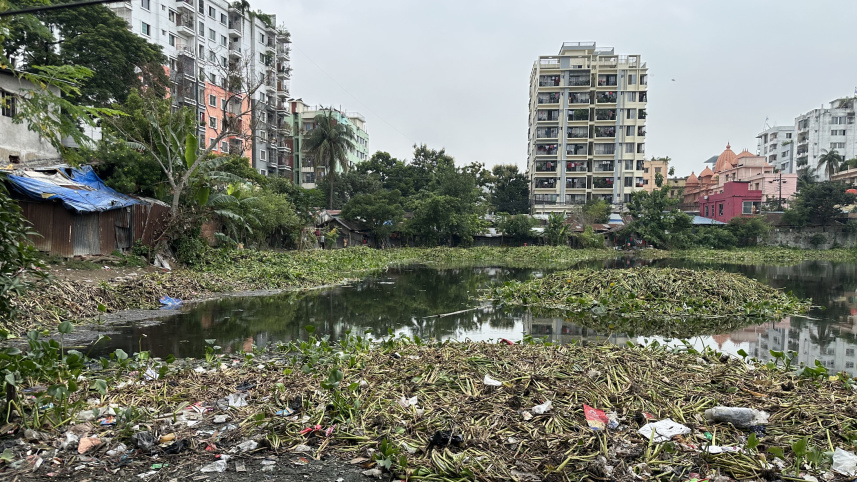
A few weeks ago, I set out to visit some of Chattogram’s historic dighis—the great reservoirs that shaped the urban imagination of generations of residents in the port city. More than a sightseeing tour, the excursion became a metaphorical and investigative journey back to the city of my childhood. My first stop was Askar Dighi, in the heart of the city.
For centuries, Askar Dighi served as Chattogram’s principal drinking-water reservoir. It was excavated during the Mughal period as a vital piece of urban infrastructure. Following the Mughal conquest of Chattogram from the Arakanese in 1666, the new administration under Nawab Askar Khan began constructing the city’s civic infrastructure. Askar Dighi was among the most significant public works undertaken during this period. The reservoir provided a dependable supply of drinking water for Mughal troops and the city’s growing urban population. In the 17th century, when modern water supply systems did not exist, this vast water body was one of Chattogram’s principal sources of potable water.

Even today, the dighi remains immensely important, although administrative negligence and our collective failure to protect the environment have reduced many of its functions to little more than rhetoric on paper. Askar Dighi serves as a retention basin for excess rainwater during the monsoon, helping to mitigate urban flooding; an important groundwater recharge zone; a natural habitat for fish, birds, and aquatic vegetation; and one of the very few surviving historic open-water bodies in the heart of Chattogram. Sadly, much of the foregoing now reads like wishful thinking.
After wandering around Askar Dighi, exhausted and appalled by its miserable condition, I found myself wondering: why are we like this as a nation? We have become remarkably self-destructive, driven by an insatiable urge to encroach upon land and water alike. We have altered our ecological DNA through a toxic combination of ignorance, greed, and indifference. We seem incapable of recognising, let alone protecting, the broader public interest.
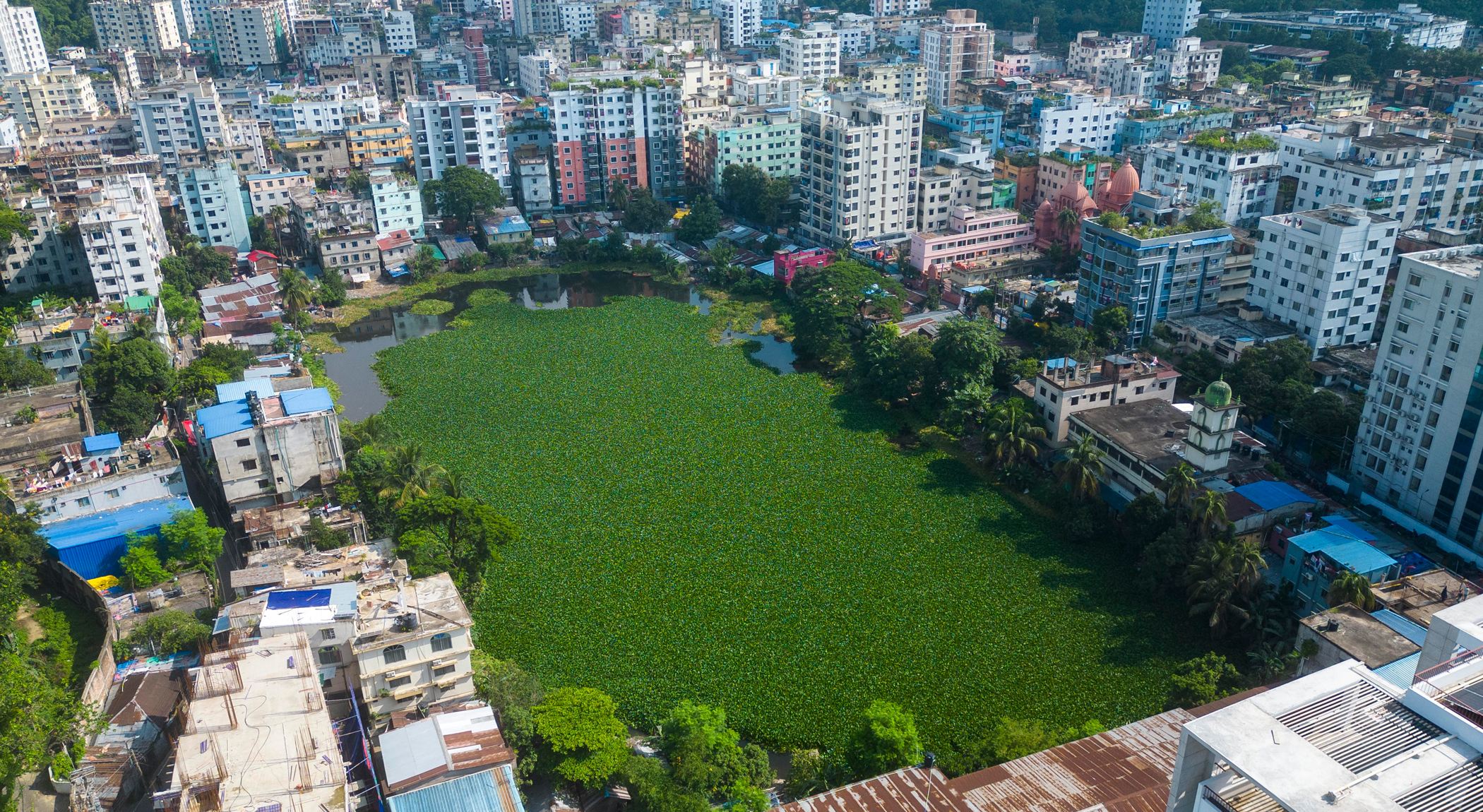
Today, Askar Dighi presents a dystopian landscape, overwhelmed by informal settlements along its edges, choked by invasive water hyacinths, and blanketed by layers of garbage through which dark, stagnant water occasionally peeks.
As a child, I often visited the dighi with friends and family. It was a magnificent expanse of water, surrounded by lush trees and greenery. Informal pathways encircled the reservoir, inviting people to stroll along its banks. A vibrant community life flourished around it. It was at once an environmental asset, a social gathering place, and a source of neighbourhood pride.
Sometime during the 1930s, however, the dighi appears to have passed into partial private control through a lease arrangement. Barada Chakrabarty, most likely an employee of the British Indian Railway, obtained a lease of Askar Dighi from the railway authorities. This transaction marked the beginning of the reservoir’s gradual privatisation. Private control of such an environmental resource carries enormous public costs. Its fate becomes contingent upon the priorities, and sometimes the whims, of individual owners rather than the public good. Today, Askar Dighi lies on its deathbed, yet there seems to be no guardian of the city willing to rescue it as a national public asset. Its decline has been no accident, but rather deliberate and designed.
Such a process usually unfolds in stages. First, the reservoir is gradually concealed behind low-income housing, disappearing from public view and, eventually, from the city’s collective perspective. Once hidden, it becomes an informal dumping ground for garbage. The lethal combination of water hyacinths and solid waste transforms the reservoir into what many conveniently dismiss as an urban “nuisance.” Finally, the seemingly inevitable solution is proposed: fill it in, construct apartment buildings and shopping complexes, and celebrate the project as a symbol of urban progress. The mayor and city administration applaud the transformation. The public is persuaded that this is development. The triumphant narrative becomes: it used to be filthy, look how beautiful it is now!
In any civilised society, a historic reservoir such as Askar Dighi would have been protected as a public heritage asset. What can we do today? The state can reacquire it through the doctrine of eminent domain—the sovereign power to acquire private property for public use upon payment of just compensation—and restore it to the role it once played: a water body that serves environmental, social, and urban functions while providing a place for community gathering and civic pride.
Such conservation is not merely about preserving a body of water. It is about safeguarding a city’s ecological resilience, historical memory, and collective future. In that sense, restoring Askar Dighi would also be an act of moral repair.
What Askar Dighi does not need is to become yet another spectacle of development. It needs no paddle boats, no water sports, no shopping mall, no restaurants, no dancing fountains, and no amphitheatres. It simply needs water, trees, and unadorned walking paths that invite solitude, contemplation, and immersion in nature. Turning Askar Dighi into another Foy’s Lake would amount to discrimination by design, replacing a public ecological commons with a commercial leisure landscape. The glitzy, market-driven model of development—one built on spectacle, consumption, and ostentation—is precisely what Askar Dighi does not need. It needs only the restoration of its ecological integrity. That alone could become a powerful symbol of the city’s moral repair.
Sometimes, the best development is no development at all.
Adnan Zillur Morshed is an architect, architectural historian, professor, and public thinker. He can be reached at morshed@cua.edu.
Views expressed in this article are the author's own.
Follow The Daily Star Opinion on Facebook for the latest opinions, commentaries, and analyses by experts and professionals. To contribute your article or letter to The Daily Star Opinion, see our guidelines for submission.
 For all latest news, follow The Daily Star's Google News channel.
Comments