


Act fast before the dengue outbreak worsens
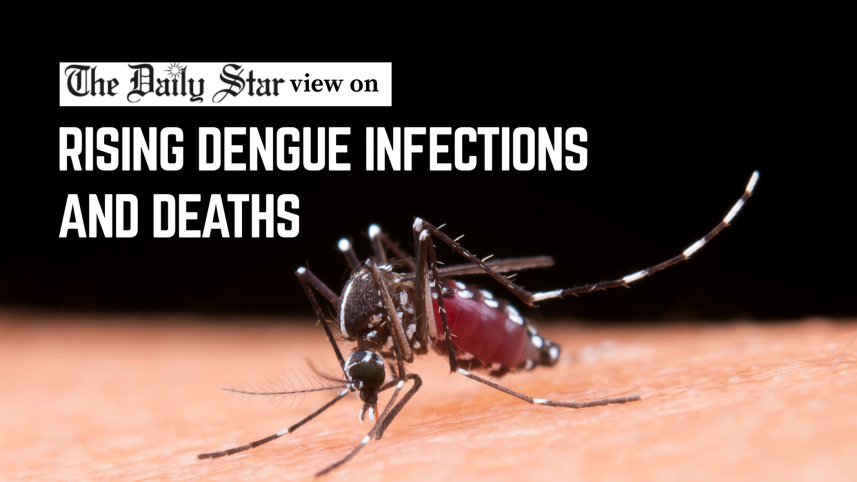
We are deeply concerned by the sharp rise in dengue infections and deaths in July, which serve as a warning that we may witness another severe outbreak this year. According to the Directorate General of Health Services, 54 people have died and 15,310 have been hospitalised with dengue so far in 2026. Alarmingly, 36 of those deaths and more than 9,200 infections were recorded in July alone. Public health experts and entomologists warn that if breeding conditions remain favourable, infections may continue rising through August and September, and could even remain high until October. It is high time for authorities to move beyond their familiar and ineffective reactive approach and adopt a coordinated nationwide prevention strategy immediately.
Since the beginning of the year, this daily has repeatedly called on authorities to strengthen dengue prevention efforts before monsoon. The rise in infections and deaths shows that our calls went unheeded. Every year, mosquito control efforts intensify only after infections begin to rise sharply. By then, hospitals are already under immense pressure, while local authorities rush to eliminate mosquito breeding grounds. Recommendations by public health experts to conduct nationwide entomological surveys have also been ignored, leaving authorities without the data needed to identify Aedes mosquito breeding hotspots and prevent outbreaks before they escalate. Such a sluggish approach to dengue control is unacceptable when the disease has become a year-round public health threat.


Unfortunately, the government still relies on fragmented mosquito control measures, with different local authorities adopting different approaches to source reduction and larvicide use. Entomologists have long argued that countries with centralised vector control systems achieve far better results than those relying on decentralised management. However, the absence of a single authority for nationwide mosquito control remains one of Bangladesh’s biggest weaknesses in tackling dengue. As transmission spreads across the country, the risk of preventable deaths also increases as many districts still lack the same diagnostic and treatment capacity as major cities.
The government must establish a permanent central mosquito control authority staffed by qualified entomologists and public health experts. Such a body should oversee nationwide surveillance, standardise mosquito control methods, coordinate source reduction campaigns, and ensure the active participation of local government institutions countrywide. Preventive interventions must begin well before the peak transmission season, not after hospitals start filling up with dengue patients. At the same time, healthcare facilities, particularly outside Dhaka, must be adequately prepared to diagnose and treat severe dengue cases. The authorities still have time to act, but that window is narrowing rapidly.
 For all latest news, follow The Daily Star's Google News channel.
Comments