


Some reflections on post-election governance and emerging challenges

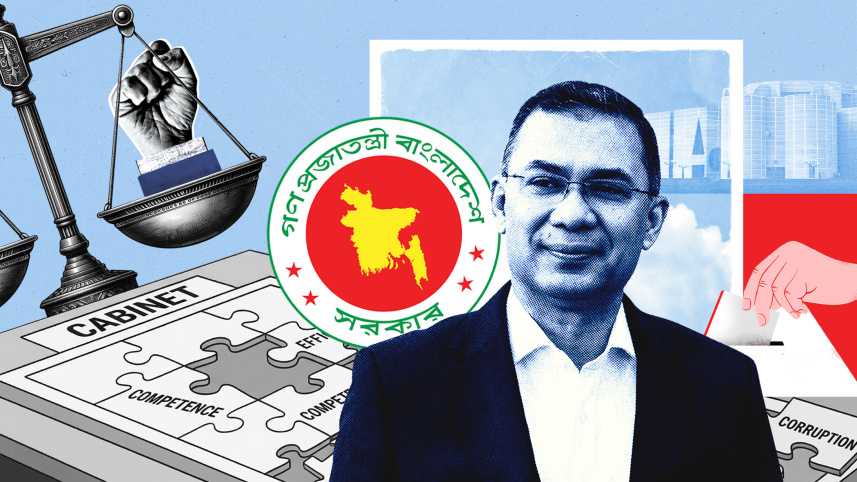
Politics often unfolds in ways that defy conventional wisdom. Few examples illustrate this better than the remarkable journey of Prime Minister Tarique Rahman.
Following the events of the 2007 “1/11” political upheaval, Tarique Rahman was arrested, allegedly tortured, and later forced into exile in the UK for nearly 17 years. During this period, his mother, former Prime Minister Khaleda Zia, endured lengthy imprisonment, protracted ailments, and severe political restrictions. Many believed that BNP had become politically irrelevant and that Tarique Rahman’s future in politics was over. There were several attempts by the Hasina regime to split the BNP. But Rahman, while in exile, guided his party leaders and held the party together through virtual meetings and video messages.

Then came the student-led uprising of July 2024, which began as protests against a discriminatory job quota system and then rapidly morphed into a nationwide movement against Hasina’s authoritarianism. The violent crackdown that followed left over a thousand people dead and many more injured. Ultimately, Sheikh Hasina had to flee the country to her sanctuary in India. Against this dramatic backdrop, Tarique Rahman returned home on December 25, 2025 to a rapturous welcome. Days later, his mother passed away, turning his homecoming into a moment of both political significance and profound personal grief. The massive public participation in her funeral, together with the senior leaders of South Asian countries present, reflected not merely public sympathy but also the unmistakable political mood of the nation.
The interim government led by Dr Muhammad Yunus subsequently held the parliamentary election of February 2026, fulfilling its promise of restoring democratic transition. The BNP secured a landslide victory, largely due to Tarique Rahman’s relentless nationwide campaigning and his message of “Bangladesh First.” So, how did the BNP, and indeed the prime minister, perform during these past months? It is reasonable to say that BNP’s first few months in office have been anything but easy.
Tarique Rahman’s new administration inherited a deeply fragile state structure: weakened institutions, economic distress, widespread corruption, deteriorating law and order, and a bureaucracy suffering from years of politicisation. Simultaneously, global instability and rising energy prices amid the Middle East crisis intensified domestic economic pressure. Bangladesh, like many developing nations, has been struggling to absorb the shockwaves of international conflict and soaring fuel costs.
The government has also faced unexpected crises at home, including a serious measles outbreak causing death to over 600 children across the country. To its credit, the administration responded quickly enough by mobilising the health sector and accelerating vaccine procurement. However, perhaps the greatest challenge lies not outside the government or power structure, but within. Even before the election, reports had emerged of extortion, land grabbing, criminality, and abuse of power by individuals claiming political affiliation, including some associated with the now ruling party. Tarique Rahman has publicly warned against such misconduct, but warnings alone will not suffice. Public trust can evaporate quickly if partisan corruption and impunity return under a new banner.
The recent horrific incidents of sexual violence against women and children have triggered widespread outrage and shaken public confidence. Citizens are demanding not only justice but also visible state measures to protect the vulnerable and uphold the rule of law. Following the rape and murder of an eight-year-old girl in Dhaka’s Pallabi on May 19, the prime minister rushed to the victim’s house to convey his condolences and sympathy to the grieving parents, assuring appropriate punishment to the perpetrators at the fastest possible time. And true to his word, the stage is now set for a June 7 verdict.
At the same time, the government has undertaken several potentially promising initiatives. These include financial support programmes for marginalised citizens, reforms aimed at making education more employment-oriented, and efforts to revive struggling banks, industries, and factories. Such measures may help stimulate economic recovery, provided that accountability duly accompanies financial assistance.
In foreign policy, in spite of unsubstantiated rumours, the government appears determined to pursue a more autonomous course under the banner of “Bangladesh First.” Since the fall of the Awami League regime, Bangladesh has faced sustained criticism and hostile narratives from sections of the Indian media and political establishment. Nevertheless, the interim administration, and now the elected government, have asserted Bangladesh’s sovereign right to conduct an independent foreign policy based on national interests.
The recalibration of relations with China, Japan, Pakistan, and the United States reflects this broader strategic repositioning. Simultaneously, Dhaka appears interested in resetting ties with India on the basis of mutual respect, non-interference, equitable water sharing, and balanced trade relations. Stable and respectful relations between the two neighbours remain essential for regional peace.
Despite these positive developments, I would humbly offer a few words of caution to the prime minister.
First, his relatively accessible style of governance has earned public admiration, but it also increases vulnerability. Bangladesh’s political history is full of tragic lessons. Public leaders are often surrounded by not only admirers but also hidden enemies waiting for an opportunity to exploit. National stability may depend heavily on his personal security and political survival. Second, growing public criticism regarding the performance of certain cabinet members and key appointments should not be ignored. A government elected with overwhelming public expectation cannot afford complacency, inefficiency, or poor governance.
Bangladesh today stands at a delicate crossroads. The country has emerged from a traumatic political chapter with renewed hope. But hope alone is not enough. The people expect discipline, competence, justice, and meaningful reform. Tarique Rahman has begun his tenure with a reassuring tone, ambitious promises, and a composed demeanor. But whether he succeeds will depend on his ability to confront corruption within his own party ranks, strengthen state institutions, and maintain national unity during a turbulent period.
As someone who survived having lost a leg in an exchange of fire with an indigenous leftist extremist group within months of the nation’s independence, I have learned never to lose faith in the resilience of our people. If the present leadership can resist the temptations of power and remain committed to national interest above partisan gain, Bangladesh may indeed be able to move towards a stable and hopeful future.
Ashraf Ud Doula is freedom fighter, retired major, former secretary to the government, and former ambassador of Bangladesh to several countries.
Views expressed in this article are the author's own.
Follow The Daily Star Opinion on Facebook for the latest opinions, commentaries, and analyses by experts and professionals. To contribute your article or letter to The Daily Star Opinion, see our guidelines for submission.
 For all latest news, follow The Daily Star's Google News channel.
Comments