


The cost of a comma: Documentation errors are the 'hidden tax' on Bangladesh’s exports

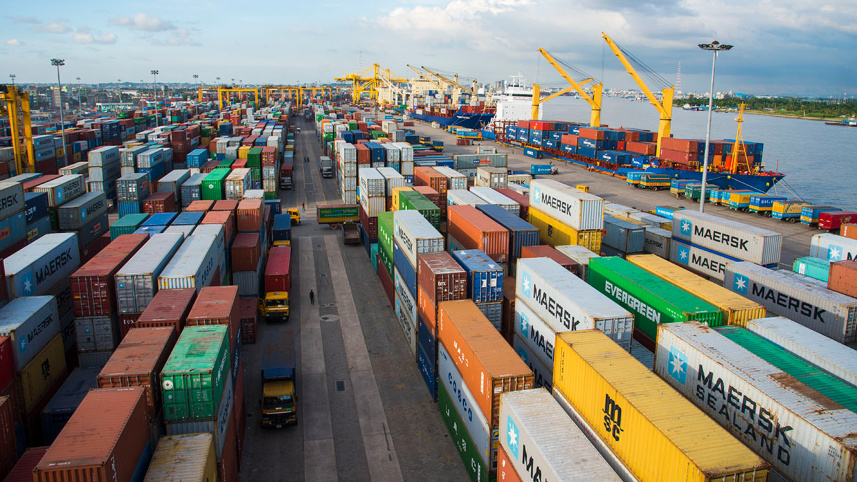
A shipment leaves Chattogram port. The goods arrive on time. The buyer is ready to pay. The exporter waits. Then comes the message no exporter wants to see: documents discrepant. This could be a minor mismatch between the commercial invoice and the letter of credit, or a date formatted incorrectly, or a phrase missing in the bill of lading. Nothing is wrong with the goods or the contract. But the bank cannot release the payment.
In global trade, precision is everything. Behind every export shipment from Bangladesh’s garment factories, leather units, pharmaceutical plants, and ceramic workshops is a thick stack of documents—invoices, packing lists, transport documents, certificates—examined strictly under international rules such as the Uniform Customs and Practice for Documentary Credits (UCP 600). Banks do not assess whether the goods are satisfactory; they assess whether the documents comply exactly with what the buyer’s bank has stipulated. Even a minor inconsistency can turn a clean transaction into a delayed one.

According to estimates by the International Chamber of Commerce, a significant share of documentary presentations worldwide contains discrepancies. In some studies, this share accounts for well over half of documentary presentations. While many are eventually resolved, each discrepancy triggers communication cycles among exporters, importers, and banks. Time passes. Cash flow tightens. Uncertainty grows.
For Bangladesh, an export-driven economy, these delays matter more than we often acknowledge.
Our exporters operate in highly competitive markets where margins are thin and payment timelines are critical. A delayed letter of credit settlement can disrupt working capital planning. Salaries must still be paid. Raw materials must still be purchased. Loans must still be serviced. And when funds are tied up because of a documentation mismatch, firms may rely on short-term borrowing, thus increasing their financing costs.
For small and medium-sized exporters, the consequences can be even more impactful. Larger firms often have trained compliance teams and well-established banking relationships. Smaller firms may depend on external agents or limited internal expertise to prepare documents. A single avoidable error can strain relationships with overseas buyers and reduce future orders.
Economists describe these frictions as transaction costs—the hidden expenses beyond production and shipping that influence the true cost of trade. In theory, global trade is governed by contracts and comparative advantage. In practice, it is governed by paperwork.
The irony is difficult to ignore. We live in a time when consumers can transfer funds across continents within seconds via mobile apps. Yet, much of Bangladesh’s export trade still relies on paper-based documents couriered across borders and manually checked line by line. A missing word in a transport document can delay a payment worth hundreds of thousands, sometimes millions, of dollars.
This is not to blame banks for strictness. Documentary trade finance exists precisely because trust must be institutionalised. Buyers and sellers across continents may never meet, so banks step in as neutral intermediaries. Documentary compliance protects all parties from fraud and ambiguity. Here, precision is not a bureaucratic obsession, but rather a necessary risk management mechanism.
But when discrepancy rates are persistently high, the issue becomes systemic rather than incidental.
If Bangladesh is aiming to strengthen its export competitiveness beyond traditional sectors and move up global value chains, efficiency must extend beyond production and logistics to documentation and compliance as well.
First, investment in document literacy is essential. Many discrepancies arise not from negligence but from misunderstanding the detailed requirements embedded in letters of credit. Structured training programmes for exporters, particularly SMEs, can significantly reduce recurring errors. Second, digital trade documentation deserves more attention. Electronic presentation of documents, digital bills of lading, and automated compliance checks can reduce clerical mistakes and courier delays. While global adoption remains uneven, early movers stand to benefit from faster processing times and lower operational risk. Third, closer coordination among banks, trade bodies, and policymakers could help identify common discrepancy patterns in Bangladesh’s export ecosystem. If certain errors recur frequently, targeted guidance and sector-specific support could meaningfully reduce friction.
Finally, exporters themselves may need to treat documentation not as a final administrative step but as an integral part of the trade strategy. In a world where buyers increasingly value reliability and speed, document precision becomes a competitive advantage.
Bangladesh has demonstrated remarkable resilience and growth in exports over the past decades. But sustaining and expanding that success requires attention to details which rarely make it to the headlines. Sometimes, the barrier to timely payment is not the quality of the goods, nor the strength of global demand. It is the cost of a comma. And in a competitive global marketplace, even a comma matters.
Nahian Rahman is research associate at the Bangladesh Institute of Governance and Management (BIGM).
Faiaz Al Lami is officer of international trade at Commercial Bank of Ceylon PLC.
Views expressed in this article are the author's own.
Follow The Daily Star Opinion on Facebook for the latest opinions, commentaries, and analyses by experts and professionals. To contribute your article or letter to The Daily Star Opinion, see our guidelines for submission.
 For all latest news, follow The Daily Star's Google News channel.
Comments