


We cannot let Indigenous midwifery and its traditions disappear

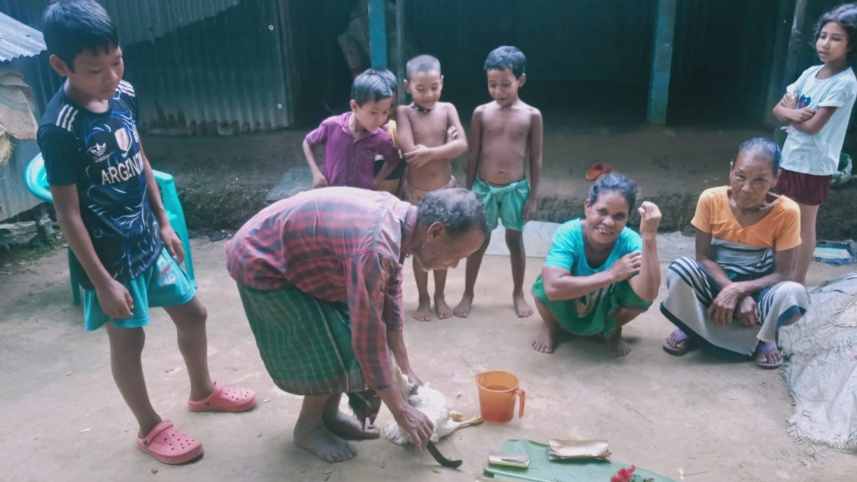
There is no hospital near Mohanpur, an ancient village of the Banai community in Sunamganj’s Madhyanagar upazila. The elderly midwives of the village are the only dependable support when a child is born. In the Banai language, midwives are called “daimai.” Eighty-five-year-old Shibila Banai, of the Nakla Nikni (clan), is the village’s renowned daimai. She learned the art of midwifery from her grandmothers, Chuiltamoni Banai and Sukumoni Banai, and has safely assisted in more than 50 births. Respected as practitioners of a sacred profession, the daimais use herbal medicine and spirituality through complex rituals and prayers, aiding humans in their journey from the womb into the world beyond.
However, their work in the Banai society is declining as no new daimais are emerging. There are several reasons. Domination by the mainstream Bangalee society, cultural hegemony, land grabbing and changes in agricultural production relations have made the Banai an impoverished community. There is no work in the village, so people are leaving in search of a livelihood. Some even risk their lives and cross the border to work in Indian coal and stone quarry areas.

Poverty, declining health as well as fear and uncertainty created by ethnic marginalisation are also reducing the childbirth rate in Banai society. Even Shibila, who possesses knowledge of an ancient civilisation, is struggling to survive. Neither the state nor wider society recognises her contributions. However, it is not just Shibila; across Indigenous and rural Bangalee communities in the country, traditional midwifery is gradually disappearing due to a lack of proper recognition.
In this context, this year’s theme of the UN International Day of the World’s Indigenous Peoples—“Honouring indigenous midwives: Safeguarding life and well-being”—becomes relevant. It focuses on the contributions of Indigenous midwives, their traditional knowledge and philosophy and their marginalisation. It calls for the urgent preservation of Indigenous midwives’ knowledge and recognition of their contributions. It also urges governments to guarantee the effective participation of Indigenous and traditional midwives in the country’s healthcare system through necessary training, equipment and employment opportunities.
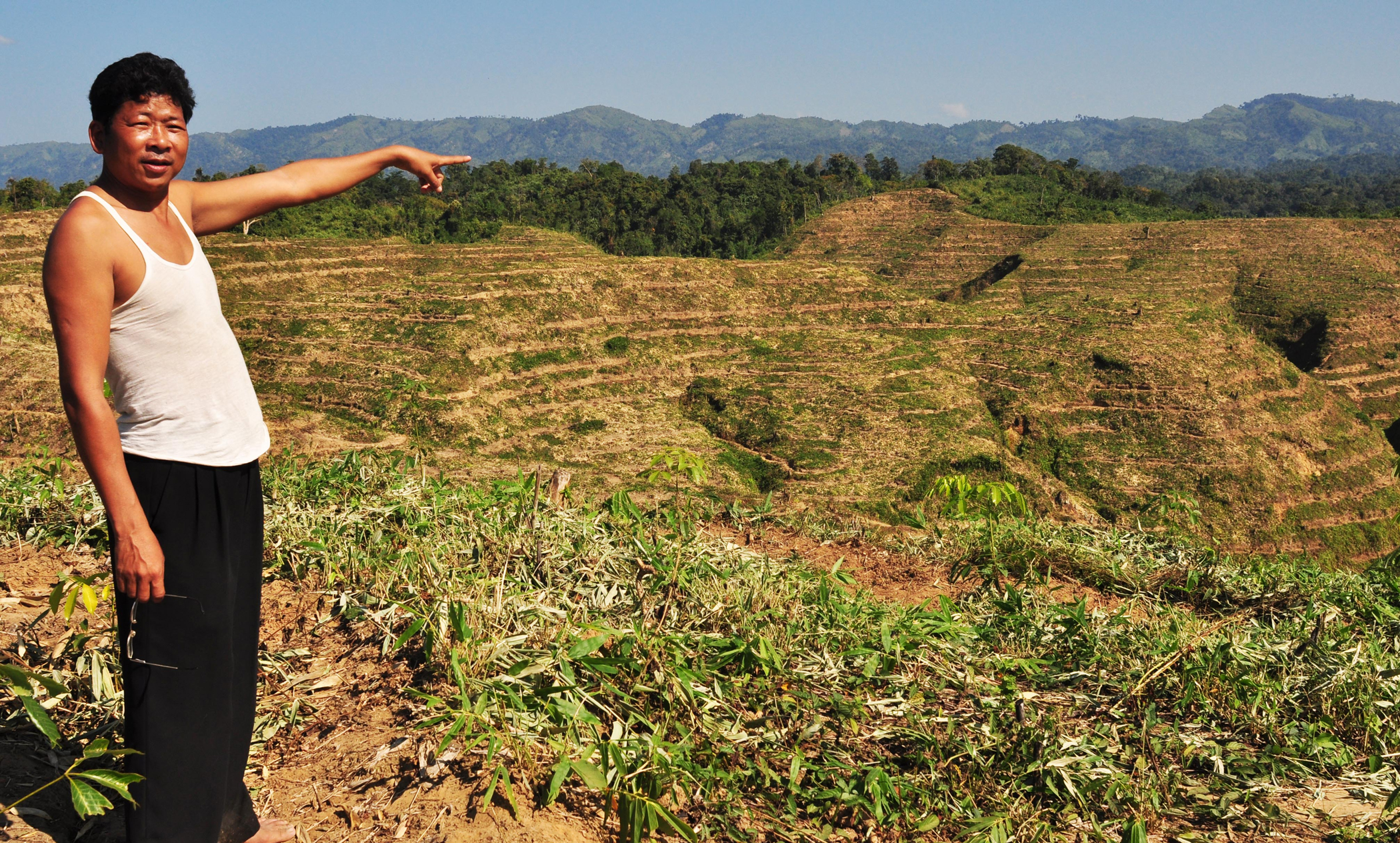
While the latest Population and Housing Census 2022 records the Indigenous population of Bangladesh as 16,50,159, belonging to 50 ethnic identities, it is not known how many among them are government- or NGO trained midwives. Besides, very little research on this subject has been carried out. The absence of statistics and documentation on rural and Indigenous midwifery demands critical discussion on this traditional profession.
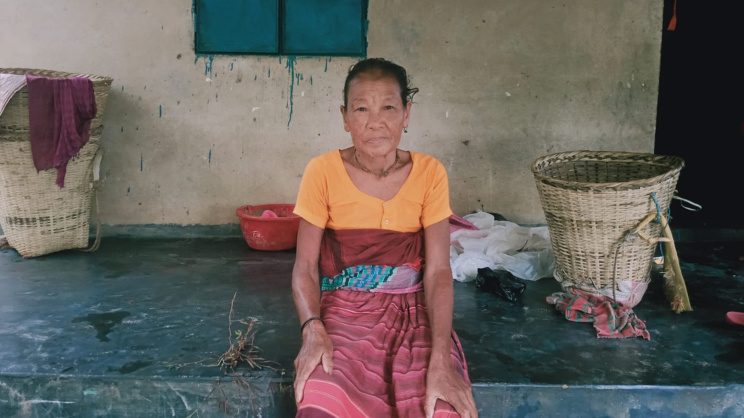
Indigenous midwives of marginalised communities
The names and forms of midwifery differ from one ethnic community to another. Among the Bawm of the Chittagong Hill Tracts, midwives are known as “nau daumah”—“nau” means younger siblings, while “daumah” means to hold something; there is a silent “fa” which means a child. The name comes from the fact that midwives are the first to hold a child during childbirth. Rou Soom Bawm, well-known in Bandarban’s Ruma upazila’s Bethelpara, has not experienced a single unsafe delivery in her life as a midwife. However, arbitrary arrests and prolonged detention in prisons have affected the lives of women and children in the Bawm community, consequently impacting midwifery practice as well.
Among the Khumi, midwives are known by two names: “cha-nau-singnai-neumpui” and “daywongdi sangde”. In Prafungma para in Ruma, Bandarban Chiling Khumi and Thongbe Khumi are well known for this work.
Midwives among the Lusai community are called “nau daumtu;” in the Marma language, they are called “waibaying syoma.” But the Marmas of Bandarban, in their regional dialect, call them “wainek chhaa-rama”. U Nume Marma from Daakchai para and Ma Mui Ching Marma of Bolipara have made names as midwives in Bandarban’s Thanchi upazila.
Among the matrilineal Lyngam community, midwives are called “mau-munnu,” and Chinchili Nongbrei of Sanyasipara in Netrokona’s Kalmakanda was an extraordinary one.
The matrilineal Khasi people call midwives “ka nongpynkha khun.” But in the regional War-sinteng language, midwives are called “satar.” Rani Marlia is a reputed Khasi midwife from Jhimai Khasipunji in Kulaura, Moulvibazar.
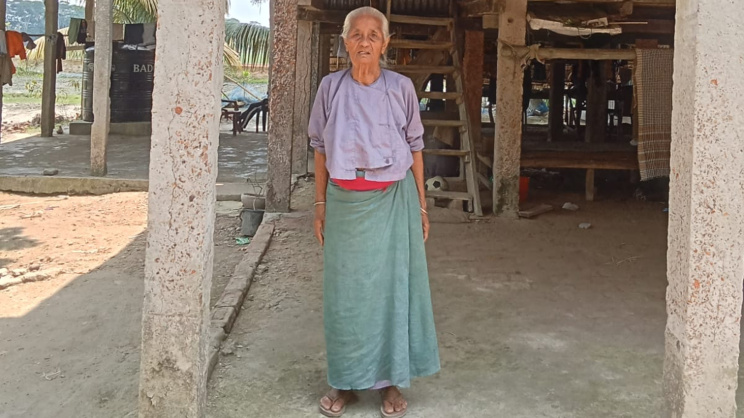
In the matrilineal Mandi community, midwives or “khamal” are accorded the status of a household priest. They are known as “michiksa khamal.” Miji Mree of Idilpur in Tangail’s Madhupur was a well-reputed michiksa khamal, who also introduced pineapple cultivation in the area.
The Tripura community calls midwives “gumachouk” or “gumachok.” Rachana Royaja of Thakurchhora and Suchirong Tripura of Bailyachhari in Guimara, Khagrachhari, are reputed gumachoks.
Among the coastal Rakhains, midwives are called “waadechhrama.” They are respected as a matriarch or “emigrio,” because they have the exclusive right to cut the “aesei” (umbilical cord). Semaching Rakhain, a centenarian from Tulatulipara in Kalapara, Patuakhali, is an experienced midwife.
Among the Chakma, midwives are called “oja.” The Tanchangya call them “osapuri”. Dayamugi Tanchangya of Tulachharipara and Dibi Tanchangya of Atotolipara in the Gainda union of Rajasthali, Rangamati, work as osapuri.
The Santal call midwives “deurigin boodhi”. Malati Hembrom of Barkona village in Parbatipur, and Dulhan Tudu from Matrigao in Thakurgaon Sadar, Dinajpur, are experienced midwives. The Mundas call a midwife “dhayani” or “daiyani”. In the Mushahar community, midwives are known as “dhaaini”. Lilmoni Rishi, from Fakdanpur in Thakurgaon Sadar, is both a dhaaini and a “khodni,” one who does tattoos.
The science and philosophy of traditional midwifery
Elderly Indigenous midwives in Bangladesh say that their work is not merely about childbirth and ensuring safe motherhood. Rather, they carry out the spiritual and cultural responsibility of creating a connection between human beings, land and nature. They pass down the grand narratives of the universe and changing philosophies of life from one generation to the next.
To do this, they perform many rituals, observe various practices, and preserve numerous plants and natural resources. Their communities entrust them with the responsibility of cutting the umbilical cord after a child leaves the mother’s womb. Therefore, it is not simply a profession. This responsibility carries profound meaning and encompasses a complex practice with cosmovision.
 For all latest news, follow The Daily Star's Google News channel.
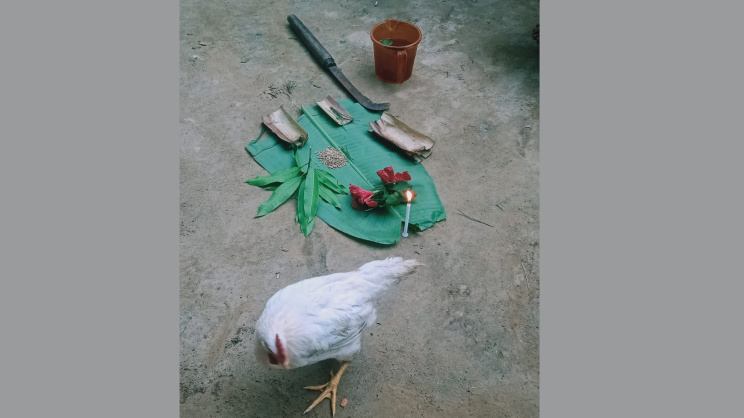
 In most Indigenous communities, a specially made knife or blade made from a particular variety of bamboo is used to cut the umbilical cord, which establishes a newborn’s first cultural connection with nature. Perhaps bamboo was among the first wild objects in nature to be domesticated by prehistoric humans. That ancient memory of the development of human civilisation is brought back through the bamboo knife, reminding people not to lose their sense of connection with nature and historical traditions and to remain conscious of their responsibilities and duties.
Among the Marma, this bamboo knife is called “waah kalaisong.” The Lengma call it “sangsali;” the Tripura call it “yanthal” in their Kokborok language; the Chakma: “duluk;” the Tanchangya: “bai-sh duluk;” the Mandi: “wani gaandeleng;” the Munda: “patikhur;” the Bediya Mahato: “chanchor;” and the Santal language: “chhoilou” or “chhunchhuni.”
Among the Santals, there was an ancient practice of cutting the umbilical cord with the tip of a bamboo arrow, which they believed established a connection between the memory of ancestors and the identity of a newborn. These bamboo knives differ from one community to another in their form, making, and use. They are generally made from specific bamboo such as Makla, Dalu and Parbo, and are collected from protected sacred forests or places of worship in the village.
The newborn is given holy water, honey or, sometimes, a drop of a culturally significant drink. Turmeric, neem, ash and various medicinal pastes are applied to the navel area of the newborn.
In most communities, a temporary “aatur ghar” or birthing room is built. The midwife and mother stay in this room for several days after childbirth. During this period, special food is prepared, healthcare is provided, and specific rules, customs and rituals are followed. Later, the midwife is ceremonially bid farewell through social rituals.

Effective policies and commitments
In Bangladesh, there are several laws to recognise, respect and protect the Indigenous and traditional knowledge and culture, including the Plant Varieties Conservation Act, 2019 and the Bangladesh Biodiversity Act, 2017. Besides, the National Cultural Policy 2006 speaks of strengthening the social harmony and cultural development of Indigenous peoples, while the Small Ethnic Groups Cultural Institutions Act, 2010 speaks of protecting their cultural rights. Indigenous midwifery, as part of traditional knowledge and culture, should therefore remain protected under these laws and policies.
Meanwhile, the National Health Policy 2011 notes that poor, socially disadvantaged, uneducated and marginalised people, Indigenous communities, women and labourers are being deprived of healthcare services. Although some programmes are being implemented for these groups, they are not being effective in their social and cultural contexts. Besides, the policy mentions ensuring adequate and skilled midwives at the field level in government health services and establishing systems for training the necessary human resources.
However, the policy lacks clear commitment to protecting rural traditional midwifery, including Indigenous communities’ practices, and safeguarding their livelihoods. In this context, alongside an effective policy framework, it is essential to ensure the recognition of Indigenous midwives and coordinate initiatives to protect and develop their practices to match today’s needs.
Pavel Partha an ecology and biodiversity conservation researcher, is director at Bangladesh Resource Centre for Indigenous Knowledge (BARCIK). He can be reached at animistbangla@gmail.com.
Views expressed in this article are the author's own.
Follow The Daily Star Opinion on Facebook for the latest opinions, commentaries, and analyses by experts and professionals. To contribute your article or letter to The Daily Star Opinion, see our guidelines for submission.
Comments