Beyond kings and dynasties: Rethinking medieval Indian history

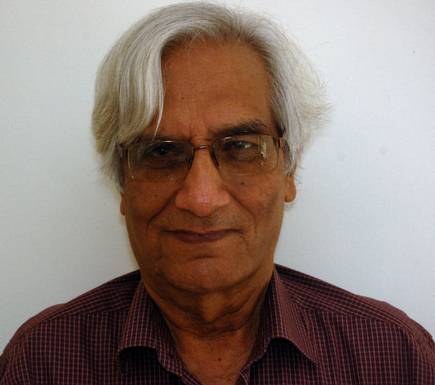
Harbans Mukhia, one of the foremost historians of medieval India and former professor at Jawaharlal Nehru University, talks to The Daily Star about writing medieval Indian history, the evolution of historiography, and the role of imagination in understanding the past.
The Daily Star (TDS): Let us begin with your intellectual journey. What led you to become a historian of medieval India?
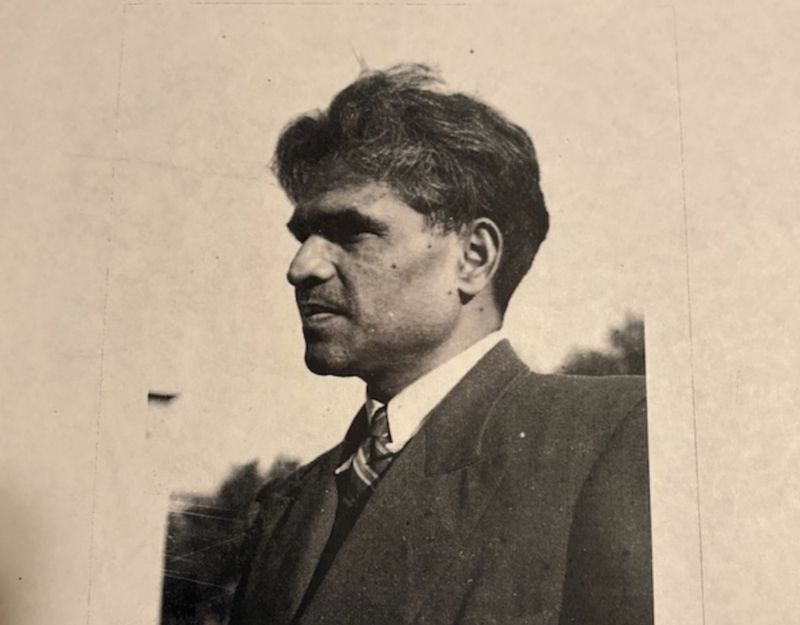
Harbans Mukhia (HM): What turned me into a historian of medieval India was primarily the influence of my guru, the pathbreaking historian Dr K. M. Ashraf, at both the undergraduate and postgraduate levels at Delhi University. He was the first historian to pioneer the study of the history of the people in medieval India, especially during the period of the Delhi Sultanate, with his PhD thesis, Life and Conditions of the People of India, submitted to the University of London as early as 1928. I had enrolled for a BA (Hons) in History in 1956, following the popular belief that the discipline constituted the easiest entry point into the Indian Administrative Services.
By 1960, when I had earned my Master's degree, I had become immersed in the wider significance of history rather than seeing it merely as a source of livelihood. I forgot about the administrative services route. It was primarily Dr Ashraf who aroused my interest in the social significance of history. He did this not by pontificating but by presenting it persuasively in the classroom. Besides being an outstanding historian, he was a highly respected freedom fighter during India's independence movement and was known to have been a most powerful public speaker; he knew the value of words.
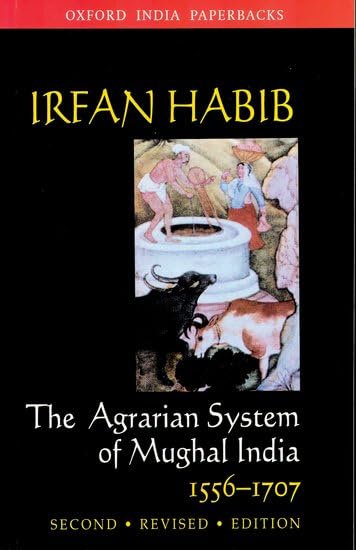
TDS: Your work appears to have been significantly influenced by Irfan Habib's The Agrarian System of Mughal India. Did that influence also lead you to learn Persian and use Persian and Arabic sources in your own research?
HM: Part of the answer is yes. That book, published in 1963, was something of a watershed in the writing of medieval Indian history, which had long been equated with the "Muslim Period" of Indian history, as laid down by James Mill in 1818. Even after the nomenclature had changed to "Medieval History", the basis of periodisation had remained the same. The sole entry point into the study of Indian history prior to the "British Period" was the religious identity of the ruling dynasty. The entirety of history was seen as being contained in the enthronement or dethronement of kings and dynasties, their wars and battles, their administrative and taxation systems, and their relations with the nobility and the army. For the standard question, "Causes of the Fall of the Mughal Empire", the standard answer was taken from Sir Jadunath Sarkar: Aurangzeb's dogmatic religious policy had antagonised his powerful Hindu nobles, which led to a "Hindu Reaction", besides Aurangzeb's unsustainable expansion of the empire, which led to the empire's collapse.
Irfan Habib's intervention changed all that at a stroke. His explanation of the collapse of the mighty empire, framed in purely Marxist terms as a class conflict between the oppressive ruling class, determined to enhance its resources by continually increasing revenue from agriculture, that is, from the peasantry, and the impoverished peasantry, who ultimately rose in rebellion and brought the empire crashing down, transformed the debate. The personal character of the ruler, his religious identity and even his various policies became irrelevant.
In fact, beginning with D. D. Kosambi's An Introduction to the Study of Indian History (1958), several leading historians, including Irfan Habib and R. S. Sharma, brought an assertive Marxist perspective to Indian history during the 1960s and 1970s. This was one way of freeing Indian history from the colonial framework established by James Mill and decolonising historical scholarship, thereby giving it new life. This intellectual transformation influenced a wide segment of practising historians.
But my own original research for my PhD did not follow the themes of agrarian or economic history—far from it. Instead, I decided to explore the historiography of Akbar's reign, for which learning Persian was imperative. I have no knowledge of Arabic, however, because it was never required in my field of research.
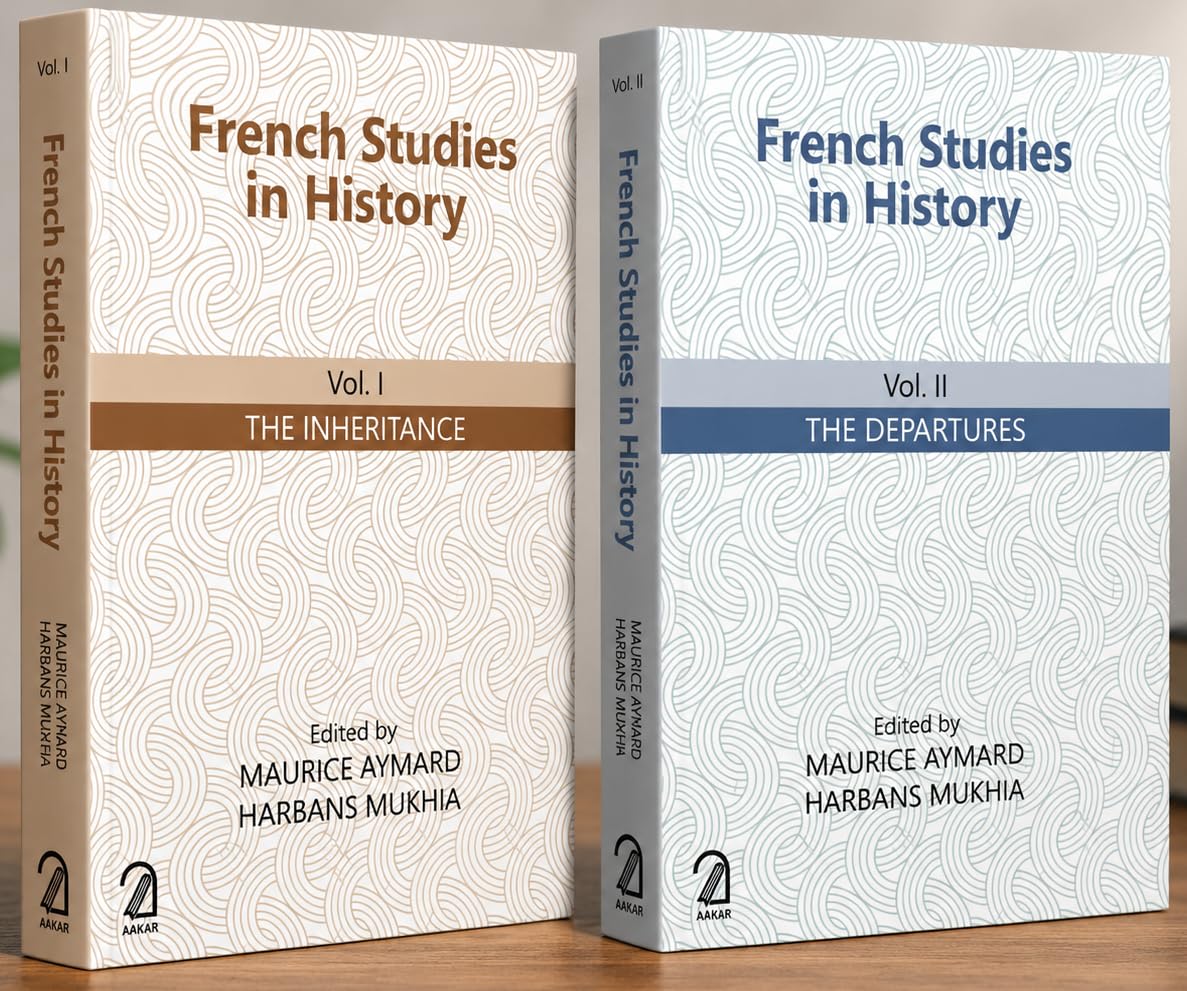
TDS: Your work has drawn on diverse intellectual traditions over the years. You were initially influenced by Marxism, but later engaged deeply with the French Annales School, particularly its emphasis on the longue durée and long-term historical processes rather than history driven primarily by singular political events. How did this intellectual shift, reflected in your edited two-volume French Studies in History, shape your understanding of medieval Indian history and your broader approach to India's medieval past?
HM: Yes, even as a student at the university, and later on becoming a teacher, I thought of myself as a Marxist and even joined the CPI as a card-holding member, as well as becoming a bit of an activist on its behalf. After the CPI split in 1964, I joined the CPI(M). But my early research, my PhD, did not have much of a Marxian theoretical impact. It was in writing the essay, "Was There Feudalism in Indian History?" (1979), that the impact became visible to me and to others. Indeed, the whole debate that followed in its wake was conducted within the Marxist framework, for every participant in it, barring Burton Stein, was professedly a Marxist, even though each had a different understanding of Marxism, which in fact demonstrated its non-linear strength.
As I was teaching a course on feudalism to MA students at JNU, I continued trying to delve deeper into the problématique. Around this time, I came into contact with eminent French scholars, which opened the door to the vast body of French literature on the subject. It so happened that I also started receiving almost regular invitations to the magnificent Maison des Sciences de l'Homme in Paris and was able to interact, over a long period, with great scholars such as Jacques Le Goff, Georges Duby, Maurice Aymard, Jacques Revel, Roger Chartier, Christiane Klapisch-Zuber, and many others. I was also introduced to the distinctive Annales ESC approach to historical scholarship.
The Annales school of historiography has many dimensions; longue durée is only one of them, introduced particularly by Fernand Braudel. What attracted me even more was its revision of the Rankean empiricist-positivist certainty that history contains an objective reality that can be incrementally recovered through the observation of objective "facts" preserved in archives. Marxism also inherited this certainty, while adding a structured causal hierarchy to historical explanation, with the economy at its base.
This was highlighted by Engels five years after Marx's death in response to a query from Joseph Bloch—namely, whether politics, philosophy, culture and other factors also mattered, in addition to the economy, in understanding history. Engels replied that they did indeed matter, but that "in the last instance" the economy mattered above all else. The Annales vision removed this notion of the "last instance" from history and instead introduced a conjunctural causal hierarchy for each particular historical conjuncture.
The creation of Bangladesh is a good example. There were, of course, political and economic grievances against West Pakistan's dominance, but it was the forcible imposition of Urdu and the suppression of Bangla that spurred the rebellion in East Pakistan, culminating in the birth of Bangladesh.
The Annales approach also challenged the absolute objectivity of facts preserved in archives and questioned the existence of a single objective truth or historical reality. It greatly expanded the scope of history beyond royalty and elites, broadened the range of historical sources far beyond official archives, and envisioned what it called "history in its entirety", something that is now being magnificently pursued across the world.
It was my growing interest in that mode of historical writing that led my friend Maurice Aymard and me to bring it to the attention of Indian historians by compiling and editing some three dozen writings by leading French historians, past and present, from Marc Bloch onwards, in English translation, and publishing them in India at affordable prices. Published in 1988 and 1990, the two volumes of French Studies in History borrowed some existing translations while others were translated in India by Indian historians proficient in French.
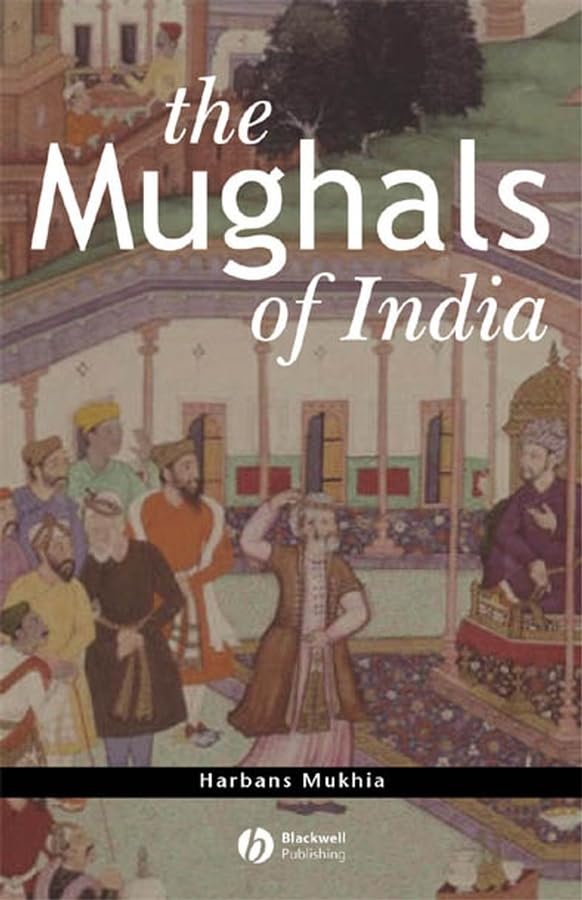
TDS: Bengal occupies a distinctive place in the history of medieval South Asia. It remained independent under the Bengal Sultanate for nearly two centuries before being incorporated into the Mughal Empire, and it was in Bengal that British colonial rule in the subcontinent effectively began after the Battle of Plassey in 1757. To what extent did medieval Bengal follow the broader political and social patterns of the subcontinent, and in what ways did it chart its own historical trajectory? How do you assess its experience of state formation, social change, the spread of Islam, and the rise of the Chaitanya movement?
HM: My guru, Dr Ashraf, was very fond of Bengalis because, he used to say, they had always rebelled against those in authority at the Centre! While historians have focused on the history of empires—the mega-entities such as the Mauryan, Gupta, Chola, Vijayanagar and Mughal empires—the smaller-scale histories of regions that later became parts of those empires have remained in the shadows, particularly when the very existence of huge empires administered from a single centre was celebrated as a manifestation of the masculine ideal.
The decline of empires was often ascribed to a loss of masculinity, encapsulated in the expression "weak rulers", who were supposedly more given to "feminine" pleasures than to territorial expansion. But regions had their own histories both before and after their incorporation into empires, and these histories are now receiving increasing scholarly attention. Bengal is one example. But the regions of the Deccan, Awadh, Odisha and, of course, the North East each preserved their distinctive characteristics even while forming parts of empires.
TDS: Communalism has long been a subject of debate in South Asian society and politics, both historically and in contemporary times. How do you think the forms of religious conflict and coexistence in medieval India differed from those that emerged under British colonial rule and in the post-independence era?
HM: I think the major change that occurred was the transformation of an awareness of difference into one of hostility—the transformation of existential community identities into potential communal identities. Medieval India recognised religious differences between communities without irredeemable hostility, as evidenced by the absence of communal rioting throughout more than five centuries of medieval Indian history. Colonialism created communal divisions as a matter of state policy, which eventually led to Partition in 1947.
The Freedom Movement did seek to resolve this divide through its vision of a nationalism embracing all communities, in contrast to the Muslim League's Two-Nation Theory. The problem with this, as I see it, is that religion remained the common category in both approaches. If the Muslim League alarmed the Muslim community by arguing that it would inevitably be subjugated by the overwhelming Hindu majority after Independence, the Congress did not challenge this by proposing an alternative organising principle other than religion. Instead, it sought to reassure the Muslim community that its religion and culture would remain secure.
The fragility of the Congress's assurance became evident when even minor incidents of communal tension could be magnified by the Muslim League into evidence of an inherent hostility between the communities. Thus, although the Congress and the Muslim League represented empirically different political alternatives, they operated within the same conceptual framework, albeit with different interpretations of it.
After more than six or seven decades of adherence to the Congress version in independent India, the current regime has resorted to the divisive dimension of that same category as a matter of state policy. Pakistan, of course, never even pretended to protect its minorities, the flimsy evidence of M. A. Jinnah's speech of 11 August 1947 notwithstanding.
TDS: Finally, how do you understand the relationship between history and imagination, a subject that has long been debated in terms of what constitutes historical fact and what does not, especially given that the boundary between the two often appears blurred? Your latest book, Kuchh Udaas Nazmein, is a collection of Urdu poems. After a long career as a historian, what were you seeking to express or explore through this work about life, history and imagination?
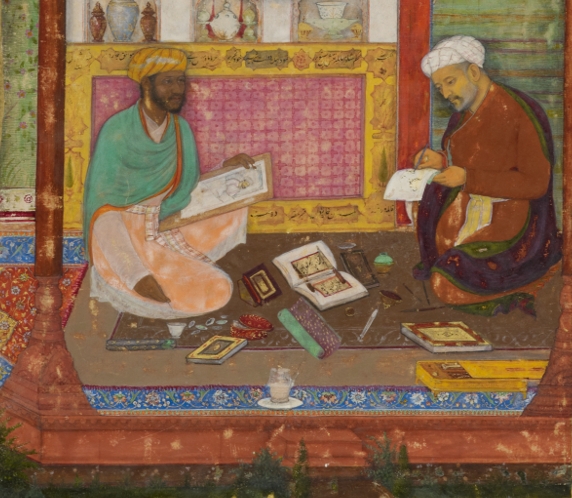
HM: One of the lessons I learnt from the Annales School was that writing history is not tantamount to recovering and re-recording bare, dry "facts", but requires the use of imagination in trying to understand them. This is especially true of intangible themes such as interpersonal relations, attempts to understand the minds and psychology of historical personae, questions of culture, mentality and collective consciousness, or the history of sensibilities, as Marc Bloch's friend and comrade Lucien Febvre phrased it, or the highly complex milieu of everyday life at different social levels.
While studying history, I always maintained an abiding interest in literature, especially poetry, and Urdu poetry in particular. I loved reading and reciting Urdu verses and ghazals to myself, although I never learnt to sing, never mind the fact that I took lessons in playing the flute for six years after retiring from teaching.
Late in my career, Urdu poems in the form of nazms suddenly began to flow from my pen, without any prior warning and almost involuntarily. Quite a few of these nazms carry a strong presence of waqt (time) and tarikh (history), perhaps because of my ingrained training as a historian. I started noting them down on stray pieces of paper or on the backs of envelopes until a couple of them were published in the highly regarded magazine Shabkhoon, edited by the venerable Urdu scholar, the late Shamsur Rahman Faruqi. Gradually, the nazms kept flowing and continued to be published.
In 2024, the Anjuman-i Taraqqi-i Urdu (Hind) decided to publish them in a slim collection of some 50-odd poems. Over the past two decades, however, the nazms have decided to abandon me; I have not been able to write even one.
The interview was taken by Priyam Paul.
Send your articles for Slow Reads to slowreads@thedailystar.net. Check out our submission guidelines for details.
The enduring legacy of the 2nd Bangladesh Liberation War Course
Reading Ardhakathanak / What a 17th-century merchant's autobiography reveals about Mughal governance
The blind spots of Bangladesh studies

Rediscovering Santal history through Scandinavian archives
Asma Abbasi: The essence of orange
Tigers and the empire: A history of hunting, power and resistance
25th Death Anniversary / A life so full: Remembering Ahmed Sofa
Bengal's forgotten slave trade: Portuguese, Arakanese and Dutch trafficking networks
Mufazzal Haider Chaudhury and the idea of Bangladesh