


We need to confront sexual violence both online and offline

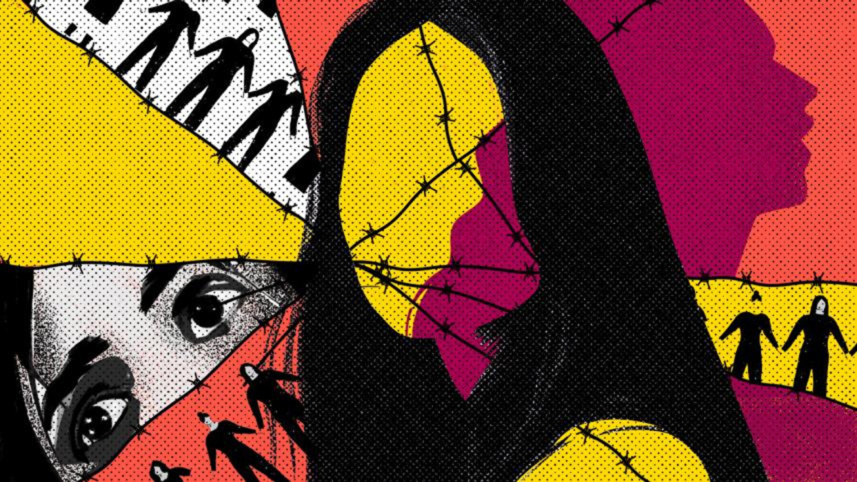
Violence against women and children has recently become a disturbingly regular occurrence in the country. Looking into the nature of these crimes makes one wonder if not humanity but savagery has taken us over. It also makes one wonder if the foundation of our moral education is gradually weakening. In reality, morality cannot be taught through books; it is something that must be practised. Families, teachers, society, and the country—everyone has a role to play here.
While we prioritise highlighting crimes committed in physical or traditional spaces, we do not give equal importance to crimes happening in digital spaces. Publicly threatening people online, exposing personal matters on social media, spreading false and baseless information through digital media, cyberbullying women and children, and even sexual harassment—these promote harmful behaviour and lead to even more heinous crimes.

One can get an idea of the shocking perspective many hold about women and children by looking at comments made under social media posts. First and foremost, our society needs a change in mentality. This holds true for both physical and cyber spaces. In this regard, following examples of other countries, including Europe and Australia, we could introduce eSafety, Privacy, and Defamation Regulation (EPDR), a framework designed to protect individuals from online harm, data misuse, and reputational damage. Many people confuse this with cyber security laws, but they are quite different. For instance, if important information from a bank or state institution is stolen or attacked through cyber means, that falls under cyber security law. However, if someone’s personal information is spread on social media to humiliate them, it would be more appropriate to address it under EPDR.
Now, to demonstrate how dire the situation is in Bangladesh, we need to look at some data. According to Ain o Salish Kendra (ASK), some 118 children were raped while 17 were killed between January and May 20 this year. An earlier estimate by ASK last year studied rape cases data between 2015 and 2024 and found that at least 5,632 reports of rape of girls aged below 18 were recorded across the country in the last 10 years. Additionally, some 318 of these children were murdered after being raped. In just the three years from 2019 to 2021, some 2,778 children became victims of rape, which is nearly half of the total number over the last decade. In 2020 alone, the highest number—1,018 children—were victimised. Between 2001 and July 2020, only 3.56 percent of cases filed under theWomen and Children Repression Prevention Act 2000 have resulted in a court judgment, according to data from the government’s One Stop Crisis Centre, and only about 0.37 percent of cases have ended with convictions. Such low conviction rates contribute to the breakdown in public trust when it comes to the law.
Furthermore, it is unfortunate that in a country of nearly 18 crore people, there are not enough DNA testing facilities. Cases of sexual harassment are increasing day by day in the country, and not having adequate DNA testing facilities often hinder the investigation process. This is also one of the reasons behind delays in the judicial process.
Now, if we were to look briefly at how child protection is ensured in Australia, in every state there, those who work with children (under 18 years old) are required to obtain a “Working with children check” card. Although the name of the card varies in different states, the main objective is the same: ensuring a safe environment for children. People from any profession such as teachers, researchers, nurses, doctors, caretakers, and heads of religious institutions, who need to interact with children must obtain a children check card before joining their profession. This card is issued transparently after checking police databases and child sex offender databases. If allegations of sexual abuse against a regular school teacher or religious teacher are proven, they can never again get a job involving interaction with children, and it also becomes very difficult for them to obtain other jobs.
America has an even stricter system. In Australia, sex offender databases are not publicly accessible in many cases. However, in America, they are. They have a “National sex offender public website” from which everyone, including ordinary citizens, can obtain information and guidance.
If we could introduce such a database in our country, it might help us bring down the number of violent incidents our women and children are subjected to. Before hiring staff in schools, appointing teachers in madrasas, hiring private tutors, renting houses, appointing caretakers in orphanages, or employing security guards, online checks should be considered.
Violence against women and children is not only a legal or a social issue, it is also a reflection of our humanitarian and moral crisis. To overcome this situation, coordinated initiatives are needed from families, educational institutions, society, and the state. Alongside strict law enforcement, moral education, digital awareness, child protection systems, and speedy justice must be ensured. Learning from initiatives that worked for other countries, Bangladesh must take realistic and technology-driven measures.
Dr. Md. Aktaruzzaman is a technical education, digital learning, and cyber security expert.
Views expressed in this article are the author's own.
Follow The Daily Star Opinion on Facebook for the latest opinions, commentaries, and analyses by experts and professionals. To contribute your article or letter to The Daily Star Opinion, see our guidelines for submission.
 For all latest news, follow The Daily Star's Google News channel.
Comments