


Why Bangladesh’s small producers struggle to scale, and how to help them

Bangladesh is generating economic activity faster than it is building firms. A tea stall, a home-based catering service, or a family-owned shop may count on paper as an economic unit. A business becomes more serious when it keeps records, hires workers, reaches buyers, qualifies for financing, and survives beyond the daily balance sheet of a single household. If this transition does not happen, Bangladesh will remain on the familiar path of narrow growth and rising disparity.
So how do we help businesses graduate? Counting borrowers, accounts, and disbursements is not enough. Finance matters when it helps producers buy assets, survive shocks, keep records, and reach better markets. Microcredit has kept millions of Bangladeshi households afloat. But we need to move beyond survival-based finance and help micro-producers build businesses that will last.

According to the BBS Economic Census 2024, between 2013 and 2024, the number of economic units in Bangladesh rose by nearly 50 percent, reaching 1.17 crore. Employment within those units grew by only 25 percent, and the average number of workers per unit fell from 3.13 to 2.62, suggesting that Bangladesh is creating more units but not enough businesses to absorb the available workforce.
The transition issue becomes clearer when we look into the businesses’ ownership-related features. Micro and cottage enterprises now account for around 95 percent of all economic entities. Around 50 lakh units operate directly out of households, and over 87 percent are individually or family-owned.
Bangladesh has a vast entrepreneurial base. Yet, too few household enterprises are taking the leap towards becoming businesses that hire, borrow, and sell at scale.
For many producers, the first constraint is the household balance sheet. There is often no surplus to reinvest. The Power and Participation Research Centre’s “State of the Real Economy 2025” study shows how thin that margin is. Average monthly household income stands at Tk 32,685 against expenditure of Tk 32,615, leaving a nominal monthly surplus of just Tk 70.
We can see that thin margin reflected in people’s in everyday choices, too. When food and energy costs rise, the cash that could have bought raw materials or supplies for the business, repaired equipment, or restocked inventory is diverted to the family’s immediate needs.
Bangladesh is not alone in facing this problem. The IFC and SME Finance Forum estimate that SMEs across 119 emerging and developing economies face a financing gap of $5.7 trillion. Bangladesh’s specific challenge is that many small producers are caught between two systems: 1) microfinance, which offers quick liquidity, and 2) banks, which require collateral, audited accounts, and formal documentation. Between these two are producers who have outgrown survival credit but cannot yet qualify for bank finance.
More than 73 lakh economic units are in rural areas. Many proprietors work every day outside the reach of affordable finance, logistics, reliable energy, storage, and buyer networks. Without direct links to markets and infrastructure, most will likely remain at the subsistence level. A woman may be producing, selling, and earning every day and still remain invisible to the financial system. Female participation across all economic units remains stalled at just 16.71 percent, often concentrated in low-return, home-based, cottage, or unpaid work. This is mainly because land ownership, mobility, collateral requirements, and formal records still shape one’s access to bank finance.
Education is no longer a reliable path into formal employment either, making self-employment a forced fallback for graduates. They can launch Facebook-based shops, app-based ventures, and online food businesses using very little capital. But what they lack is the support required to build capacity: trade finance, logistics integration, formal bookkeeping, payment histories, and protection from sudden regulatory pressures.
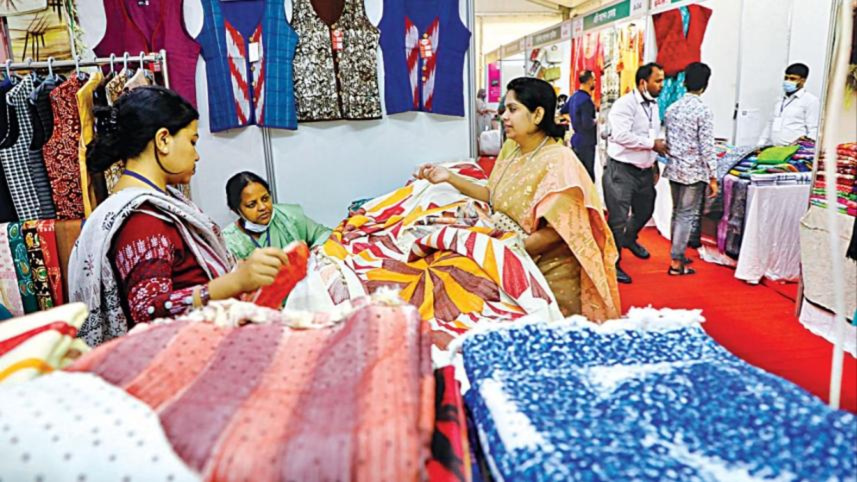
A report by The Daily Star grounds this point in the lived economy. It detailed women-led embroidery, handicraft, and food businesses from Pabna that created earning opportunities from household production. The report also noted familiar constraints: finance, marketing, and institutional reach. The lesson is that home-based production need not remain marginal. With financial, marketing, and aggregation support, household producers can become real businesses.
The policy answer can be found closer to the producer. A small firm cannot grow on money alone. Power, transport, storage, licensing, and buyer access matter just as much. Cottage industries are weakened by power disruptions because they cannot afford backup systems. Others lose margin before the product reaches the buyer because logistics, storage, and market access remain too costly. Then come the everyday costs of dealing with the state: informal payments, delays, inspections, and local rent-seeking that make formalisation feel risky rather than rewarding.
For many small businesses, becoming visible to the state can also feel like exposure rather than protection. Bangladesh’s licensing regime and elements such as VAT, licensing, and regulatory compliance remain major challenges for SMEs. Many spend months trying to obtain a basic trade licence. For a small producer, registration should bring access to services before it brings fear of inspection. Otherwise, finance will still fall short if formalisation itself feels dangerous.
Even after a loan is disbursed for a business, conflicts arise. Does it help the proprietor keep records, buy equipment, reach buyers, or qualify for larger financing? Banks and public agencies already have evidence of that: repayment histories, orders, mobile payments, buyer relationships, and survival through bad months. Few small businesses can afford cold storage, testing labs, modern machinery, or design technology on their own. Shared facilities, buyer aggregation, certification support, and credible digital marketplaces can lower the cost of reaching larger buyers.
Small-business policy cannot be separated from household risk. When a family faces illness, food inflation, or unreliable utilities, taking on entrepreneurial risk becomes almost impossible. Micro-health insurance, emergency liquidity, and flexible repayment terms can serve as welfare tools while also protecting working capital.
Bangladesh’s small producers are not waiting to become entrepreneurial. They already are. They sell from homes, stalls, farms, workshops, and Facebook pages, often with little protection and almost no margin for error. The question is whether the economy will continue to treat them as borrowers on the edges of the formal system, or if it will help more of them become businesses inside it. This shift will happen when finance, records, markets, infrastructure, and protection work together. Only then will inclusion move beyond reach and give small producers what they have long lacked: a fair chance to build businesses that last.
Saba El Kabir is founder of Cultivera, and institutional sustainability adviser at PPRC. He can be reached at saba@cultivera.net.
Views expressed in this article are the author's own.
Follow The Daily Star Opinion on Facebook for the latest opinions, commentaries, and analyses by experts and professionals. To contribute your article or letter to The Daily Star Opinion, see our guidelines for submission.
 For all latest news, follow The Daily Star's Google News channel.
Comments