


Why internet access should be recognised as a fundamental right
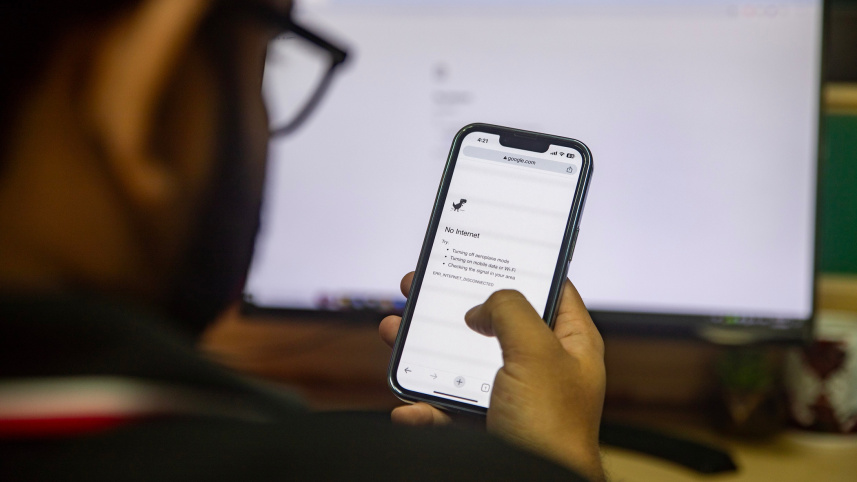
In July 2024, Bangladesh experienced one of the most consequential internet shutdowns in its history. What began as a state response to escalating student protests quickly spiralled into a nationwide blackout that lasted for over two weeks, paralysing communication, commerce, education, and emergency services. The all-encompassing effect was a stark reminder that the internet is no longer a luxury, but the backbone of our daily life. The shutdown disrupted livelihoods, endangered lives, and exposed the fragility of rights in a digital-dependent society, resulting in revenue losses amounting to around $1.2 billion.
So, should access to the internet be recognised as a fundamental right? The answer is an unequivocal yes.

The internet has evolved far beyond its origins as a mere communication tool. Today, it is the primary enabler of political, socio-economic, and legal rights. Citizens rely on the internet to engage in democratic processes, for accessing information, participating in public debate, monitoring government actions, and utilising government services. During the July 2024 shutdown, Bangladeshis were cut off from real-time updates, unable to verify information, and deprived of the transparency essential for democratic accountability. When political rights depend on digital infrastructure, denying internet access translates to political disenfranchisement.
From online classes to mobile banking, job applications to telemedicine, the internet is the gateway to opportunities. Bangladesh has built a thriving ecosystem of freelancers, entrepreneurs, and small businesses dependent on connectivity. The shutdown in July 2024 froze mobile financial services (MFS), halted online marketplaces, and left students stranded mid-semester.
Freedom of expression and the right to information are meaningless without access to the platforms where modern discourse takes place. The blackout silenced millions, not through censorship of content but through the elimination of the medium itself. In a digital-first world, the absence of connectivity becomes a direct assault on fundamental freedoms.
Several philosophical and legal frameworks support the argument that internet access must be elevated to the status of a fundamental right. From a utilitarian perspective, universal internet access maximises societal welfare. Studies consistently show that connectivity boosts GDP, enhances labour productivity, and expands access to essential services. The 2024 shutdown demonstrated the effects of being completely cut off: economic losses ran into millions, supply chains were disrupted, and digital services collapsed. With the utilitarian tenet being “the greatest good for the greatest number,” ensuring uninterrupted access becomes a moral imperative.
At present, one must be connected digitally to participate in society politically, economically, and culturally. Without internet access, individuals are effectively excluded from national conversation. Legal scholars argue that when the absence of an enabler (such as the internet) prevents the exercise of fundamental freedoms, the enabler itself becomes a right.
The shutdown also exposed the unevenness of Bangladesh’s digital landscape. The digitally literate found workarounds, like virtual private networks (VPNs), alternative networks, or travelling to connected zones, while rural and marginalised communities were left completely cut off. This mirrors the digital divide seen in under-developed nations where lack of access entrenches structural disadvantages.
Governments often adopt a “wait and see” approach, treating connectivity as a market-driven service rather than a public good. But the digital divide will not close on its own. States have an obligation to build infrastructure, ensure affordability, and protect access. In Bangladesh, where digital services underpin everything from remittance to education, this obligation is even more pressing.
International bodies, like the United Nations, have affirmed that internet access is essential for the enjoyment of human rights. Yet, these declarations remain “soft laws”, normative but unenforceable. Without binding legal frameworks, states can continue to shut down the internet with impunity. If states claim sovereignty over digital spaces, such as via regulating platforms, taxing digital services, and policing online content, they must also guarantee citizens’ access to those spaces. Sovereignty without responsibility becomes authoritarianism.
Recognising internet access as a fundamental right is not a symbolic gesture, it is a practical necessity. The consequences of disconnection are too severe to ignore. States need to treat connectivity as essential infrastructure, like water or electricity, protected by law and insulated from political manipulation. A rights-based approach to internet governance is the only way to ensure that every citizen, regardless of geography, class, or political context, can participate fully in the digital age. The future of democracy, development, and dignity depends on it.
Syed Almas Kabir is chairman of Bangladesh ICT & Innovation Network (BIIN).
Views expressed in this article are the author's own.
Follow The Daily Star Opinion on Facebook for the latest opinions, commentaries, and analyses by experts and professionals. To contribute your article or letter to The Daily Star Opinion, see our guidelines for submission.
 For all latest news, follow The Daily Star's Google News channel.
Comments