


Without timely labour data, how will we know if jobs are being created?

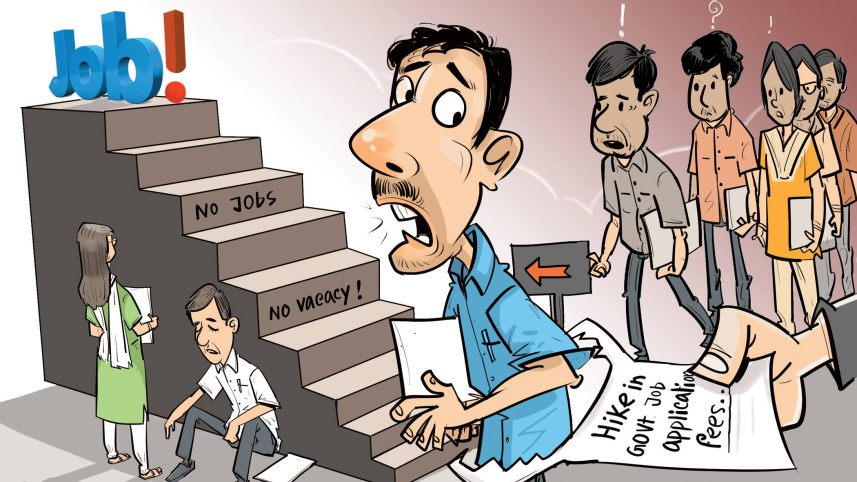
In 2026, the latest labour force data available on the Bangladesh Bureau of Statistics (BBS) website is from 2024. This time gap is a result of delays, dilemmas, and bureaucratic red tape. The ongoing Labour Force Survey (LFS) project ended when it ran out of money. Meanwhile, the data collection process has not even started.
Unlike the Consumer Price Index (CPI) or inflation research, which are funded through the revenue budget and published every month, the LFS has always been carried out on temporary financing. When the project ends, so does the survey. The last available quarterly figures are from October-December quarter of 2024 and the final report of 2024, when the number of unemployed people stood at 27.30 lakh, up from 26.6 lakh in the previous quarter. Since then, the trail has been cold.

Due to lack of preparation by both the ousted Awami League-led government and the interim administration, the project has yet to make any meaningful progress. The relevant file is still being shuffled between the Bangladesh Bureau of Statistics (BBS) and the Planning Commission. This is despite the current ruling party’s election pledge to generate employment for one crore people within its first 18 months in office. Six months on, authorities have yet to prepare the project for submission to the National Economic Council (Ecnec). Worse, it appears that data collection will not begin this year, which would leave Bangladesh without the labour force data of two consecutive years.
This is not merely a bureaucratic hiccup but rather appears to reflect a policy choice by the government to neglect the systematic analysis of the labour market.
With just a year remaining on its own timeline to create one crore jobs, how can the BNP administration assess whether that target has been achieved when it has not provided an updated estimate of how many jobs already exist? A pledge without a baseline is not a measurable target, but merely a pre-election slogan.
The concern is even more pressing because reports of factory closures and job cuts have become increasingly common as many large conglomerates struggle with financial distress. Without timely and credible labour market data, it is impossible to determine whether new jobs are offsetting these losses or if overall employment is continuing to deteriorate. For instance, factory closures have led to significant job losses, with 245 to 353 factories reportedly shutting down between August 2024 and November 2025 and affecting at least 1,00,000 workers, while labour unions suggest losses may have reached 200,000-300,000 workers. In the garment sector alone, according to one recent Prothom Alo report, 20,000 workers were laid off during the first six months of 2026.
To understand, why labour data matters so much in the first place, one need only look back at the July 2024 uprising. What set it off was students and jobseekers having to watch as a quota system reserved a large share of coveted government positions based on traits that had nothing to do with merit, while the private sector wasn’t creating enough jobs to absorb everyone else. The anger was towards the unfairness in an already insecure job market where opportunity was scarce.
Of the 26.24 lakh unemployed counted in the last Labour Force Survey, nearly nine lakh were graduates—the highest jobless rate of any education group, even as overall joblessness had dipped. The picture worsens upon deeper examination: one in three graduates looking for work last year stayed jobless for up to two years; one in seven was out of work for one to two years; and one in six was unemployed for more than two years.
Graduates who enter the job market a year or two late often carry that setback throughout their careers, facing lower starting salaries, slower promotions, and a persistent earnings gap compared with peers who secured employment on time.
Other countries have gradually moved towards more frequent and timelier labour market data dissemination. India, for example, is in the process of shifting from quarterly to monthly unemployment estimates, and Malaysia is following a similar path. Sri Lanka, Thailand, Vietnam, and Singapore publish labour force statistics on a quarterly basis.
Sri Lanka’s transition was gradual. Before 1990, its Labour Force Survey was conducted once every five years. Since 1990, however, it has been carried out the survey regularly, providing both quarterly and annual labour market indicators. This progressive approach has enabled policymakers to access more timely employment data to aid informed decision-making.
Bangladesh has struggled to maintain a regular publication schedule for labour force statistics, creating significant data gaps and making it difficult for policymakers, businesses, and researchers to assess labour market conditions accurately. But it is the high time to rethink the publication frequency of labour market data and conduct surveys at least on a quarterly basis. This should in fact be the standard, not a distant aspiration.
More importantly, the government must move BBS’s labour statistics out of the project financing model and make space for it in the national revenue budget. If not, as we see happening, the BBS will be unable to provide labour market data consistently, policymakers will be left working in the dark, and the government’s promise of one crore jobs may remain unfulfilled.
Md Asaduz Zaman is business reporter at The Daily Star. He can be reached at asaduz.zamanjubd@gmail.com.
Views expressed in this article are the author's own.
Follow The Daily Star Opinion on Facebook for the latest opinions, commentaries, and analyses by experts and professionals. To contribute your article or letter to The Daily Star Opinion, see our guidelines for submission.
 For all latest news, follow The Daily Star's Google News channel.
Comments