


Women voters are not undecided – they are unconvinced

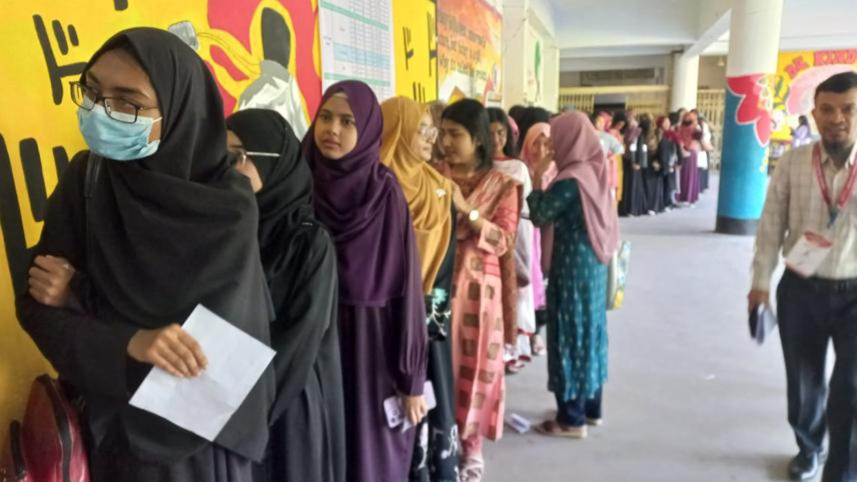
At the moment when women have become the most invoked voters of the upcoming election—celebrated or disrespected in speeches, targeted through promises, and framed as the moral centre—it is worth pausing to ask: what if women are unconvinced?
This question emerged during Round 3 of the People’s Election Pulse Survey (PEPS) by Innovision Consulting, an initiative tracking shifts in voter sentiment over time. This round was a panel survey of electoral attitudes as the election approached. As part of the survey unit, I personally spoke with women who had identified themselves as “undecided.”

One of the most striking findings from this round is the persistent gender gap in political disclosure. Across all three rounds of PEPS, women remained significantly less likely than men to say they decided whom to vote for. In Round 3, around 23 percent of female respondents reported being undecided, compared to 16 percent of men, while a substantially higher proportion of women chose “I don’t want to say.” This consistency suggests that what we are seeing is not momentary hesitation, but something more fundamental: women’s political preferences are more constrained, more private, and harder to articulate in both public and survey settings.
To understand what lies beneath this silence, I wanted to speak to these women, selected at random from the list of undecided voters. Of the 30 women called, 10 picked up; the rest were either uninterested in speaking further or did not answer. What emerged from these conversations is far more complicated than the assumption that undecided voters are simply confused or waiting for better information.
Instead, many women were remarkably clear about their priorities: reasonable price of essentials, law and order, safety, better education for children, employment opportunities, and peace. However, they were deeply uncertain that electoral politics would meaningfully respond to them.
“I will vote because I have to,” many women said across districts and age groups, often immediately followed by “but nothing will change.” This resignation was striking. It did not sound like apathy, but like experience.
For working-class and economically vulnerable women—domestic workers, day labourers, etc—political disengagement was shaped by immediacy. Rising prices, healthcare costs, housing insecurity. and unsafe public spaces left little room for political optimism. Several women described voting decisions as something men make or something families decide collectively. Their exclusion was not dramatic or enforced; it was normalised.
Lower-middle and middle-income homemakers expressed a different kind of disengagement: fatigue. These women were not disconnected from public life. They followed the news, discussed elections occasionally, and were aware of party promises. But trust was absent. Politicians were described as corrupt, interchangeable and distant. Electoral competition appeared repetitive rather than responsive. For these women, withholding a voting preference was less about indecision and more about disbelief.
Among Gen Z women, disengagement took its most explicit form. Many openly questioned whether elections had any bearing on their future, particularly on employment prospects and personal safety. Party assurances, including women-focused welfare schemes or symbolic concessions, failed to persuade. For younger women, scepticism was not inherited; it was learnt.
What connects these experiences across class and generation seems like a collapse of expectation. Women are struggling to locate themselves within electoral politics as agents of meaningful change. Their reluctance to declare a preference is a response to repeated disappointments.
This matters because women are not a peripheral voting bloc. They are central to household economies, care work, community stability, and social reproduction. Yet, the issues they consistently prioritise—price stability, safety in public spaces, accessible healthcare, quality education, and dignified employment—remain chronically under-delivered. Whether this election and the government that follows will succeed in addressing these concerns in credible ways remains to be seen. The disengagement seemed like a rational choice at the moment for some.
The persistence of women’s undecided status across several rounds of the survey suggests something structural. It points to a political system that has not earned women’s confidence, even when it seeks their votes. More rallies, louder slogans or gender-specific promises will not bridge this gap.
For the next government, regardless of who forms it, this should serve as a warning. A democracy in which women do not have faith is not a stable one. If political parties want women’s trust, they must move beyond symbolic inclusion and demonstrate through governance: that politics can tangibly improve everyday life by controlling prices, ensuring safety, delivering education, and healthcare, and reducing corruption in ways that are visible and felt. Until that changes, many women will remain absent from ballot boxes and political beliefs.
Tasmiah T Rahman works at Innovision Consulting and is pursuing a joint PhD programme between SOAS University of London, UK, and BRAC University on the political economy of development.
Views expressed in this article are the author’s own.
Views expressed in this article are the author's own.
Follow The Daily Star Opinion on Facebook for the latest opinions, commentaries, and analyses by experts and professionals. To contribute your article or letter to The Daily Star Opinion, see our guidelines for submission.
 For all latest news, follow The Daily Star's Google News channel.
Comments