


Politicisation of our professions
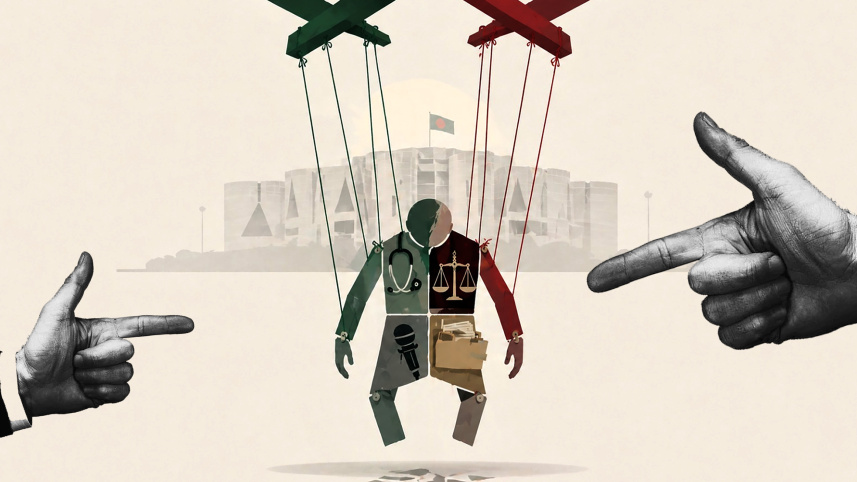
A fact that we don’t discuss much, and seem to have taken as a given, is the politicisation of our various professions. Over the years, this phenomenon has destroyed our ability to achieve professional excellence, substituting meritocracy with mediocrity, ability with obedience, ambition with lethargy, critical thinking with sycophancy, and the desire to build self-worth with a lack of sense of shame. We would rather genuflect than be genuine.
Most of our professional bodies are divided on partisan lines; as a result, professional standards are getting sidelined to promote partisan interests, which serves personal ambition—to occupy leadership positions or take advantage of opportunities—masquerading in the name of party loyalty. Our doctors, lawyers, engineers, journalists, and members of many other professions have openly allowed professionalism to take a second place to party interests, thereby lowering the standard of our respective professions. One of the key factors that have prevented our modernisation and progress is politicisation of public service bodies like the bureaucracy, administration, and law enforcement institutions, whose accountability has shifted from the people and transformed into loyalty to the ruling party of the day.

We start with the doctors because it is a profession that deals with our lives. The politicisation of doctors’ representative bodies—set up with the backing of BNP and Awami League—started several decades ago. These bodies practically took over the health sector when their parties came to power. They determined all the key government postings and new appointments and had a say in allocation of funds and major projects. How successful one is as a doctor does not matter; how powerful one is in these bodies determines everything. Can a health sector, whose basic ethos is public service, operate this way? Doesn’t the sector’s present-day ills—after 55 years of our independence—prove it? Obviously, every doctor has the right to have their political affiliation, and they may even participate in their respective party activities freely. But to allow politics and partisanship to dominate all relevant policies, priorities, decisions, and appointments is suicidal.
The politicisation and partisanship of teachers, especially those at the university level, have greatly damaged our higher education. The formation of various teachers groups—white, blue, and pink panels, linked with BNP-Jamaat, Awami League, and the left, respectively—created serious division within the teachers’ community, greatly affecting the academic atmosphere in most of our public universities. Important postings and granting of scholarships and research funds all followed party lines. Appointment of pro-VCs, proctors, hall provosts and even house tutors showed clear signs of favouritism. Scholarship disappeared as a condition of success or recognition.
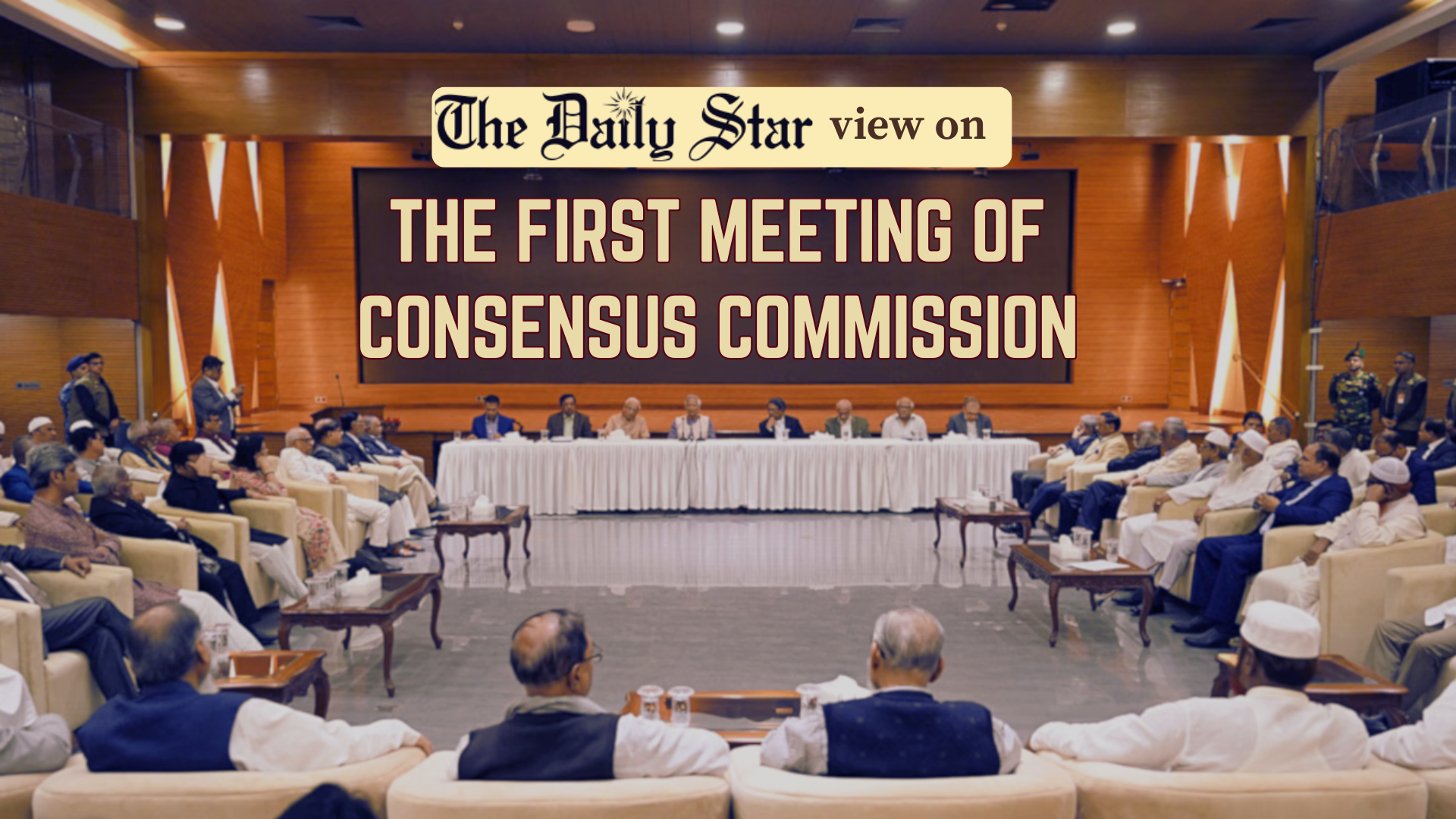
Partisan teachers’ groups gradually linked up with students’ parties of similar leanings, giving rise to a shameful teacher-student divide that crossed all lines of dignity and courtesy, with party lines becoming the only factor for success. Partisan students felt empowered to insult teachers in opposition groups, and sometimes would even assault them physically with behind-the-scenes encouragement from teachers of the same political line. One can easily imagine the near-total loss of academic atmosphere in these universities and how muscle power gradually prevailed over freedom of thought, ideas and speech. Teachers devoted to academics were gradually sidelined and could only survive by remaining totally silent.
What perhaps caused the greatest damage to these academic institutions were the appointments of VCs that were determined on political considerations. Many of them were not even remotely qualified for such appointments. They formed their own groups of teachers and students and ran these academic institutions as personal fiefdoms, totally destroying their academic atmosphere. Sadly, VC appointments during the interim government era did not extricate themselves from this legacy.
Appointments of principals at well-known colleges across the country regrettably followed the same pattern. Those who got the posts because of their party affiliations were more beholden to the local MPs and student parties in running their institutions.
In both these categories of academic institutions, merit and scholarship gradually disappeared, making students miserable victims of politicisation.
My own profession, journalism, is a victim of this politicisation as well. Like the doctors, journalists have also been divided along partisan lines. Maybe it started earlier, but from 1991 onwards, we could clearly see that whichever party would be in power, its journalist-affiliate bodies would dominate the professional bodies. They would receive all official support and foreign appointments (at press wings), and get official patronage. During the 15-plus years of rule by Sheikh Hasina, we could hardly see any pro-BNP journalists at any official functions. Not even at the National Press Club, just as we don’t see any pro-AL journalists there now.
The journalists who were part of this process did not seem to realise that having political affiliations revealed a bias that was antithetical to the values of neutrality and objectivity—the core values of this profession. This significantly reduced public trust in journalism, which journalists themselves did not seem to realise, or they ignored it knowingly. Today, hundreds of journalists from one side are accused of murder, without a shred of proof even after nearly 21 months, and journalists from the other side are not uttering a word. Okay, don’t protest, but at least ask. Such is the political tilt.
Politicisation also afflicted bureaucracy and the law enforcement bodies in a deadly way. Being part of the government, they could not publicly take sides, but the undeclared affiliations were well-known and proven by the benefits that one group got as against the other. The cost of such affiliations in bureaucracy was clearly visible in terms of accountability and efficiency. The most significant impact was on nurturing merit. Good officers, if they wanted proper evaluation, had to exhibit, if not direct party loyalty, at least a clear tilt. Promotion and evaluation became based less on merit and more on partisanship, and the louder they stood out, the bigger the award was. Accountability disappeared and sycophancy took over.
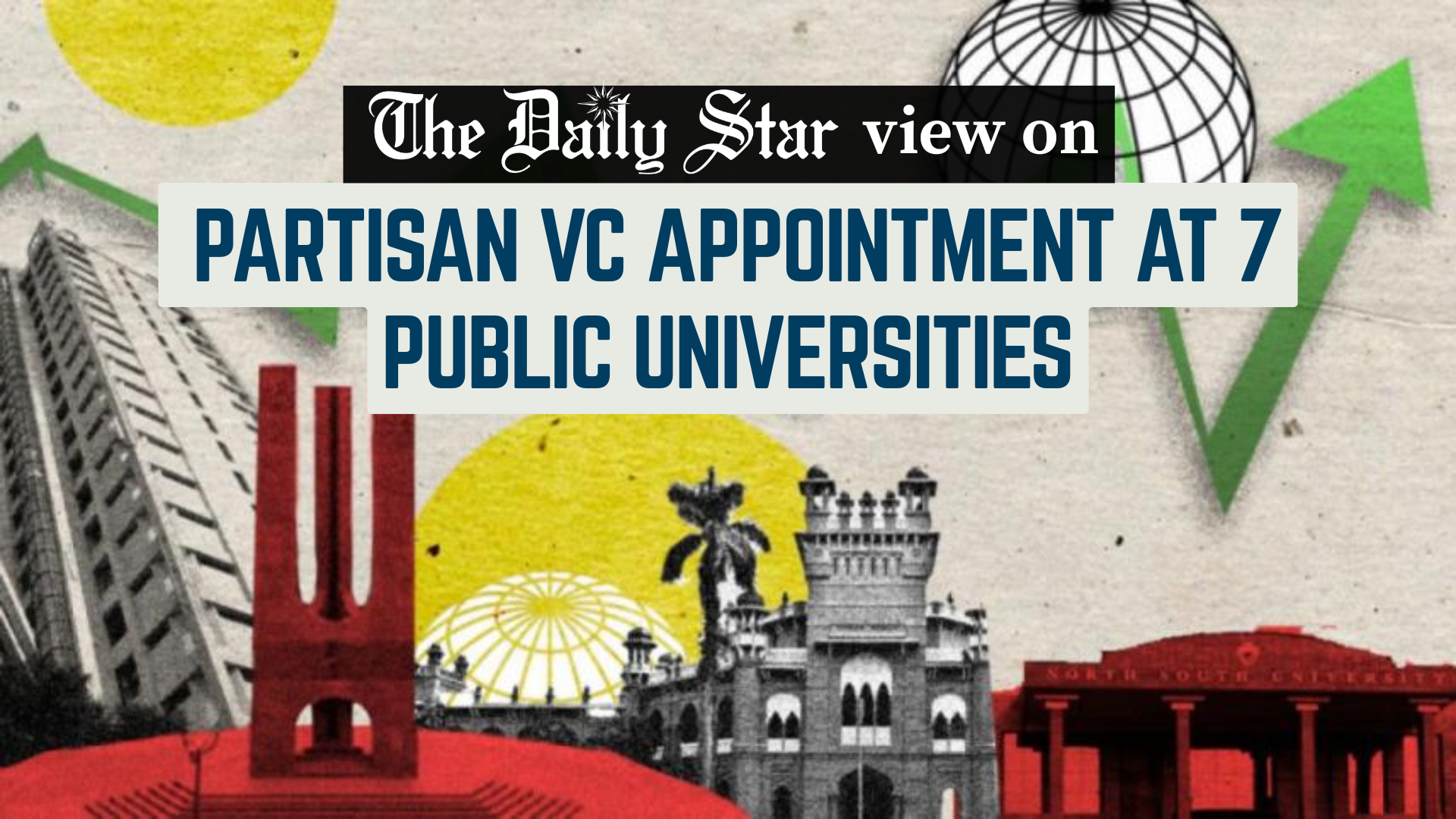
The administration entered perhaps their darkest phase when elections started to be usurped after 2014. To manipulate the elections, the then ruling party needed the bureaucrats and law enforcers more; consequently, their power and privileges became literally unquestioned, as exemplified by the wealth accumulated by former IGP Benazir Ahmed and others.
One had hoped that the interim government would put a stop to this aberration, but what we saw instead was a “festival” of appointments, whose justification eluded us. Yes, many bureaucrats were punished and harassed on political grounds by the Hasina government, and they may have deserved some compensation of sorts, but to put some of them at the bureaucratic helm of ministries after years out of office did not serve to restore either accountability or efficiency in our bureaucracy.
What we are now seeing is perhaps the most politicised example of a critically important profession: lawyers. On Wednesday, the Supreme Court Bar Association (SCBA) cancelled the nomination papers of 42 lawyers out of 90 candidates in the election scheduled for May 13-14, citing their affiliation with the Awami League whose political activities have been banned under the Anti-Terrorism (Amendment) Act, 2025. With one stroke, electoral rivals were totally removed. The SCBA should disclose under what provision of their own article of association did it take that action. The fact that the association has so far refused to make its formal resolution public raises questions about the attempt to hide something that the public deserves to know.
An organisation’s activities may be banned, but an individual’s rights cannot be taken away without due process. Not allowing 42 lawyers to participate in an election, for which they are legally and professionally qualified, means depriving them of their legal and constitutional rights. The lawyers whose nominations were cancelled did not submit their applications as candidates of the Awami League; they reportedly did so in their individual capacity. Today, the SCBA is practically taking away their right to contest elections, and tomorrow, they may use the same law to deprive them of their right to practise. So, the decision by SCBA has serious implications and must be thoroughly examined.
What worries us is the fact that legally questionable actions are being taken by a body that is supposed to uphold the law at the highest level of the state—the Supreme Court. Lawyers practising at the apex court are expected to act as the highest representatives of the law and the legal system as a whole. They are considered officials of the law, an essential part of the justice delivery system. They are definitely the moral torchbearers of justice and upholders of its highest standards.
As an ordinary citizen, my understanding is that, along with the “letter of the law,” there is the bigger horizon of the “spirit of the law.” The SCBA must see the wider picture of the impact of its decision on society, democracy, personal rights, individual freedom, and the overall values of the legal system. To use it for the political benefit of the moment, and the personal benefit of some, is to play with the law, justice system, the image of the apex court, and public trust. This is not only dangerous but extremely damaging for the reputation of the present government whose head, the prime minister, has strongly declared that he is against such a phenomenon. It lowers public faith in the law and in our constitution. We should never let that happen—definitely not by lawyers who are members of the Supreme Court Bar Association.
 For all latest news, follow The Daily Star's Google News channel.
 I conclude by repeating the initial question about how politicisation of our professions has held Bangladesh back. Take a look at the world and realise where every profession has gone, is going, and where they are headed. Do we have any chance of competing without transforming ourselves? The place to begin is to restore professionalism in every profession and institution in our country.
Mahfuz Anam is editor and publisher of The Daily Star.
Views expressed in this article are the author's own.
Follow The Daily Star Opinion on Facebook for the latest opinions, commentaries, and analyses by experts and professionals. To contribute your article or letter to The Daily Star Opinion, see our guidelines for submission.
Comments